Contents
Scroll to:
 Oxana O. Sinitsyna,
Nadezhda V. Kuz,
Maria V. Pushkareva,
Viktor V. Turbinsky,
Margarita A. Shiryaeva
Oxana O. Sinitsyna,
Nadezhda V. Kuz,
Maria V. Pushkareva,
Viktor V. Turbinsky,
Margarita A. Shiryaeva https://doi.org/10.47470/0016-9900-2026-105-1-15-24
EDN: csfscc
Scroll to:
Introduction. Massive algal blooms typical of all climatic zones of the Russian Federation are observed in all federal districts. The greatest danger is posed by the rapid proliferation of cyanobacteria (CB), whose life cycle and death release highly hazardous cyanotoxins into the water.
The purpose - hygienic assessment of contamination of Moscow, Chelyabinsk, and Rostov-on-Don surface sources of drinking and domestic water with CB and cyanotoxins and the development of preventive measures aimed at reducing the risk to public health.
Materials and methods. The objects of the study were CB and cyanotoxins (microcystin-LR, anatoxin-a, cylindrospermopsin, β-N-methylamino-1-alanine (BMAA), saxitoxin), investigated in surface water sources in the cities of Moscow, Chelyabinsk, and Rostov-on-Don. Theoretical and empirical methods of scientific systems analysis were used. Data from domestic and foreign scientific literature were searched and summarized from the MedLine/PubMed/PubChem, Scopus, and eLIBRARY scientific publication databases, the results of industrial control of water supply institutions, and own chemical analytical and toxicological studies.
Results. Regional patterns in the quantitative composition and intraspecific differentiation of toxic cyanobacteria species in surface water sources located in different climatic zones were identified. A hygienic assessment of cyanotic contamination of water sources and the effectiveness of drinking water treatment were conducted. In addition to the current MAC for microcystin-LR (SanPiN 1.2.3685–21), MACs for anatoxin-a, cylindrospermopsin, and BMAA produced by priority types of CB in water sources in the Russian Federation have been substantiated. An algorithm for current monitoring of water pollution with CB and cyanotoxins has been developed, and preventive measures aimed at reducing the risk to public health from drinking water pollution with cyanotoxins have been proposed.
Limitations. The lack of domestic standards and test systems that allow testing the content of priority cyanotoxins in water with the required reliability of results.
Conclusion. Most surface water sources in the Russian Federation are subject to anthropogenic and, in recent years, climatic influences, creating favorable conditions for the widespread development of CB. The latter, in turn, adversly impacts the quality and safety of drinking water and requires the development and implementation of methodological recommendations for the prevention and control of pollution of water sources for domestic, cultural and household water use, and drinking water with toxic types of CB and cyanotoxins.
Compliance with ethical standards. The study does not require the submission of a biomedical ethics committee opinion or other documents.
Contributions:
Sinitsyna O.O. – research concept and design, text writing, editing;
Kuz N.V. – research design development, collection and processing of material, text writing;
Pushkareva M.V., Turbinsky V.V., Shiryaeva M.A. – handling material.
All authors are responsible for the integrity of all parts of the manuscript and approval of the manuscript final version.
Conflict of interest. The authors declare no conflict of interest.
Funding. The study was carried out as part of the implementation of the state program “Ensuring the chemical and biological safety of the Russian Federation” for 2021–2024.
Received: November 11, 2025 / Accepted: December 2, 2025 / Published: February 10, 2026
Sinitsyna O.O., Kuz N.V., Pushkareva M.V., Turbinsky V.V., Shiryaeva M.A. Cyanobacteria and cyanotoxins in water sources – a threat to public water safety. Hygiene and Sanitation. 2026;105(1):15-24. https://doi.org/10.47470/0016-9900-2026-105-1-15-24. EDN: csfscc
Introduction
Improving the quality of drinking water supply for the population is one of the national development goals of the Russian Federation for the period up to 2030 [1]. An important condition for ensuring the quality and safety of drinking water is the sanitary reliability of the water source. However, most surface water sources in our country are subject to intense anthropogenic pollution [2]: the number of surface sources of centralized drinking water supply that do not meet sanitary-epidemiological requirements increased by 4.76% over the period 2014–2023 [3]. Moreover, 33.4% of the aforementioned water sources fail to meet sanitary-epidemiological requirements due to the absence of organized sanitary protection zones, designed to protect and prevent contamination of water intake areas [3].
Chronic anthropogenic load contributes to the entry into water bodies of untreated and insufficiently treated wastewater, as well as the release of nutrients accumulated in bottom sediments: mineral compounds of nitrogen, phosphorus, silicon, iron, and certain microelements that serve as a food source for cyanobacteria (CB), or blue-green algae [4]. Since phosphorus plays an important role in stimulating CB growth, some countries, including EU states, Japan, New Zealand, South Korea, and Brazil, have established permissible limits for its content in wastewater [5]. New technologies for wastewater treatment with the removal of nutrients (nitrogen and phosphorus) are also being introduced in our country [6].
Our country first encountered the problem of water body blooms in the 1960s after the implementation of a water management hydrotechnical construction program for a cascade of reservoirs on major waterways, including Dnieper and Volga. The intensity of CB growth and development increased from northern to southern reservoirs. The creation of reservoirs without proper cleaning of the bed, which had significant land areas subject to anthropogenic impact, along with a sharp change in the hydrological characteristics of river flow, a decrease in water flow velocity, the formation of extensive shallow and stagnant zones, and thermal pollution, all contributed to the intensification of eutrophication processes in water bodies [7]. Increasing anthropogenic load and favorable hydrological conditions led to an increase in the proportion of blue-green algae representatives in the phytoplankton composition.
The climatic factor significantly influences the intensity and duration of surface water body bloom processes. According to long-term observations by the Federal Service for Hydrometeorology and Environmental Monitoring, the rate of air temperature increase in Russia since the mid-1970s is 0.5 °C per 10 years, which is 2.8 times more intense compared to the global average temperature (0.18 °C per 10 years), with a tendency for the rate of increase to accelerate [8]. Unlike other types of phytoplankton, the optimal temperature for the development of certain CB genera is considered to be above plus 25 °C [9]. For instance, Cylindrospermopsis actively develops in the temperature range from plus 20 to plus 35 °C, with maximum growth occurring at plus 30 °C [10]. The rise in surface water temperatures facilitates the spread of CB northward, and these bacteria are actively colonizing habitats previously atypical for them [11].
Blue-green algae bloom processes are observed in all climatic zones of the Russian Federation, including regions with colder climates: the Northwestern, Ural, Siberian, and Far Eastern Federal Districts. However, the most frequent mass development of CB is still observed in the Southern Federal District [12].
The mass development of CB significantly impacts the sanitary-hygienic indicators of water quality and safety. Metabolic products released into the aquatic environment both during the vital activity of CB and after their death can deteriorate the organoleptic and sanitary-hygienic properties of water. The growth and development of CB are the primary cause of various unpleasant tastes and odors in water that are difficult to remove [13]. Furthermore, during bloom periods, the color of the water increases [14]. The decomposition of phytoplankton cells contributes to an increase in water turbidity [15]. At high concentrations of CB, the water’s color changes. In particular, with the mass development of species like Aphanizomenon flos-aquae, Microcystis aeruginosa, and Anabaena, the water acquires an emerald-green color, which turns blue upon the decomposition of the algae, associated with the release of the green pigment chlorophyll-a and the blue pigment phycocyanin from the cells [16]. However, CB can impart other colors to water depending on various pigment combinations, of which approximately 30 are known [17]. The dissolved oxygen content in water decreases with CB accumulation and organic matter decomposition. Oxygen deficiency in water bodies is often a cause of fish mortality [18]. During the period of CB cell death and organic matter decomposition, a significant increase in biochemical oxygen demand (BOD) and ammonium nitrogen content in the water is observed [19]. During intensive CB development, water pH usually rises to alkaline levels [20]. A slightly alkaline environment combined with low oxygen content optimizes conditions for certain pathogens of dangerous infectious diseases, including Vibrio cholerae [21]. Cyanobacterial algal accumulations during decomposition produce large quantities of volatile sulfur compounds, including hydrogen sulfide, methyl mercaptan, and dimethyl sulfide [22]. Recent studies have shown that algal decomposition stimulated hydrogen sulfide production by sulfate-reducing bacteria [23]. The accumulation of butyl alcohol, butyric, lactic, acetic, and other acids formed as a result of fermentation processes in massive algal accumulations, also negatively affects water quality [24].
However, the most acute problem associated with the mass development of CB in water is their ability to produce toxins that adversely affect human health [25]. Currently, about 40 toxigenic species of CB are known [26]. According to [27], in 70% of cases, freshwater body blooms are toxic. Overall, the number of identified cyanotoxins produced by blue-green algae reaches 95 substances [28]. The greatest concern worldwide, due to the potential for drinking water contamination, is raised by microcystin-LR, anatoxin-a, cylindrospermopsin, β-N-methylamino-L-alanine (BMAA), and saxitoxin because of their high toxicity and hazard, including carcinogenicity [29]. The spectrum of biological action of these substances is quite broad, but the main effects are neurotoxic, hepatotoxic, and cytotoxic [28–30].
Thus, data from experimental and epidemiological studies by domestic and foreign authors indicate the toxicity and hazard of most CB toxins to humans and animals, confirming the relevance of monitoring and regulating CB and their metabolic products in source water and drinking water. The abovementioned determined the aim of the present study.
Aim of the work – a hygienic assessment of contamination by cyanobacteria and cyanotoxins in surface sources used for drinking water supply and recreational purposes in Moscow, Chelyabinsk, Rostov-on-Don, and the development of preventive measures aimed at reducing the risk to public health.
Materials and Methods
The objects of the study were cyanobacteria (blue-green algae) and the cyanotoxins they produce, present in surface water supply sources for the population located in the main (I, II, and III) climatic zones of the Russian Federation (Moscow, Moscow Oblast, Chelyabinsk Oblast, Rostov Oblast).
Theoretical and empirical methods of scientific system analysis were used. A search and synthesis of data from domestic and foreign scientific literature presented in the scientific publication databases MedLine/PubMed/PubChem, Scopus, eLIBRARY were conducted. Retrospective results of production control of water sources, carried out by water supply organizations of the municipal utilities in Moscow (2009–2023), Chelyabinsk (2010–2022), and Rostov-on-Don (2019–2023), were analyzed. The authors’ own chemical-analytical and toxicological studies were performed, serving as the basis for developing approaches to minimize public health risks associated with contamination of drinking water by toxic species of cyanobacteria and cyanotoxins.
In chemical-analytical studies using enzyme-linked immunosorbent assay (ELISA) methods, the content of the cyanotoxins microcystin-LR, anatoxin-a, cylindrospermopsin, β-N-methylamino-L-alanine (BMAA), and saxitoxin was examined in source water and drinking water from Moscow (a Moskva River source, 2016 and 2023), Chelyabinsk (the Shershnevskoye Reservoir, 2022), and Rostov-on-Don (Don River, 2022). The effectiveness of technologies used for water purification from cyanotoxins at the Rublevskaya (2016) and Western (2023) water treatment stations in Moscow was evaluated.
Toxicological studies included the investigation of general toxic, neurotoxic, embryotoxic, and teratogenic effects of anatoxin-a, cylindrospermopsin, and BMAA (beta-methylamino-L-alanine) in a subchronic experiment with intragastric administration to laboratory animals.
Results
The most common and well-studied metabolic products of CB that impart unpleasant tastes and odors to water are geosmin and 2-methylisoborneol [31]. Our own results of a retrospective analysis of water studies from surface water sources in Moscow showed a positive correlation between the number of CB and the content of geosmin in the raw water (r = 0.31; p < 0.01) [32]. Musty, unpleasant odors imparted to water by odorants, against the background of chlorine odor, are often associated with the smell of DDT dust. In the distribution network, the odor can intensify, causing justified complaints from the population [33]. Traditional water treatment methods (coagulation followed by clarification, disinfection using chemical reagents) are insufficiently effective against the aforementioned odorants. A more effective solution for removing unpleasant tastes and odors caused by CB apparently lies in combining traditional methods (physicochemical and biological) with advanced oxidation processes, such as oxidation-sorption treatment using ozone and granular activated carbon. The use of ozonation-sorption has proven successful in the water treatment technology at the Western Water Treatment Station in Moscow, where, in accordance with Moscow Government Decree No. 176-PP of March 14, 2006 “On the Development of Water Supply and Sewerage Systems in Moscow for the Period up to 2020,” a new ozonation-sorption unit with a design capacity of 250 thousand m³/day was commissioned in 2011 [34].
As a result of a retrospective analysis of long-term hydrobiological data from drinking water sources in Moscow, Chelyabinsk, and Rostov-on-Don over the observation periods, a significant increase in the total abundance of CB during peak bloom months was noted; for example, in the Moskva River – from 21,500 cells/mL in 2009 to 73,080 cells/mL in 2019; in the Don River – from 34,035 cells/mL in 2019 to 194,037 cells/mL in 2023. Maximum concentrations of cyanobacteria in the Shershnevskoye Reservoir were observed in 2010 – 462,000 cells/mL.
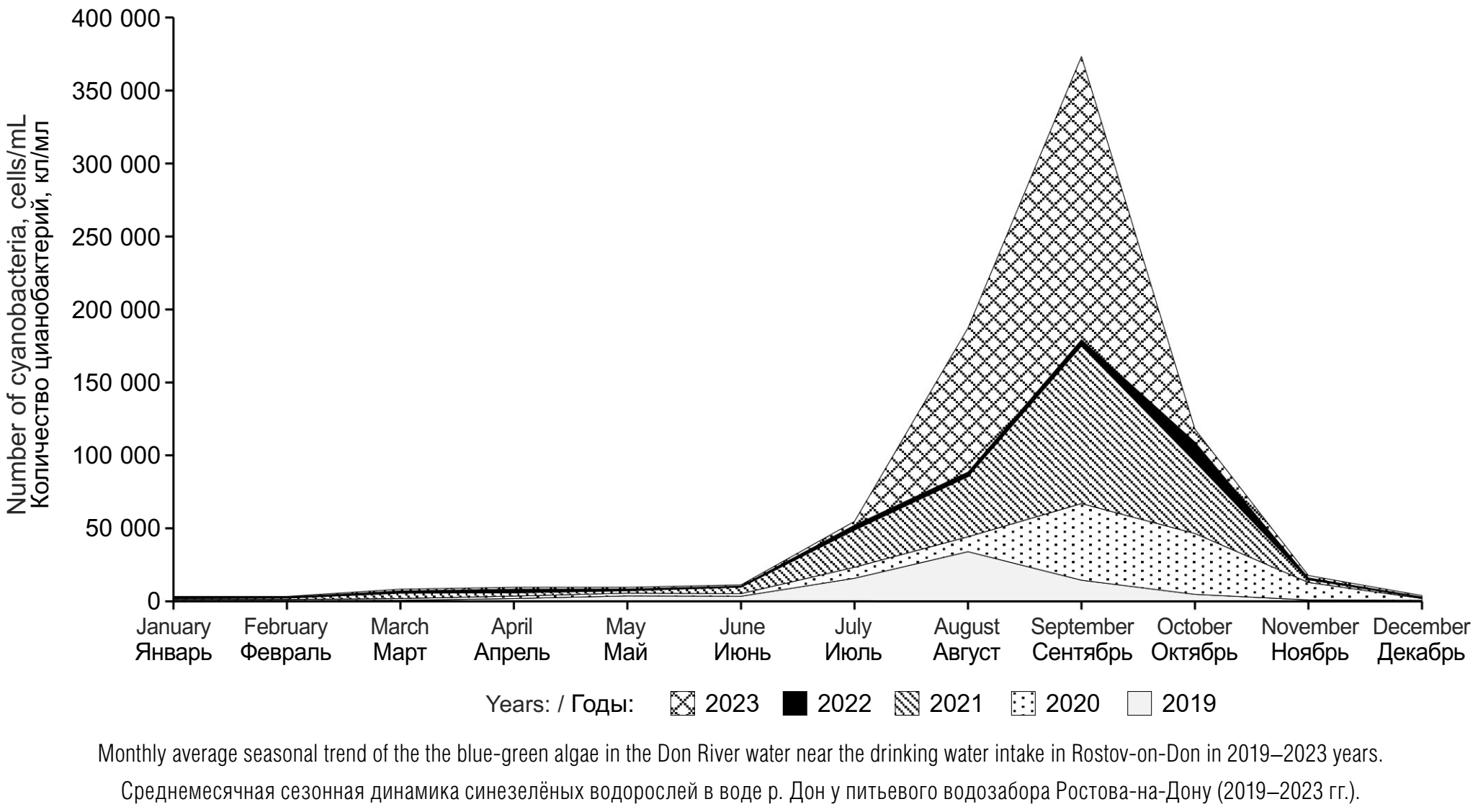
It is also important to note the lengthening of the CB vegetation period, particularly pronounced in the northernmost of the studied water sources – the Shershnevskoye Reservoir (III climatic zone). For instance, while in 2010 at Chelyabinsk water intake sites, CB concentrations above 2500 cells/mL were recorded from June to September, in 2021 such concentrations of blue-green algae were registered over 11 months (February to December) [35]. A similar trend was noted in the Don River (see Figure), where the duration of the active CB vegetation period increased from three months (July – September) in 2019 to six months (June – November) in 2023.
Furthermore, regional features in the intra-generic differentiation of toxic CB species were identified (Table 1).
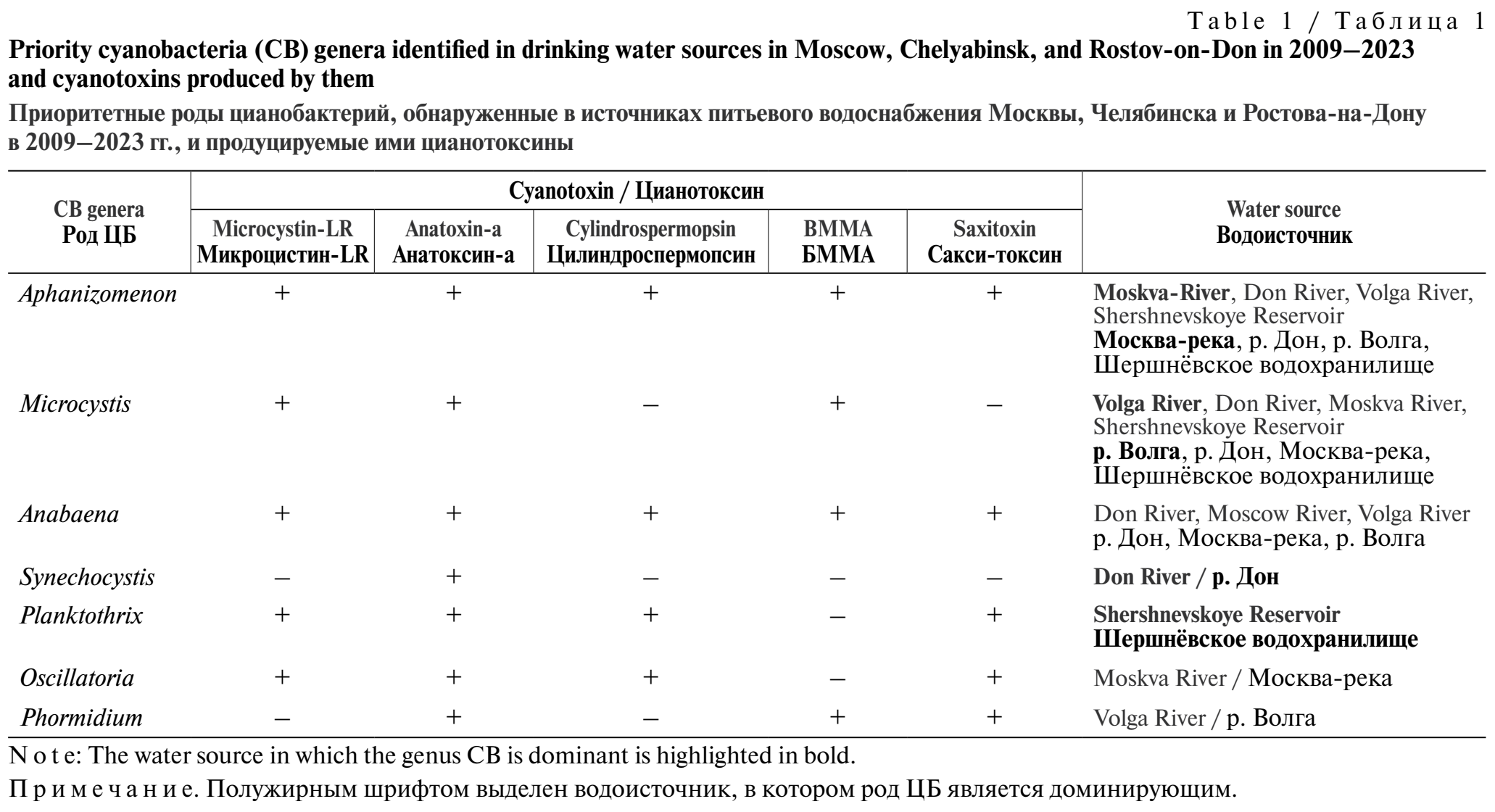
Thus, in the water of the Moskva River source in Moscow (II climatic zone), where in 2023 the content of blue-green algal cells exceeded 2500 cells/mL for five months (July to November), the dominant species (up to 90% of the total abundance) was Aphanizomenon flos-aquae (L.) Ralfs, which produces several types of toxins: microcystin-LR, anatoxin-a, BMAA, cylindrospermopsin, and saxitoxin. At the water intakes of the Volga source in Moscow, with CB concentrations ranging from 267 to 3978 cells/mL, Microcystis aeruginosa, primarily a producer of one toxin – the hepatocarcinogen microcystin-LR, constituted 18 to 100% of the total CB abundance. In the water of the Shershnevskoye Reservoir in Chelyabinsk, located in the III climatic zone, the following species of blue-green algae were most frequently detected: Planktothrix agardhii – up to 45.5%; Aphanizomenon flos-aquae (L.) Ralfs and Aphanizomenon issatschenkoi – up to 19%; Microcystis aeruginosa, Microcystis pulverea, Microcystis wesenbergii, Microcystis firma – up to 11% of the total CB composition [35]. The maximum quantity of CB was found in the Don River – the water source for Rostov-on-Don (I climatic zone): 291,820 cells/mL (September 2023), with predominance of the genera Synechocystis, Microcystis, Anabaena, Oscillatoria, Aphanizomenon [36].
In the CB composition of all four studied water sources (Moskva River and Volga sources for Moscow, Shershnevskoye Reservoir, Don River), the toxic CB genera Aphanizomenon, Anabaena, and Microcystis were detected most frequently. Identification of toxic CB genera can provide information both about the presence of bloom processes not visible to the naked eye and about the potential presence of cyanotoxins.
Chemical-analytical studies of water from sources of drinking water supply and drinking water in Moscow (Moskva River source), Chelyabinsk, and Rostov-on-Don, conducted in 2023, recorded the content of a number of cyanotoxins (microcystin-LR, anatoxin-a, cylindrospermopsin, β-N-methylamino-L-alanine, and saxitoxin) at concentrations exceeding the lower limit of quantification. The concentrations of cyanotoxins detected during monitoring in the water source bloom seasons are presented in Table 2.
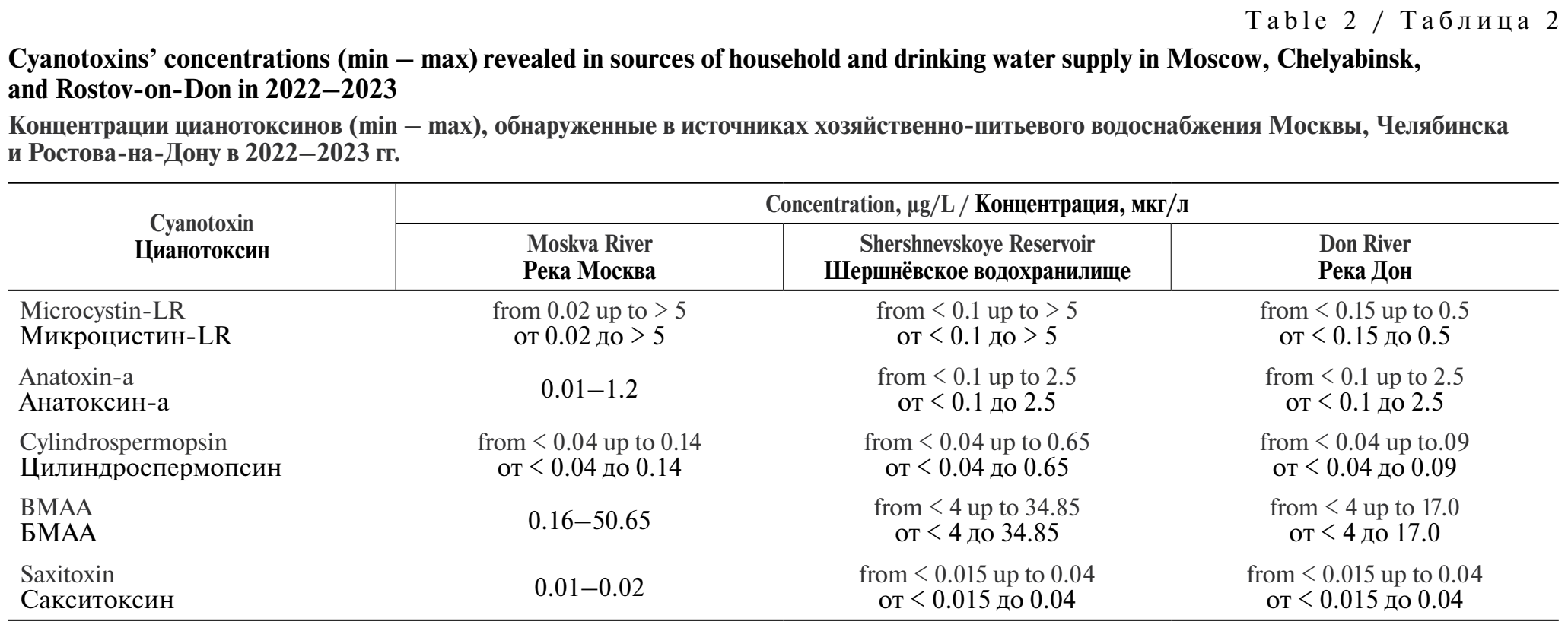
Comparison of the 2023 study results for the Moskva River source in Moscow with data from the analogous period in 2016 [37] demonstrates a negative dynamic in cyanotoxin content. For example, in 2016, maximum levels at water intakes were 0.3 µg/L for microcystin-LR, 0.3 µg/L for anatoxin-a, and 24.8 µg/L for BMAA. In 2023, the concentration of microcystin-LR increased more than 16-fold, and in 65% of the samples taken, it exceeded the upper limit of the measurement method. The content of anatoxin-a increased 4-fold, and BMAA increased 2-fold. Cylindrospermopsin and saxitoxin, which were not detected in 2016 (concentration < 0.05 µg/L), appeared in the source water.
Microcystins are considered the most common cyanotoxins in fresh waters worldwide [38, 39]. Currently, over 70 microcystins have been identified, with microcystin-LR being the most frequently encountered and more toxic [40]. Results from epidemiological studies indicate a positive correlation between the concentration of microcystin-LR and hepatotoxicity [41]. In 2010, the International Agency for Research on Cancer classified microcystin-LR in Group 2B for carcinogenicity [42]. In 2018, our country scientifically substantiated and implemented into practice the maximum permissible level (MPL) for microcystin-LR in water bodies used for drinking water supply and recreational purposes, and in drinking water (0.001 mg/L marked “k” (carcinogen), 1st hazard class¹). A method for determining microcystin-LR in water² was approved. This was based on the experience of the WHO and 22 countries in regulation, as well as data from the world literature on the toxic effects of microcystin-LR on the human body and laboratory animals [17].
The cyanotoxin anatoxin-a is considered one of the most neurotoxic compounds, as its rate of acetylcholinesterase inhibition is higher than that of most organophosphorus insecticides [9]. The most frequent producers of anatoxin-a are CB of the genera Anabaena, Oscillatoria, Planktothrix, Microcystis, Cylindrospermum, Phormidium, and Aphanizomenon [9]. Despite the WHO’s opinion that there is insufficient evidence of anatoxin-a toxicity to establish a safe level in water [30], many countries, including some US states and New Zealand, have set their own standards ranging from 1 to 6 µg/L [43]. In studies conducted on white rats at the F.F. Erisman Federal Scientific Center for Hygiene, Rospotrebnadzor, animals showed disorders of protein and lipid metabolism, the leukocyte lineage in blood, and morphofunctional changes in the testes, thymus, stomach, large intestine, pancreas, and adrenal glands following intragastric administration of anatoxin-a at a dose of 1 µg/kg in a subchronic experiment. Embryotoxic, reprotoxic, and neurotoxic effects of the cyanotoxin at doses ≤ 1 mg/kg were not registered in the experiment [44]. Based on the results of our own research and analysis of scientific literature data, the MPL for anatoxin-a in water for drinking and recreational purposes was substantiated: 4 µg/L, sanitary-toxicological hazard indicator, 2nd hazard class. A determination method³ with a lower limit of quantification of 0.05 µg/L was developed and approved for monitoring anatoxin-a content in water.
CB of the genera Cylindrospermopsis, Aphanizomenon, Anabaena, Oscillatoria, Umezakia, Raphidiopsis, Lyngbya produce the cyanotoxin cylindrospermopsin [9]. Cylindrospermopsin inhibits protein synthesis, is cyto- and genotoxic, causes damage to intracellular organelles of various tissues and organs, and initiates carcinogenesis processes [45]. Currently, standards for cylindrospermopsin in drinking water have been established in some countries (Australia, Brazil, New Zealand) at levels from 1 to 15 µg/L [46]. The WHO considers the evidence for cylindrospermopsin toxicity insufficient to establish a safe level in water [30]. In our own experimental studies, in a subchronic toxicological experiment on laboratory animals with intragastric administration of cylindrospermopsin at a dose of 10 µg/kg, a significant increase in the content of alanine aminotransferase, aspartate aminotransferase, glucose, creatinine, and triglycerides was established, along with a simultaneous decrease in albumin, uric acid, urea, and total protein in the blood serum. Morphofunctional disorders in animals confirmed predominantly impaired normal function of the liver and kidneys. Additionally, impairments in cognitive functions were identified in the experimental animals. Embryotoxic and teratogenic effects at administered doses ≤ 10 µg/kg were not recorded. Considering the obtained data, as well as the results of analyzing foreign materials on regulating and controlling cylindrospermopsin content in water bodies and drinking water, the MPL for water used for drinking and recreational purposes was substantiated: 1 µg/L, sanitary-toxicological hazard indicator, 1st hazard class. An ELISA-based method⁴ with a quantitative measurement range of 0.05–2 µg/L was developed for monitoring cylindrospermopsin content in water.
The non-protein amino acid β-N-methylamino-L-alanine (BMAA), produced by CB species such as Chroococcus, Merismopedia, Mycrocystis, Synechocystis, Myxosarcina, Leptolyngbya, Lyngbya, Oscillatoria, Anabaena, Nostoc [47], is also considered a potent cyanobacterial toxin. The neurotoxin BMAA is implicated as a cause of neurodegenerative diseases, including amyotrophic lateral sclerosis, parkinsonism, and dementia, developing later in life [47]. Based on an analysis of domestic and foreign literature sources and the results of our own research on the effect of BMAA on the organoleptic properties of water (threshold concentration – 10 mg/L based on odor change), the self-purification processes of water bodies (threshold concentration – 3 mg/L based on BOD change), and the organism of warm-blooded animals (maximum no-effect dose 0.05 mg/kg b.w.), the MPL for BMAA in water for drinking and recreational purposes was substantiated: 1 mg/L, sanitary-toxicological hazard indicator, 3rd hazard class. A draft methodological guideline for determining BMAA content in drinking and natural water by ELISA, with a lower limit of quantification of 0.005 mg/L, has been developed for monitoring purposes.
Since the main route of entry of cyanotoxins into the human body is the use of water containing CB and cyanotoxins for drinking purposes [48], the applied water treatment technologies are of great importance for ensuring the normative quality of drinking water. High concentrations of algae complicate the water treatment process. Blue-green algae are characterized by relatively small sizes and are poorly removed during coagulation, passing through the sand filter media. Therefore, water treatment plants are forced to apply high doses of coagulant, additionally introduce flocculant, shorten the filter cycle time, and increase the intensity of filter media washing [33]. The measures applied allow increasing the efficiency of raw water purification from CB cells up to 99.8%, with the maximum quantity of CB cells being removed along with the bulk of suspended solids in settling tanks and on sand filters [49].
Comparative studies conducted in 2016 on the content of cyanotoxins in source water and drinking water at the Rublevskaya Water Treatment Station in Moscow, where water treatment followed a traditional two-stage scheme followed by ozonation and filtration through filters with activated granular carbon and sand filters with quartz sand, showed a 45% reduction in BMAA concentration and a 100% reduction in microcystin-LR. The existing water treatment scheme proved ineffective for anatoxin-a. With the toxin content in the raw water being below the lower detection limit (0.05 µg/L), its concentration in the drinking water increased 3.5 times, likely related to the release of the toxin into the water upon the destruction of CB cells during the treatment process [49].
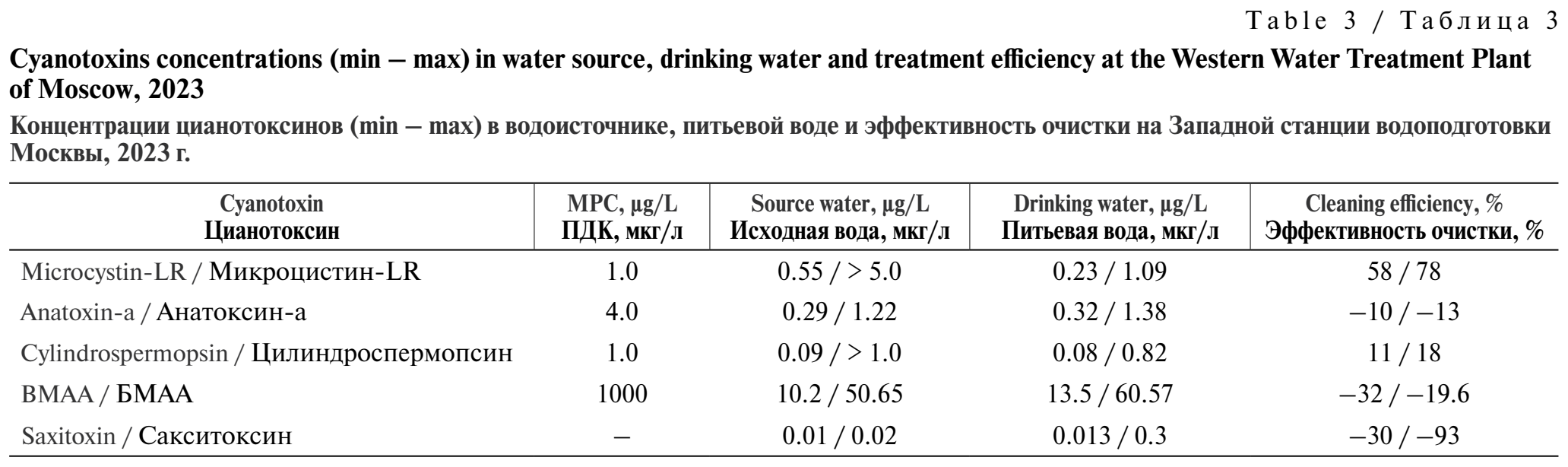
A somewhat different efficiency of water purification from cyanotoxins was recorded in 2023 during the survey of the Western Water Treatment Station in Moscow, where, alongside classical water treatment technologies and ozonation-sorption, ultrafiltration is also used (Table 3). The content of microcystin-LR decreased on average by 58% from the initial pollution level, with purification efficiency increasing to 78% as the concentration decreased. For BMAA, the two-stage ozonation and multi-layer filtration stage showed the highest efficiency – 39.1%. Nevertheless, the BMAA content in the drinking water after passing through the treatment line exceeded its content in the raw water by 1.3 times. In the drinking water, concentrations of anatoxin-a and saxitoxin increased by 13% and 93%, respectively. The efficiency of the aforementioned scheme for cylindrospermopsin removal ranged from 11% to 18%.
Discussion
Thus, the obtained results of monitoring the quantitative and qualitative composition of CB and the most hazardous cyanotoxins (microcystin-LR, anatoxin-a, cylindrospermopsin, BMAA, and saxitoxin) in surface water supply sources located in the main (I, II, and III) climatic zones of the Russian Federation indicate the relevance of the water bloom problem for our country. The presence of cyanotoxins and the insufficient technological efficiency of water treatment pose risks to public health. The identified minor differences in drinking water purification efficiency at water treatment stations with similar technological schemes but differing in the final filtration method (sand filters or ultrafiltration) suggest that the degree of cyanotoxin removal is determined not only by the applied technologies but also by differences in the intensity of filter media fouling, as well as the concentrations of cyanotoxins in the untreated water.
To minimize health risks associated with the presence of toxic cyanobacteria in water used for drinking purposes and for recreational water activities, preventive measures are necessary.
First and foremost, to minimize water source bloom processes, an assessment of factors contributing to the mass growth and development of CB is required. Such an analysis can be based on the following information:
It is necessary to analyze retrospective data on the quantity and species of CB cells or assess their biovolume in the raw water, and consider information on toxins. This can contribute to a better understanding of treatment requirements, potential needs for optimizing treatment plant operations, and the efficiency of cyanotoxin removal.
Signs of water blooms, detectable during visual inspection of water intake sites and recreational areas, include:
Furthermore, it is advisable to consider seasonal changes in treatment technology (reduced filter run times, increased chemical reagent consumption), as well as the presence of similar complaints about water quality, including unpleasant odors.
For an objective assessment of the risks associated with CB and cyanotoxin contamination, ongoing monitoring is required of source water, water in water bodies used for recreation, water at various stages of treatment, and drinking water from centralized cold water supply systems.
Preventive measures should include optimizing existing treatment technologies concerning CB and, primarily, the most hazardous cyanotoxins: microcystin-LR, anatoxin-a, cylindrospermopsin, BMAA, and saxitoxin. This necessitates:
Any changes in treatment methods aimed at reducing toxin concentrations must be adapted to the genus (genera) of CB present and the water quality at the specific site (e.g., pH, temperature, turbidity, presence of natural organic matter).
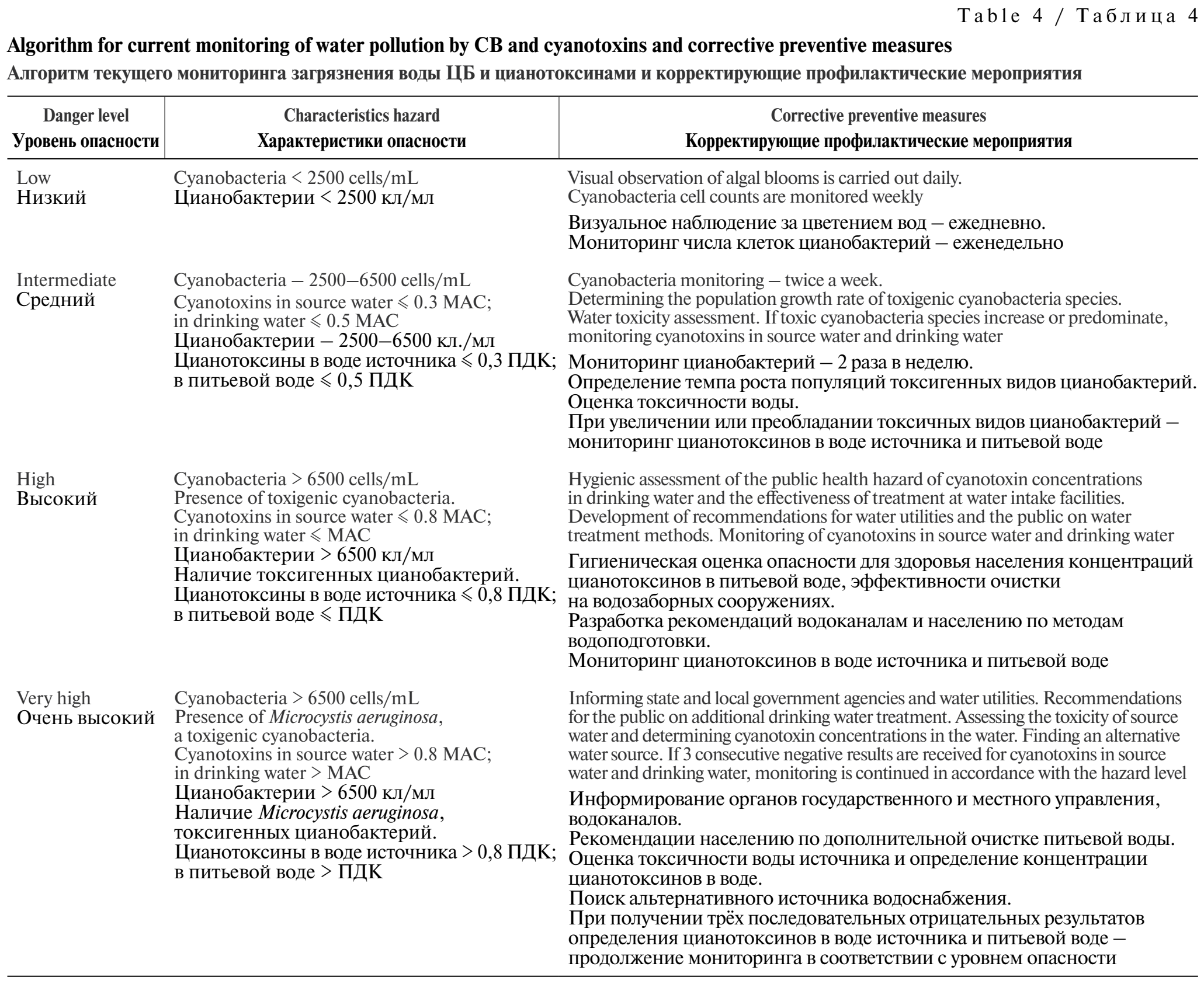
An algorithm for ongoing monitoring of CB and cyanotoxin contamination in water, including health risk assessment and corrective actions, is presented in Table 4.
Conclusion
Surface water sources in the Russian Federation are subject to mass growth and development of cyanobacteria that generate cyanotoxins hazardous to human life and health. This determines the necessity for continuous monitoring of bloom processes, implementation of preventive measures, including those aimed at protecting water sources from nutrient pollution, and improving technological processes of water treatment.
To minimize the health risk associated with the mass development of CB in water bodies used for drinking and recreational purposes, and to ensure a unified approach in monitoring, it is necessary to develop methodological recommendations for controlling contamination by toxic CB species and cyanotoxins in water sources used for drinking water supply, recreational purposes, and in drinking water itself.
¹ Sanitary Rules and Norms 1.2.3685–21 “Hygienic Standards and Requirements for Ensuring the Safety and (or) Harmlessness of Environmental Factors to Humans”.
² METHODOLOGICAL GUIDELINES 4.1.3552–19 “Determination of Microcystin-LR in Water Bodies Used for Domestic Drinking and Recreational Purposes and in Drinking Water by Enzyme-Linked Immunosorbent Assay”.
³ METHODOLOGICAL GUIDELINES 4.1.4055–24 “Quantitative Determination of Anatoxin-a in Drinking and Natural Water by Enzyme-Linked Immunosorbent Assay”.
⁴ METHODOLOGICAL GUIDELINES 4.1.4112–25 “Determination of Cylindrospermopsin in Drinking and Natural Water by Enzyme-Linked Immunosorbent Assay”.
1. Decree of the President of the Russian Federation № 474 «On the National Development Goals of the Russian Federation for the period up to 2030»; 2020.
2. Rakhmanin Yu.A., Onishchenko G.G. Hygienic assessment of drinking water supply of the population of the Russian Federation: problems and the way their rational decision. Gigiena i Sanitaria (Hygiene and Sanitation, Russian journal). 2022; 101(10): 1158–66. https://doi.org/10.47470/0016-9900-2022-101-10-1158-1166 https://elibrary.ru/hkiarc (in Russian)
3. State report «On the state of sanitary and epidemiological welfare of the population in the Russian Federation in 2023». Moscow; 2024. (in Russian)
4. Kuzovlev V.V., Grigorieva I.L., Komissarov A.B., Chekmareva E.A. Content of biogenic elements in water of lakes Pesvo and Udomlya. In: Organic Matter and Biogenic Elements in Inland Waters and Marine Waters: Proceedings of the VI All-Russian Symposium with International Participation [Organicheskoe veshchestvo i biogennye elementy vo vnutrennikh vodoemakh i morskikh vodakh: Trudy VI Vserossiiskogo simpoziuma s mezhdunarodnym uchastiem]. Barnaul; 2017: 120–3. https://elibrary.ru/vvkglz (in Russian)
5. Khamidulina Kh.Kh., Proskurina A.S. About measures to reduce the risk of cyanotoxins exposure to the health of population by regulating phosphates in synthetic detergents. Toksikologicheskii vestnik. 2020; (3): 3–8. https://doi.org/10.36946/0869-7922-2020-3-3-8 https://elibrary.ru/abazuu (in Russian)
6. Kevbrina M.V., Gavrilov D.V., Belov N.A., Agarev A.M. Industrial tests at the Kur’ianovskie wastewater treatment facilities involving the transfer of one primary settling tank into the acidification mode. Vodosnabzhenie i sanitarnaya tekhnika. 2023; (2): 46–52. https://doi.org/10.35776/VST.2023.02.06 https://elibrary.ru/pemsbk (in Russian)
7. Pimenova E.V. Chemical Analysis Methods in Monitoring of Water Bodies [Khimicheskie metody analiza v monitoringe vodnykh ob’’ektov]. Perm’; 2012. https://elibrary.ru/qkkzjj (in Russian)
8. Federal Service for Hydrometeorology and Environmental Monitoring. The first biennial report of the Russian Federation on transparency. Moscow; 2024. (in Russian)
9. Chorus I., Bartram J., eds. Toxic Cyanobacteria in Water: A Guide to Their Public Health Consequences, Monitoring and Management. WHO; 1999.
10. Chonudomkul D., Yongmanitchai W., Theeragool G., Kawachi M., Kasai F., Kaya K., et al. Morphology, genetic diversity, temperature tolerance and toxicity of Cylindrospermopsis raciborskii (Nostocales, Cyanobacteria) strains from Thailand and Japan. FEMS Microbiol. Ecol. 2004; 48(3): 345–55. https://doi.org/10.1016/j.femsec.2004.02.014
11. Shevyrev S.L., Antsiferova G.A., Rusova N.I. Immigration of the alien cyanobacteriae into the basins of middle latitude territories under conditions of high temperature air anomalies. Uspekhi sovremennogo estestvoznaniya. 2018; (11–2): 407–12. https://elibrary.ru/vomrlo (in Russian)
12. Namsaraev Z., Melnikova A., Komova A., Ivanov V., Rudenko A., Ivanov E. Algal bloom occurrence and effects in Russia. Water. 2020; 12(1): 285. https://doi.org/10.3390/w12010285
13. Igwaran A., Kayode A.J., Moloantoa K.M., Khetsha Z.P., Unuofin J.O. Cyanobacteria harmful algae blooms: causes, impacts, and risk management. Water Air Soil Pollut. 2024; 235: 71. https://doi.org/10.1007/s11270-023-06782-y
14. Kravtsova A.V., Khodorovskaya N.I., Deryabina L.V. Complex characteristics of the state of the Shershnevsky reservoir (Russia, Chelyabinsk). Biologicheskie nauki. Nauchnoe obozrenie. 2023; (1): 85–90. (in Russian)
15. Grigor’eva E.V., Ksenofontov B.S. The influence of phytoplankton on water quality. In: Russia in the 21st Century in the Context of Global Challenges: Problems of Risk Management and Ensuring the Safety of Socio-Economic and Socio-Political Systems and Natural and Man-Made Complexes. Collection of Materials of the All-Russian Scientific and Practical Conference. Volume 2 [Rossiya v XXI veke v usloviyakh global’nykh vyzovov: problemy upravleniya riskami i obespecheniya bezopasnosti sotsial’no-ekonomicheskikh i sotsial’no-politicheskikh sistem i prirodno-tekhnogennykh kompleksov. Sbornik materialov Vserossiiskoi nauchno-prakticheskoi konferentsii. Tom 2]. Moscow; 2022: 173–5. https://elibrary.ru/gnxrye (in Russian)
16. Paukov A.G., Teptina A.YU., Kutlina N.A., Shakhmatov A.S., Pavlovskii E.V. Algae: Cyanobacteria, Red, Green and Brown Algae [Vodorosli: tsianobakterii, krasnye, zelenye i kharovye vodorosli]. Ekaterinburg; 2017. https://elibrary.ru/ymiwud (in Russian)
17. Egorova N.A., Kuz N.V., Sinitsyna O.O. Materials for the substantiation of hygienic standard of microcystin-Lr in water of water objects. Gigiena i Sanitaria (Hygiene and Sanitation, Russian journal). 2018; 97(11): 1046–52. https://elibrary.ru/slxzjn (in Russian)
18. Selezneva K.V., Selezneva A.V., Seleznev V.A. Dissolved oxygen deficiency in the conditions of anthropogenic eutrophication of the Kuibyshev reservoir. Vodnoe khozyaistvo Rossii: problemy, tekhnologii, upravlenie. 2022; (4): 38–53. https://doi.org/10.35567/19994508_2022_4_3 https://elibrary.ru/bxldij (in Russian)
19. Selezneva K.V., Selezneva A.V., Seleznev V.A. Seasonal changes in dissolved oxygen in the water of the Kuibyshev reservoir. In: Bairakov I.A., Lushkin I.A., eds. Environmental Management and Sustainable Development of Russian Regions: Collection of Articles of the IV All-Russian Scientific and Practical Conference [Prirodopol’zovanie i ustoichivoe razvitie regionov Rossii: Sbornik statei IV Vserossiiskoi nauchno-prakticheskoi konferentsii]. Penza; 2022: 3–7. https://elibrary.ru/cgxwis (in Russian)
20. Rumyantsev V.A., Kryukov L.N. Water bloom, a threat to environmental safety. Proceedings of the Russian Geographical Society. 2013; 145(2): 1–9. (In Russ.)
21. Kaminsky D.I., Lobanov V.V., Rozhkov K.K., Mazrukho A.B. Evaluation of nutrient media to grow some infection diseases causative agents. Zhurnal mikrobiologii, epidemiologii i immunobiologii. 2017; (2): 104–10. https://doi.org/10.36233/0372-9311-2017-2-104-110 https://elibrary.ru/afkdjo (in Russian)
22. Zinder S.H., Doemel W.N., Brock T.D. Production of volatile sulfur compounds during the decomposition of algal mats. Appl. Environ. Microbiol. 1977; 34(6): 859–60. https://doi.org/10.1128/aem.34.6.859-860.1977
23. Achá D., Guédron S., Amouroux D., Point D., Lazzaro X., Fernandez P.E., et al. Algal bloom exacerbates hydrogen sulfide and methylmercury contamination in the emblematic high-altitude Lake Titicaca. Geosciences. 2018; 8(12): 438. https://doi.org/10.3390/geosciences8120438
24. Neverova-Dziopak E.V., Tsvetkova L.I. Assessment of the Trophic State of Surface Waters [Otsenka troficheskogo sostoyaniya poverkhnostnykh vod]. St. Petersburg; 2020. https://elibrary.ru/koltdw (in Russian)
25. Sorokovikova E.G. Blue-green threat. Science Firsthand. 2010; 6 (36). URL: https://cyberleninka.ru/article/n/sine-zelenaya-ugroza (accessed: 26.01.2026).
26. Skulberg O.M. Taxonomy of Toxic Cyanophyceae (Cyanobacteria). Algal Toxins in Seafood and Drinking Water. London: Academic Press; 1993: 145–64.
27. Gupta K., Soni N., Nema R.K., Sahu N., Srivastava R.K., Ratre P., et al. Microcystin-LR in drinking water: An emerging role of mitochondrial-induced epigenetic modifications and possible mitigation strategies. Toxicol. Rep. 2024; 13: 101745. https://doi.org/10.1016/j.toxrep.2024.101745
28. Voloshko L.N., Plyushch A.V., Titova N.N. Toxins of cyanobacteria (CYANOBACTERIA, CYANOPHYTAS). Al’gologiya. 2008; 18(1): 3–20. (in Russian)
29. Chorus I., Welker M., eds. Toxic cyanobacteria in water: a guide to their public health consequences, monitoring and management. Boca Raton: CRC Press, WHO; 2021. Available at: https://who.int/publications/m/item/toxic-cyanobacteria-in-water---second-edition
30. WHO. Guidelines for drinking-water quality: fourth edition incorporating the first and second addenda; 2022. Available at: https://who.int/publications/i/item/9789240045064
31. Yamada Y., Kuzuyama T., Komatsu M., Shin-ya K., Omura S., Cane D.E., et al. Terpene synthases are widely distributed in bacteria. Proc. Natl Acad. Sci. USA. 2015; 112(3): 857–62. https://doi.org/10.1073/pnas.1422108112
32. Kuz’ N.V. Information technology analysis and content evaluation of geosmin in the water. Informatsionnye i telekommunikatsionnye tekhnologii. 2018; (39): 50–61. https://elibrary.ru/ypeflv (in Russian)
33. Shushkevich E.V., Karpushenko A.V., Polyanin V.O., Stolyarova E.A. Water treatment and water quality management in conditions of phytoplankton development on the example of the Moskvoretsky water source. Vodosnabzhenie i sanitarnaya tekhnika. 2010; (10–1): 13–5. https://elibrary.ru/mvrern (in Russian)
34. Shushkevich E.V., Babaev A.V., Smirnov A.V., Sourayeva N.O., Grigoryev A.S. Improving the water treatment technology at the west water treatment plant. Vodosnabzhenie i sanitarnaya tekhnika. 2011; (10): 7–11. https://elibrary.ru/oiqlyv (in Russian)
35. Turbinsky V.V., Bragina I.V., Kuz N.V., Sinitsyna O.O., Pushkareva M.V. The problem of algal bloom in the source of drinking water supply for the population. Gigiena i Sanitaria (Hygiene and Sanitation, Russian journal). 2024; 103(12): 1466–72. https://doi.org/10.47470/0016-9900-2024-103-12-1466-1472 https://elibrary.ru/fvwkpd (in Russian)
36. Kuz N.V., Turbinskii V.V., Sinitsyna O.O. Toxic “blooming” of the Don River, the water source of Rostov-on-Don. In: Erisman Readings – 2023. New Developments in Preventive Medicine and Ensuring the Sanitary and Epidemiological Well-Being of the Population: Proceedings of the First All-Russian Scientific Congress with International Participation [Erismanovskie chteniya – 2023. Novoe v profilakticheskoi meditsine i obespechenii sanitarno-epidemiologicheskogo blagopoluchiya naseleniya: Materialy I Vserossiiskogo nauchnogo kongressa s mezhdunarodnym uchastiem]. Mytishchi; 2023: 144–6. https://elibrary.ru/aahkfr (in Russian)
37. Kuz N.V. Dynamics of cyanotoxin contamination of the Moscow River water. In: Proceedings of the XIV International Symposium "Human Ecology and Medical and Biological Safety of the Population" [Sbornik materialov XIV mezhdunarodnogo simpoziuma "Ekologiya cheloveka i mediko-biologicheskaya bezopasnost’ naseleniya"]. Krym; 2024: 137–40. (in Russian)
38. Svirčev Z., Lalić D., Bojadžija Savić G., Tokodi N., Drobac Backović D., Chen L., et al. Global geographical and historical overview of cyanotoxin distribution and cyanobacterial poisonings. Arch. Toxicol. 2019; 93(9): 2429–81. https://doi.org/10.1007/s00204-019-02524-4
39. Voloshko L.N., Pinevich A.V. Diversity of the cyanobacterial toxins. Astrakhanskii vestnik ekologicheskogo obrazovaniya. 2014; (1): 68–80. https://elibrary.ru/rxbfsp (in Russian)
40. Spoof L., Vesterkvist P., Lindholm T., Meriluoto J. Screening for cyanobacterial hepatotoxins, microcystins and nodularin in environmental water samples by reversed-phase liquid chromatography-electrospray ionisation mass spectrometry. J. Chromatogr. A. 2003; 1020(1):105-19. https://doi.org/10.1016/s0021-9673(03)00428-x
41. Welten R.D., Meneely J.P., Elliott C.T. A comparative review of the effect of microcystin-LR on the proteome. Expo Health. 2020; 12: 111–23. https://doi.org/10.1007/s12403-019-00303-1
42. Ding W., Shangguan Y., Zhu Y., Sultan Y., Feng Y., Zhang B., et al. Negative impacts of microcystin-LR and glyphosate on zebrafish intestine: Linked with gut microbiota and microRNAs? Environ. Pollut. 2021; 286: 117685. https://doi.org/10.1016/j.envpol.2021.117685
43. Farrer D., Counter M., Hillwig R., Cude C. Health-based cyanotoxin guideline values allow for cyanotoxin-based monitoring and efficient public health response to cyanobacterial blooms. Toxins (Basel). 2015; 7(2): 457–77. https://doi.org/10.3390/toxins7020457
44. Sinitsyna O.O., Turbinskii V.V., Pushkareva M.V., Kuz N.V., Masaltsev G.V., Shiryaeva M.A., et al. Morphofunctional changes in the animal organisms under oral exposure to anatoxin-a in subchronic experimental settings. Toksikologicheskii vestnik. 2024; 32(6): 336–47. https://doi.org/10.47470/0869-7922-2024-32-6-336-347 https://elibrary.ru/jltlsi (in Russian)
45. Pichardo S., Camean A.M., Jos A. In vitro toxicological assessment of cylindrospermopsin: a review. Toxins (Basel). 2017; 9(12): 402. https://doi.org/10.3390/toxins9120402
46. Drinking Water Health Advisory for the Cyanobacterial Toxin Cylindrospermopsin Prepared by: U.S. Environmental Protection Agency Office of Water (4304T) Health and Ecological Criteria Division Washington, DC 20460. EPA Document Number: 820R15101; 2015.
47. Koksharova O.A., Safronova N.A. Non-proteinogenic amino acid β-N-methylamino-L-alanine (BMAA): bioactivity and ecological significance. Toxins. 2022; 14(8): 539. https://doi.org/10.3390/toxins14080539
48. Sidelev S.I., Babanazarova O.V. Detection of cyanobacterial toxins in water supply sources and tap water in some Russian cities: searching producers and testing removal methods. Water Resources. 2020; 47(2): 304–14. https://doi.org/10.1134/S0097807820020189 https://elibrary.ru/bxlumh
49. Kuz N.V., Sinitsyna O.O. The problem of the “flowering” of the water sources. Evaluation of the influence of water processing on the content of cyanobacterium in drinking water of economic drinking water supply of Moscow. Zdorov’e naseleniya i sreda obitaniya – ZNiSO. 2017; (9): 38–42. https://doi.org/10.35627/2219-5238/2017-294-9-38-42 https://elibrary.ru/zjubep (in Russian)
DSc (Medicine), professor, corresponding member of the RAS, deputy director for Research, Federal Scientific Center of Hygiene named after F.F. Erisman, Mytishchi, 141014, Russian Federation
e-mail: sinitsyna.oo@fncg.ru
PhD (Medicine), Head, Municipal Hygiene Department,Center for Hygiene and Epidemiology in Moscow, Moscow, 129626, Russian Federation
e-mail: nadezhda.v.k@gmail.com
DSc (Medicine), professor, chief researcher, Department of water hygiene, Federal Scientific Center of Hygiene named after F.F. Erisman, Mytishchi, 141014, Russian Federation
e-mail: pushkareva.mv@fncg.ru
DSc (Medicine), associate professor, head of the Department of water hygiene, Federal Scientific Center of Hygiene named after F.F. Erisman, Mytishchi, 141014, Russian Federation
e-mail: turbinskii.vv@fncg.ru
Junior researcher, Department of water hygiene, Federal Scientific Center of Hygiene named after F.F. Erisman, Mytishchi, 141014, Russian Federation
e-mail: shiryaeva.ma@fncg.ru
Sinitsyna O.O., Kuz N.V., Pushkareva M.V., Turbinsky V.V., Shiryaeva M.A. Cyanobacteria and cyanotoxins in water sources – a threat to public water safety. Hygiene and Sanitation. 2026;105(1):15-24. https://doi.org/10.47470/0016-9900-2026-105-1-15-24. EDN: csfscc
Мы в ВК:

 Email this article (Login required)
Email the author (Login required)
Email this article (Login required)
Email the author (Login required) 141014, The Moscow region, Mytishchi, 2, Semashko street
Federal Scientific Center of Hygiene named after F.F. Erisman
Phone: +7 916 885 28 02
e-mail: gigsan@list.ru