Contents
Scroll to:
 Daria O. Stefanovich,
Liliya A. Alikbaeva,
Sofia A. Filatova,
Irek Sh. Yakubova,
Otari G. Khurtsilava
Daria O. Stefanovich,
Liliya A. Alikbaeva,
Sofia A. Filatova,
Irek Sh. Yakubova,
Otari G. Khurtsilava https://doi.org/10.47470/0016-9900-2026-105-2-140-148
EDN: obdzpj
Scroll to:
Introduction. The priority pollutants used to assess the quality of atmospheric air in urbanized areas are particulate matter (PM) with aerodynamic diameters of 10 microns (PM10) and 2.5 microns (PM2.5). The anthropogenic emissions of these particulates have a significant adverse impact on both adults’ and children’s health. The main sources of these fine particulate emissions include the operation of internal combustion engines, combustion of solid organic fuels, industrial activities, and the wear and tear of road surfaces due to vehicular traffic, as well as abrasion from brake pads and tires.
Materials and Methods. The concentration of suspended particulate matter (PM10 and PM2.5) in atmospheric air was assessed on the base of average daily measurements obtained from stationary air quality monitoring stations in Arkhangelsk, Krasnodar, Krasnoyarsk, and St. Petersburg.
Results. St. Petersburg and Krasnodar are characterized by spring-summer peaks in concentrations of PM10 and PM2.5 particulate matter due to secondary dust formation processes associated with snow melting and stable positive temperatures, as well as the intensity of automobile traffic. Conversely, in Krasnoyarsk and Arkhangelsk, maximum levels of atmospheric pollution from suspended particles are observed in winter due to the significant use of solid fuels for heating and favorable weather conditions for dispersion. Based on the established relationship between the level of air pollution from particulate matter and regional climatic conditions, as well as priority emission sources, a series of preventive measures to reduce the concentrations of these pollutants have been justified. The main principle is to implement these measures prior to the onset of seasonal peaks in PM10 and PM2.5 concentrations in the atmosphere.
Limitations. The study has limitations due to its low statistical power, which is a result of an insufficient sample size collected for the autumn season in Krasnodar.
Conclusion. The distribution dynamics of PM10 and PM2.5 particle concentrations in the atmospheric air in the cities of Arkhangelsk, Krasnodar, Krasnoyarsk, and St. Petersburg exhibits a pronounced seasonal dependence determined by a combination of factors. Among these factors, climatic conditions in the region, operational characteristics of the road and motor vehicle sectors, and specific features of the heating supply system play a key role. To minimize the risk of particulate matter affecting public health during warmer months, it is necessary to take measures to reduce car traffic intensity. In areas that use solid fuels for heating, the priority must be given to the technical modernization of thermal power plants, the introduction of highly effective gas purification methods, the development and implementation of best available technologies, as well as considering the possibility of switching to alternative fuels, especially natural gas.
Compliance with ethical standards. The study does not require submission of the Biomedical ethics committee or other documents.
Contributions:
Stefanovich D.O., Filatova S.A. ‒ data collection, literature review, statistical analysis, data visualization preparation, analysis and interpretation of the results, drafting of the manuscript;
Alikbaeva L.A., Yakubova I.Sh., Khurtsilava O.G. ‒ development of the research concept and design, resource provision, interpretation of the results.
All authors are responsible for the integrity of all parts of the manuscript and approval of the manuscript final version.
Conflict of interest. The authors declare no conflict of interest.
Funding. The research was supported by a nominal grant from Professor E.E. Eichwald of the North-Western State Medical University named after I.I. Mechnikov (2024) and a Grant from the Government of St. Petersburg (2025).
Received: October 29, 2025 / Revised: February 20, 2026 / Accepted: February 24, 2026 / Published: March 13, 2026
Stefanovich D.O., Alikbaeva L.A., Filatova S.A., Yakubova I.Sh., Khurtsilava O.G. Hygienic assessment of the factors determining the content of suspended particles in the atmospheric air of cities. Hygiene and Sanitation. 2026;105(2):140-148. https://doi.org/10.47470/0016-9900-2026-105-2-140-148. EDN: obdzpj
Introduction
Recent studies show that residents of large cities inhale more than 10 billion fine particulate matter particles every day. The priority pollutants used to assess atmospheric air quality (AAQ) in urban areas include particulate matter (PM)10 and PM2.5¹. The main sources of PM include the operation of internal combustion engines, the combustion of solid organic fuels, industrial activities, as well as road surface erosion caused by vehicle traffic and the wear of brake pads and tyres [1–4]. The work of many domestic [5–8] and international [9–11] researchers is devoted to studying the impact of PM2.5 on public health. For instance, the publication by Zhu C. et al. (2021) describes in detail the main mechanisms of action of PM2.5 and PM10: oxidative stress, lipid peroxidation, pulmonary and systemic inflammation, increased blood pressure, vasomotor dysfunction and inflammation in the central nervous system [10].
Epidemiological and clinical studies have confirmed that high levels of PM10 and PM2.5 from anthropogenic sources in the city have a significant adverse effect on both the adult and pediatric populations, increasing the risk of cardiovascular disease, respiratory diseases and the development of allergies [9–14]. The literature indicates that short-term exposure to high concentrations of PM10 is associated with an increased risk of myocardial infarction, arrhythmia, hypertension and sudden cardiac death [15, 16]. Currently, the combination of air pollution and PM is classified by the IARC as Group 1 in the list of carcinogenic factors [17]. According to estimates from the ‘Global Burden of Disease’ project by the Institute for Health Metrics and Evaluation (IHME), air pollution from fine particulate matter causes more than 4 million premature deaths per year worldwide [18, 19]. Circulatory system diseases account for 93% of this mortality, whilst malignant neoplasms of the trachea, bronchi and lungs account for 7%. In this regard, the development and justification of measures to reduce PM particle concentrations in the atmospheric air of populated areas are particularly relevant.
The aim of the study was to conduct a hygienic assessment of the factors influencing the concentration of PM10 and PM2.5 in the atmospheric air of cities in the Russian Federation (Arkhangelsk, Krasnodar, Krasnoyarsk, St Petersburg) and to justify a set of preventive measures aimed at reducing the spread of these particles.
Materials and methods
A hygiene assessment of the concentrations of PM10 and PM2.5 particles in atmospheric air was carried out in cities located in various climatic regions of the Russian Federation in accordance with the climate zoning scheme²: in Krasnoyarsk (Climatic Zone I) – based on data from 77 automatic stations of the atmospheric air monitoring system; in Arkhangelsk (climatic zone IIA) – based on data from a fixed air pollution monitoring station; in St Petersburg (Climate Zone IIB) – based on data from 20 automatic air pollution monitoring stations; in Krasnodar (Climate Zone III) – based on data from four Sanitary Rules (SPs). Weather and climate conditions were assessed using data from the ‘Weather and Climate’ and ‘Gismeteo’ reference and information portals, obtained from meteorological stations in Arkhangelsk, Krasnodar, Krasnoyarsk and St Petersburg for the period from 2012 to 2023.
Air quality was assessed based on average daily concentrations of PM. To determine the dynamics of PM particle concentrations throughout the year, their average monthly and average seasonal concentrations were calculated. The data obtained (in mg/m³, µg/m³) were compared with the maximum permissible concentrations (MPCs) established by SanPiN 1.2.3685–21 ‘Hygienic standards and requirements for ensuring the safety and/or harmlessness to humans of environmental factors’.
The database (containing over 160,000 data points) was created using Microsoft Excel. The results were analyzed using parametric statistical methods: calculation of means and measures of variability (M ± σ) and confidence intervals, regression analysis (linear regression equation, least squares method) using Microsoft Excel. The distribution of indicators in the sample populations is close to a normal distribution (Kolmogorov–Smirnov and Shapiro–Wilk tests); comparisons were performed using Student’s two-sample t-test. The critical significance level (p) was set at 0.05 for all statistical comparisons.
Results
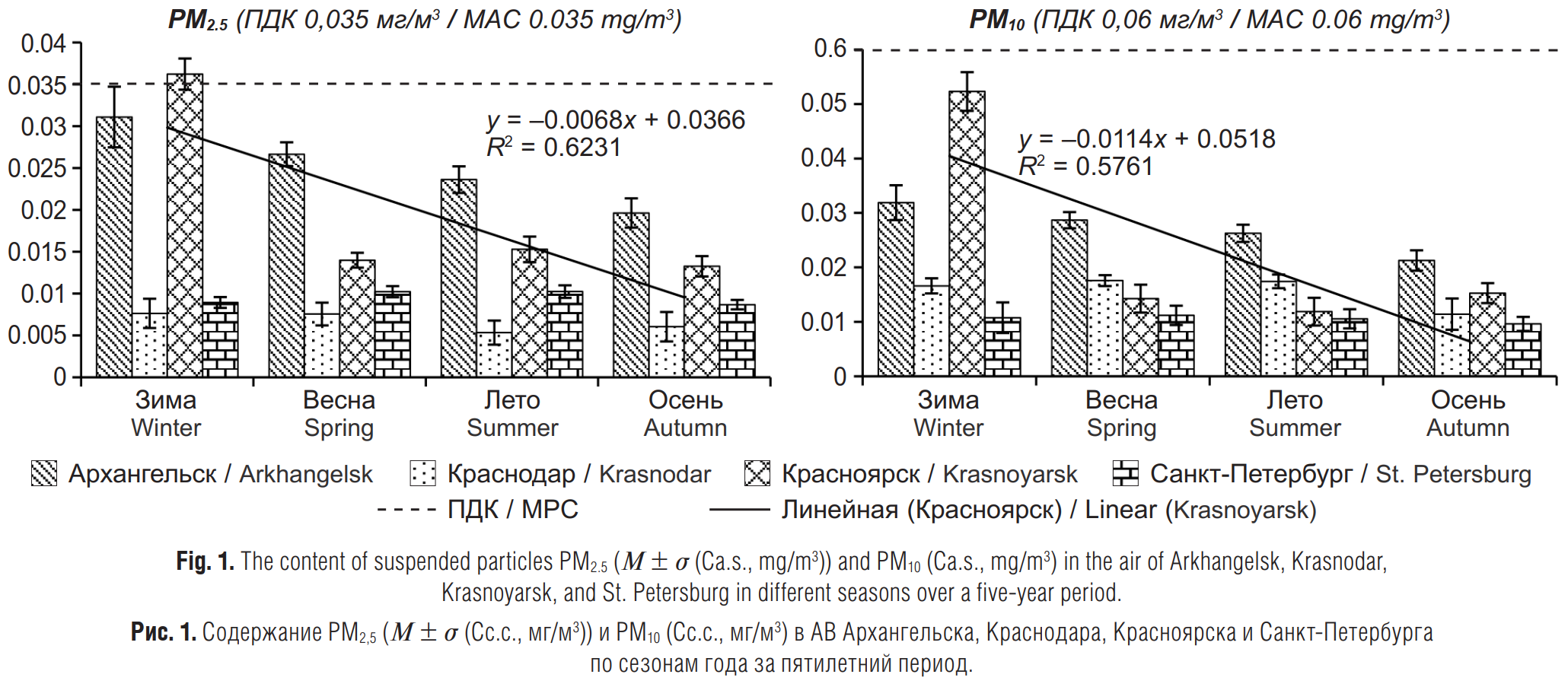
A hygienic assessment of the concentrations of PM10 and PM2.5 in the air of Arkhangelsk, Krasnodar and St Petersburg over a five-year observation period revealed no exceedances of hygiene standards, whereas in Krasnoyarsk systematic exceedances of the daily average MPCs for PM2.5 were recorded during the winter season throughout the entire observation period (Fig. 1).
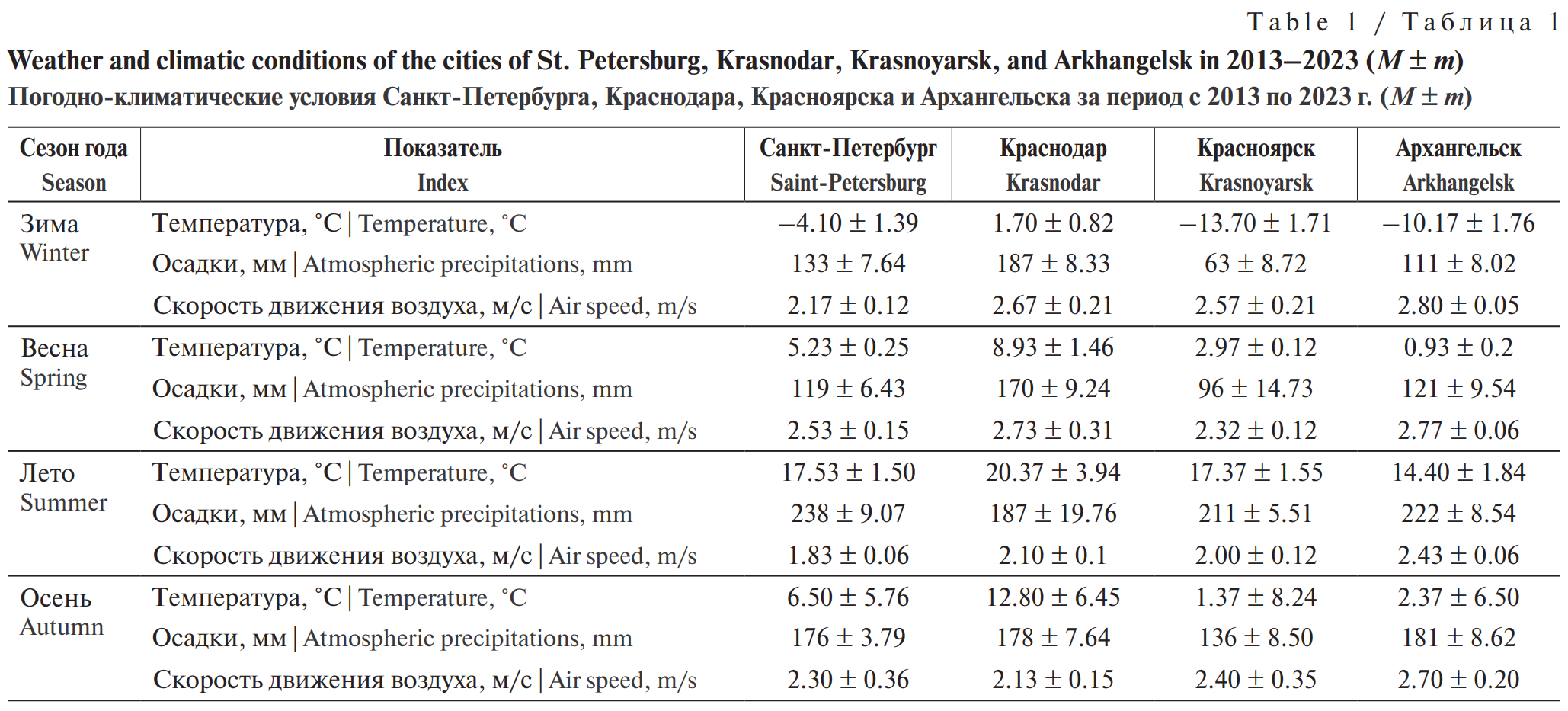
Indicators characterizing the weather and climatic conditions of the cities under study are presented in Table 1.
An assessment of the distribution of average seasonal PM concentrations in the atmospheric air of St Petersburg over a 7-year period (2017–2023) showed an increase in particle levels in spring and summer (Fig. 2). These changes may be due to the weather and climatic conditions of the region.

In winter, pollutants entering the atmosphere as a result of road transport operations, industrial emissions, and the prolonged use of insoluble de-icing materials accumulate in the snow cover. During the snowmelt period, which in St Petersburg, according to long-term observations, occurs in late March to early April, fine particulate matter (PM) settles on the roadside verges. However, as temperatures rise above freezing and winds strengthen, it becomes resuspended, and subsequently migrates into the surface layer of the atmosphere, leading to a seasonal peak in PM10 and PM2.5 in the atmospheric boundary layer in spring.
Data from the COVID-19 pandemic period confirm the significant contribution of road traffic as one of the primary sources of fine particulate matter: in the April and May of 2020, a sharp decrease in PM10 (in April – 0.00689 ± 0.000428 mg/m³); in May – 0,00714 ± 0.000436 mg/m³; in May – 0.00565 ± 0.00412 mg/m³ period, the volume of urban) and PM2.5 (in April – 0.00516 ± 0.00184 mg/m³), attributable to restrictive measures. During road traffic decreased significantly. In June, following the easing of restrictions, the concentration of particulate matter in atmospheric air increased significantly (PM10 – 0.0162 ± 0.00869 mg/m³; PM2.5 – 0.1094 ± 0.0068 mg/m³) (Fig. 3).

In 2021 and 2022, the average seasonal concentration of PM in the atmospheric air was higher in summer than in spring. The average monthly concentration of PM10 in June 2021 was 0.0162 ± 0.0006 mg/m³: the highest for the entire five-year study period. An analysis of weather and climate conditions showed that the average air temperature in June 2021 (21.4 ±0.78 °C, with the climatic normal of 16.5 °C) was the highest for the corresponding study periods. In 2022, the highest monthly average concentrations of PM10 and PM2.5 were recorded in August: 0.014098 ± 0.009 mg/m³ and 0.011189 ± 0.006 mg/m³ respectively. The results of the study showed that the average air temperature in August 2022 significantly exceeded the long-term average: 20.6 ± 1.04 °C, as compared to the climatic normal of 17.5 °C. This explains the differences in the concentration of particulate matter in the atmospheric air (Fig. 4).

The regression equation shows a moderate positive correlation (y = 624.79x + 14.313; r = 0.47) between the PM concentration in the atmospheric air of St Petersburg and the average air temperature (Fig. 5).

A similar seasonal pattern (increased PM concentrations in spring and summer) has been observed in Krasnodar, where spring brings minimal precipitation and high wind speeds, which facilitate dust transport, whilst summer brings high average daily temperatures. The increase in PM10 and PM2.5 concentrations in Krasnodar begins in mid-March, with a peak in exceedances of the average daily MPC in April–May and a decline in September; the average seasonal differences are statistically significant (p < 0.05) (Table 1; Fig. 6).

In contrast to St Petersburg and Krasnodar, an analysis of the trends in fine particulate matter (PM) concentrations in the Krasnoyarsk region (2018–2023 for PM10 and 2019–2023 for PM2.5) and Arkhangelsk revealed a trend towards an increase in particle concentrations during the winter period, which may be due to the similarity of factors influencing the migration of PM10 and PM2,5 in the air basin, including the characteristics of heating systems and climatic conditions. In winter, Krasnoyarsk and Arkhangelsk experience maximum wind speeds and minimum precipitation, which facilitates the migration of PM10 and PM2.5 from sources, including facilities in the fuel and energy sector. In summer, however, wind speeds are at their lowest and precipitation totals are at their highest (see Table 1; Figs. 7, 8).


The most significant anthropogenic factor determining the seasonal increase in PM concentrations in the atmospheric air is the operation of heat supply facilities. The gasification of our country’s regions remains a priority for the development of the domestic gas market. Currently, 78 constituent entities of the Russian Federation have been connected to the natural gas network, including Krasnodar and St Petersburg, where only natural gas is used in thermal power plants (TPPs) and boiler houses. In Krasnoyarsk, the main fuel for three TPPs and 35 boiler houses is low-calorific brown coal with a high ash content; over 1 million residents are exposed to emissions from these boiler houses [20]. In Arkhangelsk, heat supply is provided by a single TPP running on natural gas and 42 boiler houses, 31 of which use hard coal as their primary fuel. The main components of emissions from fuel and energy facilities are particulate matter, predominantly consisting of fine respirable fractions.
According to retrospective data, the heating season in Krasnoyarsk and Arkhangelsk begins in mid-September, and the peak load on the heat supply system, coinciding with the period of minimum average daily temperatures, occurs in mid- January. This period corresponds to the seasonal peak of PM pollution in Krasnoyarsk and Arkhangelsk.
To assess the contribution of heat supply facilities to atmospheric air pollution, a retrospective analysis was conducted of particulate matter emissions resulting from fuel combustion in the four cities under study, which differ in terms of the type of fuel used (Table 2). The analysis covers the period 2019–2023 based on data from Federal Statistical Observation Form No. 2-TP (Waste) (Rosstat Order No. 614 of 6 November 2025 ‘On the Approval of Federal Statistical Observation Form No. 2-TP (Waste) ‘Information on the generation, treatment, disposal, neutralization and placement of production and consumption waste’ and instructions for its completion’).
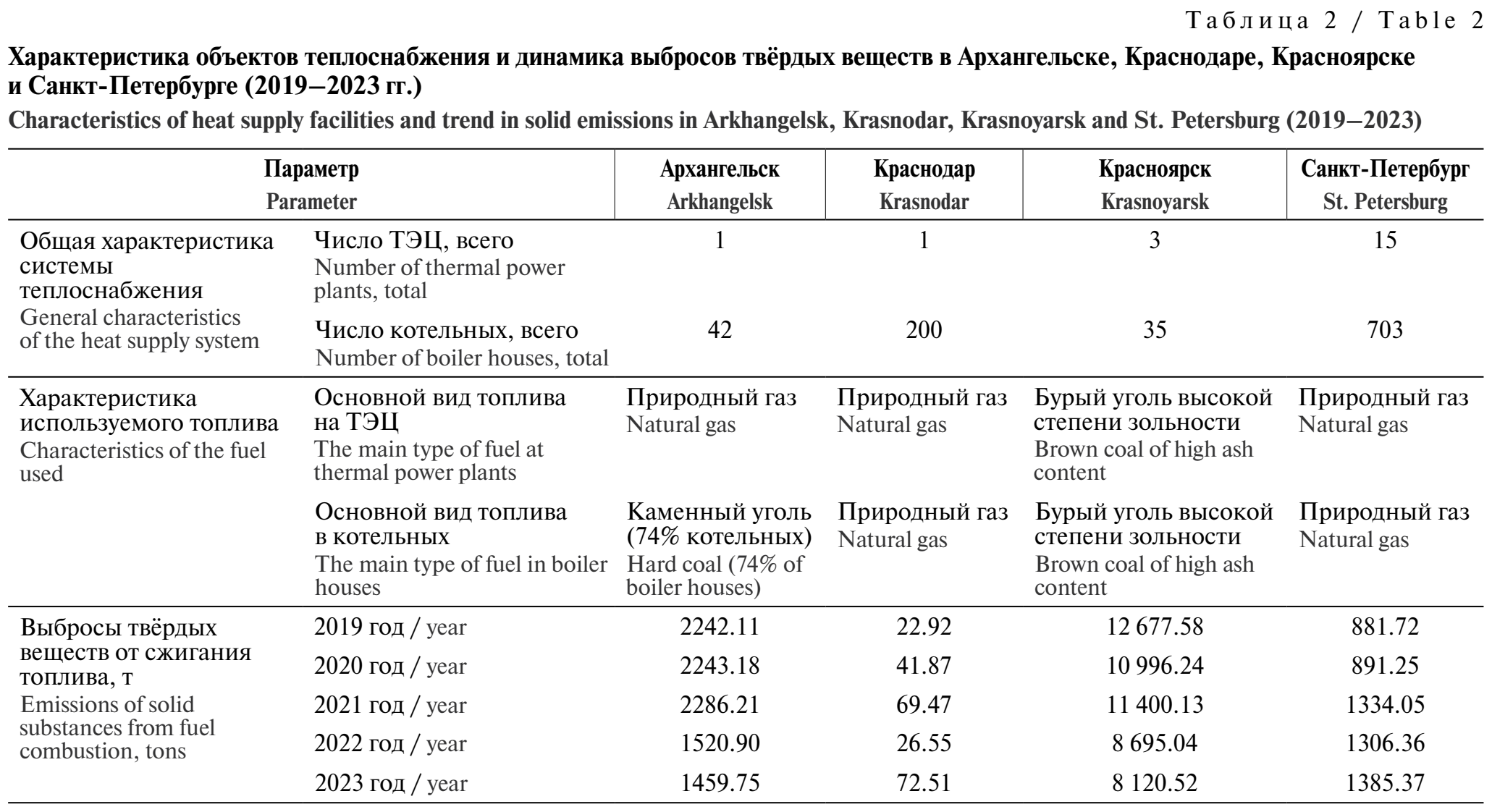
Krasnoyarsk, with the highest emissions of particulate matter, has shown a clear downward trend in the volume of particulate matter emissions into the atmosphere from fuel combustion over the reviewed five-year period, as well as in the average annual concentrations of PM10 and PM2.5. Total particulate matter emissions fell from 12,677.6 tons in 2019 to 8,120.5 tons in 2023: a relative decrease of 35.9%. In this context, a decrease in the average annual concentrations of PM10 was observed from 0.0322 to 0.0209 mg/m³, i.e. by 35.1%. A decrease in the concentration of the PM2.5 fraction was also noted: from 0.0196 mg/m³ in 2019 to 0.0182 mg/m³ in 2023. The smaller reduction in PM2.5 concentrations may indicate specific characteristics of the thermal power plant (TPP) emissions, namely the predominance of PM10 (Fig. 9).

Effective measures aimed at reducing the concentration of fine particulate matter (PM) in the air of urban areas include the timely cleaning of urban roads. An analysis of the periods for cleaning operations in Krasnoyarsk and Arkhangelsk shows similarities with the regulations adopted in St Petersburg: the summer season runs from 16 of April to 15 of October, and the winter season from 16 of October to 15 of April. In Arkhangelsk, these periods are shifted: 22 of April to 19 of October is the summer season, and 20 of October to 21 of April is the winter season. At the same time, air quality monitoring in these cities has revealed a consistent trend of a significant increase in PM concentrations that started from October in Arkhangelsk and from November in Krasnoyarsk. This trend indicates the need to amend the regulations governing winter road maintenance activities in order to reduce PM concentrations from various sources.
Discussion
An analysis of the long-term trends in the seasonal distribution of PM10 and PM2.5 concentrations in the air of urbanized areas revealed that pollution levels depend on regional climatic conditions and primary emission sources. Based on the established patterns, a set of preventive measures aimed at reducing the concentrations of the pollutants under study has been justified.
The key aspect of the proposed measures is a differentiated approach to regulating the timing of road maintenance works. For St Petersburg, where an increase in fine particulate matter (PM) levels is recorded from mid-March due to secondary dust formation during snowmelt, an adjustment to the technical regulations is proposed: bringing forward the start of the summer road maintenance period from 16 of April to 16 of March. For Krasnodar, where the relevant timeframes are not regulated, the period for summer cleaning of roads and adjacent areas has been set from 1 of March to 10 of October, which corresponds to the identified seasonal fluctuations in PM10 and PM2,5 concentrations.
It should be noted that during the warmer months, there are no statistically significant differences in PM concentrations in the atmospheric air of St Petersburg, Krasnodar, Krasnoyarsk and Arkhangelsk. This indicates the universality of the sources of PM10 pollution and confirms the need to implement a unified set of preventive measures during the warmer months for all the cities studied. Such measures include urban planning and transport solutions aimed at reducing traffic intensity (for example, in St Petersburg during summer, the expansion of pedestrian-accessible zones in the historic part of the city), as well as the greening of roadside areas to act as a dust barrier (the creation of a multi-tiered structure of shrubby undergrowth at a distance of 70 cm from the carriageway, with plant heights ranging from 70 cm to 1.5 m, etc.) [21, 22].
Unlike universal measures for the warm season, the approach to reducing winter concentrations requires consideration of the regional specifics of emission sources. In cities where gas fuel predominates in the heating system (99.7% in St Petersburg and Krasnodar), the peak in PM10 and PM2.5 pollution occurs during the warmer months. At the same time, in cities with a long heating season and the use of solid fuel (Krasnoyarsk, Arkhangelsk), winter peaks in PM10 and PM2.5 concentrations have been recorded, caused by the combined effect of emissions from thermal power plants and meteorological conditions unfavourable for dispersion.
To reduce winter peaks in PM10 and PM2.5 concentrations in Krasnoyarsk and Arkhangelsk, it is necessary to amend the relevant road maintenance regulations (‘Rules for the Improvement of the Territory of the City of Krasnoyarsk’, ‘Technical Regulations for the Maintenance of Local Public Roads in the City of Arkhangelsk’). It is advisable to commence dust suppression measures using non-friction, liquid de- icing materials with binding properties in November for Krasnoyarsk and October for Arkhangelsk, which correspond to the onset of a sustained increase in the level of PM10 and PM2.5. Particular attention should be paid to the use, during the cold season, of chloride-based dust-suppressing liquids, which prevent the formation of black ice and reduce the salinity of the road surface.
The most challenging task is to reduce emissions from stationary sources in the thermal power sector. Even the modernization of flue gas cleaning equipment in 2021 at Krasnoyarsk TPP-1 as part of the federal ‘Clean Air’ project (replacement of cyclone dust collectors with electrostatic precipitators) did not result in full compliance with health and hygiene standards for PM10 and PM2.5 in the air. This indicates the need to implement additional measures, such as pre-enrichment of coal to reduce ash content, the use of chemical additives for the coagulation of fine particles and, in the long term, a transition to more environmentally friendly fuels (natural gas) [23, 24].
Thus, the development of preventive measures requires a comprehensive approach that takes into account the specific nature of pollution sources and the climatic characteristics of each region. The key principle is the preventive implementation of measures – before the seasonal peak in PM10 and PM2.5 concentrations in the atmosphere.
Conclusion
The studies conducted have established that the dynamics of PM10 and PM2.5 concentrations in the air of Arkhangelsk, Krasnodar, Krasnoyarsk and St Petersburg exhibits pronounced seasonality, determined by a complex of factors, the key ones being the region’s climatic conditions, the operational characteristics of the diesel-fired heating plants and the specific features of the heat supply system.
It has been established that St Petersburg and Krasnodar are characterized by a spring-summer peak in PM concentrations, associated with secondary dust formation (salting) during the snowmelt period and sustained above-zero temperatures, as well as road traffic. In Krasnoyarsk and Arkhangelsk, the maximum levels of PM particulate matter pollution are recorded during the winter period, which is due to the significant proportion of district heating in the heat supply system and meteorological conditions favourable for dispersion.
To minimize the risk of PM exposure to the urban population during the warmer months, measures are required to reduce traffic intensity and to implement appropriate greening of roadside areas. In regions relying on TPPs for heat supply, the priorities are the technical modernization of heat and power facilities, the introduction of highly efficient gas cleaning methods, the development and application of the best available technologies, and the transition to alternative fuels, including natural gas.
The effectiveness of the set of preventive measures aimed at reducing air pollution in the cities under study can be enhanced by optimizing and carrying out preventive road-cleaning operations before seasonal peaks in particulate matter concentrations occur. It is advisable to amend existing road maintenance regulations to include provisions for dust suppression measures, including the use of dust- suppressing agents, as well as the use of liquid de-icing materials to prevent ice formation during periods when temperatures fluctuate around 0 °C and at sub-zero temperatures, which will help reduce the contribution of salting to overall road pollution.
¹ Letter No. 11/109-111 from the Department of State Sanitary and Epidemiological Surveillance of the Ministry of Health of the Russian Federation ‘On the list of priority substances present in the environment and their impact on public health’; 1997.
² Sanitary Rules SP 131.13330.2025. Code of Regulations. Building Climatology. Sanitary Norms and Rules SNiP 23–01–99 (approved and brought into force by Order of the Ministry of Construction of Russia No. 470/pr dated 8 August 2025).
1. Alikbaeva L.A., Kolodiy S.P., Bek A.V. Hygienic evaluation of the class hazard of discharges from road-vehicles complex. Gigiena i Sanitaria (Hygiene and Sanitation, Russian journal). 2017; 96(8): 711–6. https://elibrary.ru/zgcszx (in Russian)
2. Alikbaeva L.A., Kolodiy S.P., Stashkova D.O., Iakubova I.Sh., Krutikova N.N., Moshchev A.N., Ryzhkov A.L. Evaluation of the content of suspended substances РM10 and РM2.5 in the atmospheric air of Saint Petersburg. Profilakticheskaya i klinicheskaya meditsina. 2022; (4): 5–12. https://doi.org/10.47843/2074-9120_2022_4_5 https://elibrary.ru/dbgftf (in Russian)
3. Kopytenkova O.I., Levanchuk A.V., Yeremin G.B. Hygienic characteristics of the atmospheric air in the area of intensive use of the road-car complex. Gigiena i Sanitaria (Hygiene and Sanitation, Russian journal). 2019; 98(6): 373–80. https://elibrary.ru/cspjzy (in Russian)
4. Levanchuk A.V. Environmental pollution by products of wear and tear automobile-road complex. Gigiena i Sanitaria (Hygiene and Sanitation, Russian journal). 2014; 93(6): 17–21. https://elibrary.ru/tfantx (in Russian)
5. Kolpakova A.F., Sharipov R.N., Volkova O.A., Kolpakov F.A. Role of air pollution by particulate matter in the pathogenesis of cardiovascular diseases. prevention measures. Kardiovaskulyarnaya terapiya i profilaktika. 2020; 19(3): 71–7. https://doi.org/10.15829/1728-8800-2020-2421 https://elibrary.ru/wjguvk (in Russian)
6. Kolpakova A.F. On the relationship of anthropogenic air pollution by particulate matter with cancer risk. Gigiena i Sanitaria (Hygiene and Sanitation, Russian journal). 2020; 99(3): 298–302. https://elibrary.ru/hbbtwu (in Russian)
7. Nakhratova O.V., Tsygankova D.P., Bazdyrev E.D. Impact of air pollution with particulate particles on the risk of cardiovascular diseases (review). Ekologiya cheloveka. 2022; (8): 531–46. https://doi.org/10.17816/humeco104609 https://elibrary.ru/osafti (in Russian)
8. Fatkhutdinova L.M., Tafeeva E.A., Timerbulatova G.A., Zalyalov R.R. Health risks of air pollution with fine particulate matter. Kazanskii meditsinskii zhurnal. 2021; 102(6): 862–76. https://doi.org/10.17816/KMJ2021-862 https://elibrary.ru/jftzqz (in Russian)
9. Choi J.H., Kim J.S., Kim Y.C., Kim Y.S., Chung N.H., Cho M.H. Comparative study of PM2.5- and PM10-induced oxidative stress in rat lung epithelial cells. J. Vet. Sci. 2004; 5(1): 11–8.
10. Zhu C., Maharajan K., Liu K., Zhang Y. Role of atmospheric particulate matter exposure in COVID-19 and other health risks in human: A review. Environ. Res. 2021; 198: 111281. https://doi.org/10.1016/j.envres.2021.111281
11. Zoran M.A., Savastru R.S., Savastru D.M., Tautan M.N. Assessing the relationship between surface levels of PM2.5 and PM10 particulate matter impact on COVID-19 in Milan, Italy. Sci. Total Environ. 2020; 738: 139825. https://doi.org/10.1016/j.scitotenv.2020.139825
12. Bontinck A., Maes T., Joos G. Asthma and air pollution: recent insights in pathogenesis and clinical implications. Curr. Opin. Pulm. Med. 2020; 26(1): 10–9. https://doi.org/10.1097/mcp.0000000000000644
13. Takizawa H. Impacts of particulate air pollution on asthma: Current understanding and future perspectives. Recent Pat. Inflamm. Allergy Drug Discov. 2015; 9(2): 128–35. https://doi.org/10.2174/1872213x09666150623110714
14. Schultz A.A., Schauer J.J., Malecki K.M. Allergic disease associations with regional and localized estimates of air pollution. Environ. Res. 2017; 155: 77–85. https://doi.org/10.1016/j.envres.2017.01.039
15. Chen K., Schneider A., Cyrys J., Wolf K., Meisinger C., Heier M., et al. Hourly exposure to ultrafine particle metrics and the onset of myocardial infarction in Augsburg, Germany. Environ. Health Perspect. 2020; 128(1): 17003. https://doi.org/10.1289/ehp5478
16. Cesaroni G., Forastiere F., Stafoggia M., Andersen Z.J., Badaloni C., Beelen R., et al. Long-term exposure to ambient air pollution and incidence of acute coronary events prospective cohort study and meta-analysis in 11 European cohorts from the ESCAPE Project. BMJ. 2014; 348: f7412. https://doi.org/10.1136/bmj.f7412
17. IARC. Outdoor air pollution. IARC monographs on the evaluation of carcinogenic risks to humans. Volume 109; 2016. Available at: https://publications.iarc.who.int/Book-And-Report-Series/Iarc-Monographs-On-The-Identification-Of-Carcinogenic-Hazards-To-Humans/Outdoor-Air-Pollution-2015
18. Emission Impossible. A special report on global exposure to air pollution and its health impacts, with a focus on children’s health. Health Effects Institute: The State of Global Air; 2024. Available at: https://emissionimpossible.co.nz/news-archive/hei-stateofglobalair-2024
19. Rojas M.R., Vachon J., Laouan Sidi E.A., Blais C., Liu Y., Smargiassi A., et al. Long-term exposure to ambient PM2.5 and mortality: A comparison of between-subjects and within-subjects survival analysis. Environ. Epidemiol. 2025; 9(2): e378. https://doi.org/10.1097/ee9.0000000000000378
20. Andrishunas A.M., Kleyn S.V., Goryaev D.V., Balashov S.Yu., Zagorodnov S.Yu. Hygienic assessment of air protection activities at heat-and-power engineering enterprises. Gigiena i Sanitaria (Hygiene and Sanitation, Russian journal). 2022; 101(11): 1290–8. https://doi.org/10.47470/0016-9900-2022-101-11-1290-1298 https://elibrary.ru/nvnitk (in Russian)
21. Revich B.A. Urban planning and public health: analytical review. Health Risk Analysis. 2022; (1): 147–61. https://doi.org/10.21668/health.risk/2022.1.17.eng https://elibrary.ru/duongk
22. Revich B.A. Тhe significance of green spaces for protecting health of urban population. Health Risk Analysis. 2023; (2): 168–85. https://doi.org/10.21668/health.risk/2023.2.17.eng https://elibrary.ru/qnghci
23. Zaitseva N.V., May I.V. Ambient air quality and health risks as objective indicators to estimate effectiveness of air protection in cities included into the «Clean air» federal project. Health Risk Analysis. 2023; (1): 4–12. https://doi.org/10.21668/health.risk/2023.1.01.eng https://elibrary.ru/daavxq
24. Zaitseva N.V., Klein S.V., Andrishunas A.M., Balashov S.Yu., Chigvintsev V.M. Hygienic assessment of the impact of off-grid heat sources on ambient air quality and the formation of public health risks. Siberian Journal of Life Sciences and Agriculture. 2023; 15(6): 308–27. https://doi.org/10.12731/2658-6649-2023-15-6-991 https://elibrary.ru/gknyjt (in Russian)
PhD student (year 2), assistant, head, Laboratory of general and military hygiene, North-Western State Medical University named after I.I. Mechnikov, Saint Petersburg, 191015, Russian Federation
e-mail: Daria.Stefanovich@szgmu.ru
DSc (Medicine), professor, head, Department of general and military hygiene, North-Western State Medical University named after I.I. Mechnikov, Saint Petersburg, 191015, Russian Federation
e-mail: Liliya.Alikbaeva@szgmu.ru
Student (year 6), Institute of Preventive Medicine, North-Western State Medical University named after I.I. Mechnikov, Saint Petersburg, 191015, Russian Federation
e-mail: Sofia.Filatova@szgmu.ru
DSc (Medicine), professor, professor, Department of preventive medicine and health protection, North-Western State Medical University named after I.I. Mechnikov, Saint Petersburg, 191015, Russian Federation
e-mail: Irek.Yakubova@szgmu.ru
DSc (Medicine), professor, President of the North-Western State Medical University named after I.I. Mechnikov, Saint Petersburg, 191015, Russian Federation, Professor of the Department of public health, economics and health management
e-mail: rektorat@szgmu.ru
Stefanovich D.O., Alikbaeva L.A., Filatova S.A., Yakubova I.Sh., Khurtsilava O.G. Hygienic assessment of the factors determining the content of suspended particles in the atmospheric air of cities. Hygiene and Sanitation. 2026;105(2):140-148. https://doi.org/10.47470/0016-9900-2026-105-2-140-148. EDN: obdzpj
Мы в ВК:

 Email this article (Login required)
Email the author (Login required)
Email this article (Login required)
Email the author (Login required) 141014, The Moscow region, Mytishchi, 2, Semashko street
Federal Scientific Center of Hygiene named after F.F. Erisman
Phone: +7 916 885 28 02
e-mail: gigsan@list.ru