Contents
Scroll to:
https://doi.org/10.47470/0016-9900-2026-105-3-274-280
EDN: epdyvy
Scroll to:
Introduction. Occupational burnout is a widespread condition characterized by chronic emotional and physical exhaustion, most commonly observed among professionals engaged in intensive interpersonal work. Contemporary prevention strategies are primarily based on psychological interventions, which require specialist involvement and are typically implemented in group settings. This limits their accessibility and individualization. Physiological approaches, particularly the stimulation of the diving reflex, may serve as an effective alternative for personalized use.
Aim. To evaluate the effectiveness of the diving reflex stimulation technique as the individual physiological method of the occupational burnout influencing.
Materials and Methods. The study was conducted on volunteers having signs of burnout. Over the 10-day period, sessions simulating the diving response with monitoring of heart rate (HR), heart rate variability (HRV), blood pressure (BP), and apnea duration were administered. Burnout symptoms were assessed using the Maslach Burnout Inventory (MBI) before the intervention, immediately after, and on the 10th and 20th day after intervention.
Results. Over the 10-day course of diving reflex stimulation, pronounced improvements in physiological and psychoemotional parameters were observed: apnea duration increased, standard deviation NN interval (SDNN) and root mean square of successive differences (RMSSD) rose by 20–30%, the stress index decreased more than threefold, and the Baevsky regulatory systems activity index (PARS) declined from pronounced regulatory tension to values approaching the physiological norm. According to the MBI, emotional exhaustion and depersonalization shifted from high to moderate levels, indicating a reduction in burnout symptoms. The effect persisted throughout the 10- and 20-day follow-up period.
Limitations. The limitations of the study are the uniformity of the sample (female students aged of 19–23 years), the absence of the control group, and the short follow-up period. At the same time, the female composition is consistent with the predominant participation of women in occupational groups with the high risk of burnout development (teachers, nurses,), which does not detract from the significance of the results, but emphasizes the need for further research using the wider and more diverse sample.
Conclusion. The method of diving reflex stimulation appears to be the effective, affordable, and safe tool for individual exposure, contributing to reducing the severity of the symptoms of occupational burnout and the formation of the stable pattern of autonomic self-regulation.
Compliance with ethical standards. All procedures involving human participants were carried out in full accordance with the ethical standards of the institutional and national research committee, as well as with the principles of the Declaration of Helsinki of the World Medical Association (2013 revision) and the European Community Directives (86/609/EEC). The study was approved by the Local Commission on Bioethics of Karaganda Medical University (Protocol No. 17 dated October 22, 2024).
Contributions:
Smagulov N.K. – study conception and design, data collection and analysis, manuscript writing and editing;
Ageyev D.V. – study conception and design, data collection and analysis, manuscript writing.
All authors are responsible for the integrity of all parts of the manuscript and approval of the manuscript final version
Conflict of interest. The authors declare no conflict of interest.
Funding. The research was carried out within the framework of grant funding from the Ministry of Science and Higher Education of the Republic of Kazakhstan, grant No. AP26100059.
Received: June 24, 2025 / Revised: September 4, 2025 / Accepted: October 15, 2025 / Published: April 17, 2026
Smagulov N.K., Ageyev D.V. Possibilities of the diving reflex reaction in the reduction of the severity of the occupational burnout symptoms. Hygiene and Sanitation. 2026;105(3):274-280. https://doi.org/10.47470/0016-9900-2026-105-3-274-280. EDN: epdyvy
Introduction
Burnout syndrome is a complex condition characterized by physical, emotional, and cognitive exhaustion resulting from prolonged exposure to occupational stressors. The concept of burnout was first introduced by H. Freudenberger (1974) and was later extensively developed by C. Maslach and S. Jackson, who proposed the three-dimensional model comprising emotional exhaustion, depersonalization, and reduced personal accomplishment [1]. Burnout is particularly prevalent among professionals engaged in high-intensity interpersonal work, such as teachers, healthcare providers, and social workers [2–4].
In recent years, the increasing number of studies have highlighted the significant impact of burnout not only on professional performance [5], but also on overall health, including increased risk of cardiovascular disease, depressive disorders, metabolic syndrome, and other chronic conditions [6, 7]
Most prevention and intervention strategies for burnout are based on psychological methods, such as cognitive-behavioral therapy, stress management training, coaching, and group-based psychoeducational programs [8,9]. While the effectiveness of such approaches has been demonstrated, they also present several limitations. First, they require the involvement of qualified professionals. Second, they are time-consuming and organizationally demanding. Third, they are predominantly delivered in group settings, which limit individualization and reduces the flexibility of interventions [10].
As an alternative, physiological stress management techniques have been increasingly discussed in scientific literature. These approaches aim to regulate autonomic nervous system activity and enhance the body’s adaptive capacity. They include breathing techniques [11], cold exposure [12], physical activity, and hydrotherapies [13]. One promising yet underexplored method is the stimulation of the so-called diving reflex.
The diving reflex is an evolutionarily conserved protective mechanism comprising bradycardia, peripheral vasoconstriction, and redistribution of blood flow toward vital organs such as the brain and heart. In humans, this reflex is triggered by cooling of facial receptors, especially through immersion of the face in water [14-15]. Parasympathetic activation in response to the stimulus leads to reduced heart rate, decreased metabolic demand, and mobilization of physiological reserves [16].
In both experimental and clinical contexts, the diving reflex has been investigated as a method for improving hypoxia tolerance and restoring autonomic balance [17]. For example, a number of studies demonstrate that diving-mimicking workouts help activate the adaptive mechanisms and expand the body’s functional reserves [18,19], affect cerebral blood flow and functional status, and improve cognitive productivity [16].
Given the growing interest in non-pharmacological and individualized strategies for the prevention of professional burnout, it is timely to explore a physiological procedure based on the induction of the diving reflex as an approach to enhance the body’s adaptive reserves.
Accordingly, the aim of this study was to evaluate the effectiveness of the diving reflex stimulation technique as the individual physiological method of professional burnout influencing.
Materials and methods
This study aimed to evaluate the physiological and psycho-emotional effects of regular diving reflex stimulation in individuals showing symptoms of professional burnout. The research employed a quasi-experimental design involving dynamic observation of participants before, during, and after the intervention. The study was conducted in accordance with the ethical principles of the Declaration of Helsinki. Informed consent was obtained from all participants.
Participants. The sample consisted of 27 female students (biology, ecology, and geography majors) aged 19 to 23 years (mean age: 21.3 ± 1.4 years, body mass index – 20,39 ± 0,31 kg/m², average daily motor activity – 7 187,0 ± 364,67 steps) from Karaganda University. The study was conducted during the inter-sessional period (March – April), which made it possible to exclude the influence of stress factors related to the examination load and academic certification. Only somatically healthy volunteers without bad habits were included; all had undergone annual medical examinations and had no diagnosed cardiovascular, respiratory, or neurological conditions, cold intolerance, or reduced tolerance to hypoxic stimuli.
To ensure the reliability of Maslach Burnout Inventory (MBI) responses, a preliminary screening was conducted with 87 female students, followed by a retest after seven days. Only respondents with at least 85% consistency in their answers (n = 59) were retained. From this group, 27 students with expressed burnout symptoms were selected for further analysis.
Procedure. The protocol involved the following sequence: BP measurement, 5-minute registration of R-R intervals. Then the participant took a deep inhalation and exhalation, then held their breath at the end of a passive exhalation while immersing the face in water at a temperature of 14–16 °C. The duration of apnea was individually determined and sustained until the maximal tolerable effort. Immersion was performed in a prone position, face down. Each session included three successive immersions separated by 2–3 minutes intervals. A total of 10 daily sessions were conducted.
The method of cold-water face immersion, rather than simply breath holding, was chosen because it is the cold stimulation of the receptors of the facial zone [the trigeminal nerve innervation zone] that triggers the evolutionarily fixed diving reflex. It is accompanied by severe bradycardia, vasoconstriction, and redistribution of blood flow to vital organs [14, 15]. The selected water temperature of 14–16 °C provides optimal stimulation without the risk of hypothermia [20–22]. 10-day sessions are widely used in the practice of physiological research [23–25, etc.]. The 10-day course allows to achieve the cumulative effect of repeated stimulation and the formation of the stable patterns of parasympathetic activation [18,19]. The method is contraindicated in people with cardiovascular and respiratory diseases, neurological disorders of respiratory control, cold intolerance or low resistance to hypoxia.
Before and after the 10-day diving reflex stimulation course, a comprehensive assessment was conducted, including the level of emotional burnout, blood pressure, heart rate; heart rate variability.
Psychometric Methods. Burnout symptoms were assessed using the standardized Maslach Burnout Inventory. Although the Maslach Burnout Inventory (MBI) was originally developed to assess burnout among working professionals, its application in the student population is methodologically justified and widely adopted in international research. This is because students are also susceptible to burnout due to high academic workload, emotional pressure, academic responsibility, and uncertainty about the future [26–28]. MBI includes three subscales: emotional exhaustion, depersonalization, and reduced personal accomplishment. Assessments were conducted prior to the intervention, immediately after, and on the 10 and 20 day of post-intervention to evaluate long-term effects.
Physiological Measures. Physiological parameters included: heart rate; systolic (SBP) and diastolic blood pressure (DBP). Primary attention was given to autonomic regulation dynamics, assessed via heart rate variability indices using the «Varikard» hardware-software system (Russia), with recordings taken over a 5-minute period. The following parameters were analyzed: SDNN (standard deviation of all normal-to-normal R-R intervals), RMSSD (root mean square of successive differences between adjacent R-R intervals), stress index (SI), high-frequency (HF) and low-frequency (LF) spectral components, LF/HF ratio, and the regulatory systems activity index (RSAI). In this study, the updated RSAI classification was used [29], since it eliminates methodological inaccuracies of the original scale [30], in which there was the overlap of interpretative boundaries (for example, the value 4 referred to two categories). The new gradation includes six clearly delineated levels of functional stress – optimal stress (1–3), expressed stress (4), strongly expressed stress (5), overexertion (6), exhaustion (7), failure of adaptation (8–10), which increases both diagnostic accuracy and interpretative unambiguity.
Statistical Analysis. Data were processed using IBM SPSS Statistics 26.0. To assess changes over time, repeated-measures one-way analysis of variance (ANOVA), post hoc analysis with Bonferroni correction has been performed. To estimate the effect size, the partial η² and Cohen’s d were calculated, which classified the effect sizes as small (d = 0.2), medium (d = 0.5) and large (d > 0.8).
The level of statistical significance was set at p < 0.05.
Results
During the 10-day course of diving reflex stimulation, participants showed statistically significant changes in several physiological and psycho-emotional parameters.
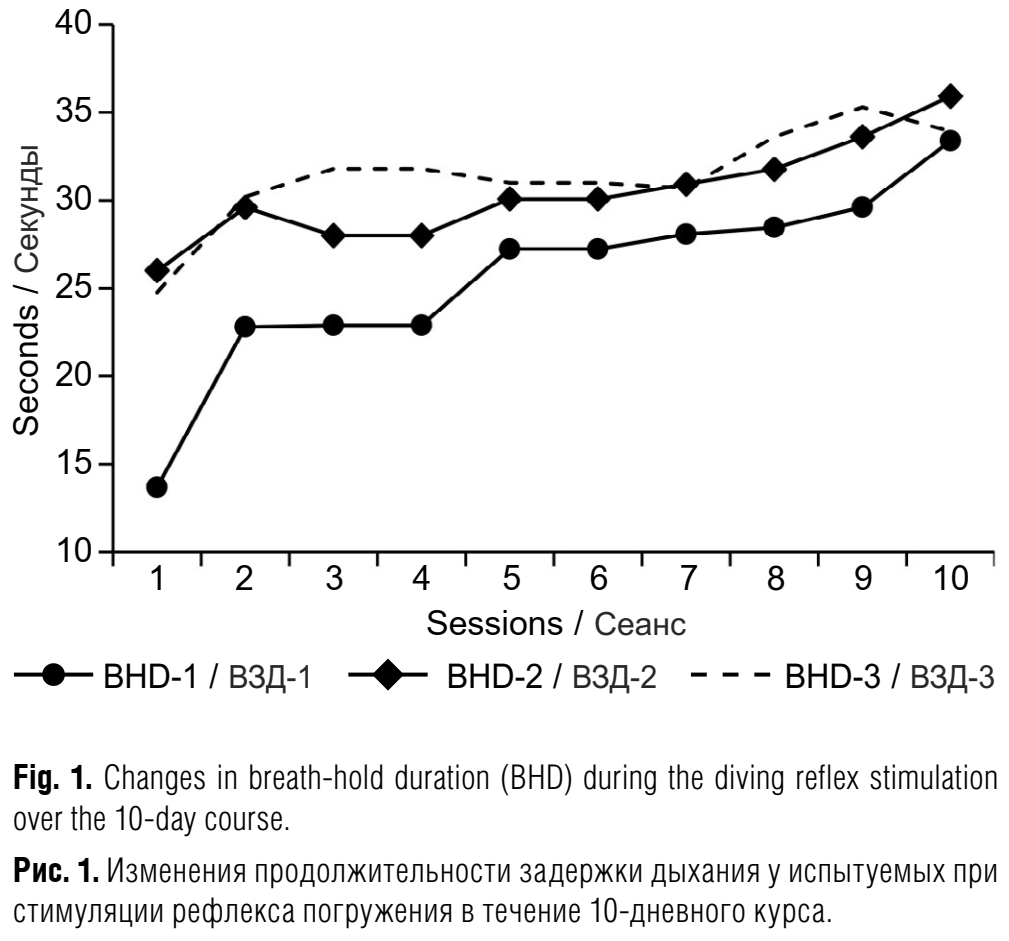
Breath-hold duration showed a sustained positive dynamic, increasing from 13.6 ± 1.94 seconds to 33.3 ± 2.68 seconds by the tenth session (F = 21.34; p < 0.001; η² = 0.51; d = 2.12) (Figure 1). This indicates enhanced hypoxic tolerance and an expansion of the body’s functional reserve. Increased hypoxia tolerance can be interpreted as a marker of successful neurovegetative adaptation, which is consistent with findings by Foster & Sheel [15], who reported improved adaptive mechanisms following regular diving reflex stimulation.
Cardiovascular responses demonstrated a consistent decrease in heart rate following immersion, evident from the first sessions (Figure 2). The average HR difference before and after immersion was 9.54 bpm during the first session, peaking at 13.23 bpm in session 4. This difference between the heart rate values before and after the immersion gradually decreased, reaching 2.77 beats per minute by the 9th session. This indicates the decrease in the initial sympathetic tone and progressive normalization of the autonomic regulation of the heart, and it is consistent with the increase in parasympathetic activity observed according to HRV data. One-way ANOVA confirmed significant pre-post differences across sessions (F = 8.74; p < 0.01; η² = 0.29; d = 0.95), indicating the strong clinical effect.
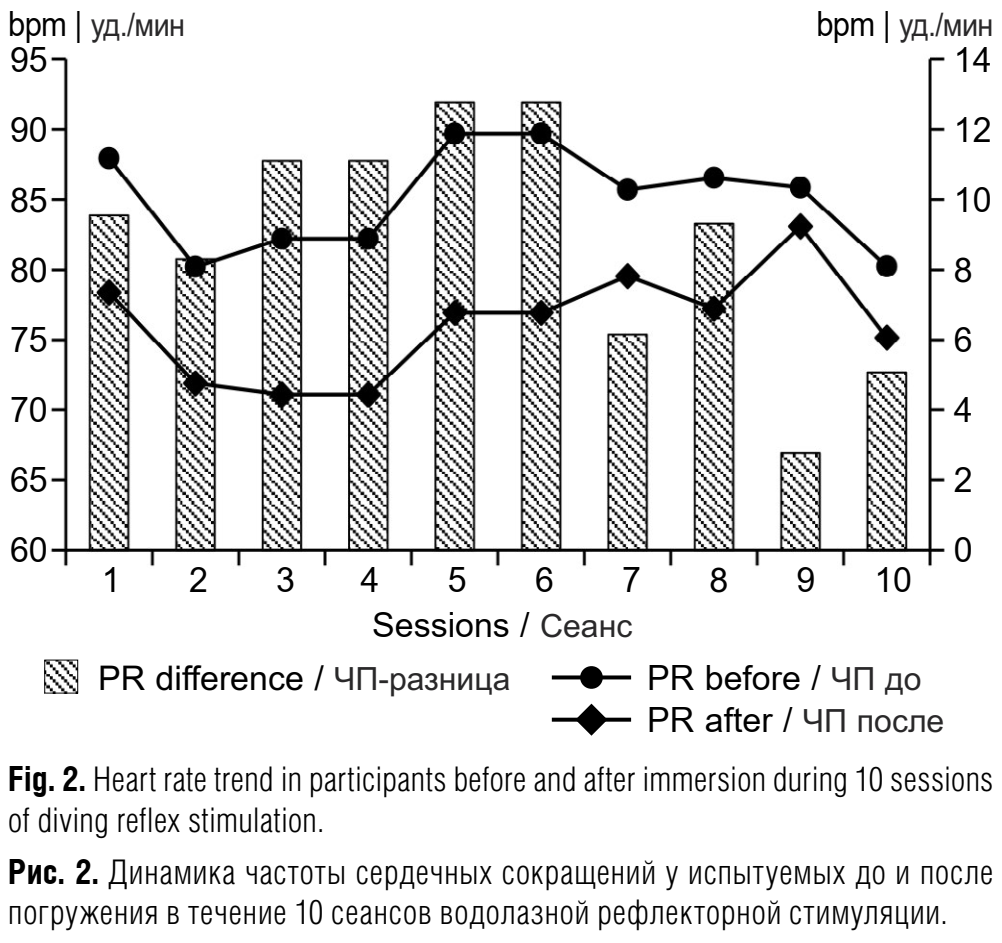
Resting heart rate decreased from a pre-immersion average of 87.9 ± 3.38 bpm to 80.2 ± 3.79 bpm post-immersion, with an average of 62.8 ± 4.61 bpm during immersion. This reflects pronounced bradycardia induced by the diving reflex and parasympathetic activation, as described by Gooden [14] and Baranova [31] as a key mechanism for oxygen conservation and reduced metabolic demand.
The BP changes in the participants were small and statistically unreliable. In some cases, there was the slight tendency to decrease SBP and DSP after the procedure, mainly in individuals with initial subhypertensive values, while no signs of orthostatic destabilization were observed (Table 1).
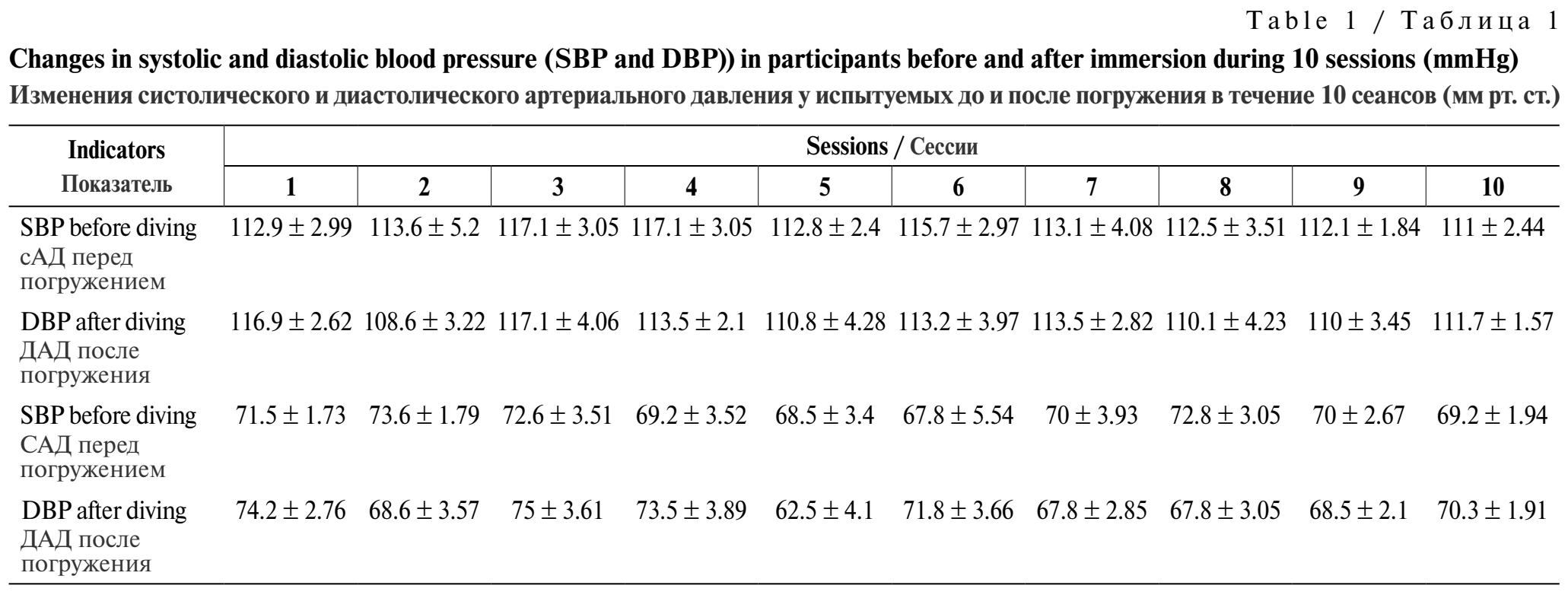
The ANOVA results for SBP/DBP changes by session showed no statistically significant differences (p > 0.05). The insignificant amplitude of the shifts only suggests the involvement of short-term regulatory reactions, including elements of baroreflective modulation, without significant effect on systemic hemodynamics.
Significant positive changes in the participants were recorded in terms of HRV and RSAI (Table 2). The shifts that occurred during the 10-day course of diving reflex stimulation are of the greatest interest. Thus, SI decreased by more than three times – from 277 ± 100.23 st. units at the beginning of the experiment to 84.2 ± 11.66 st. units before the last dive (F = 11.74; p < 0.001; η² = 0.36; d = 1.52), and it reflects the significant decrease in sympathetic dominance and the overall level of functional tension.
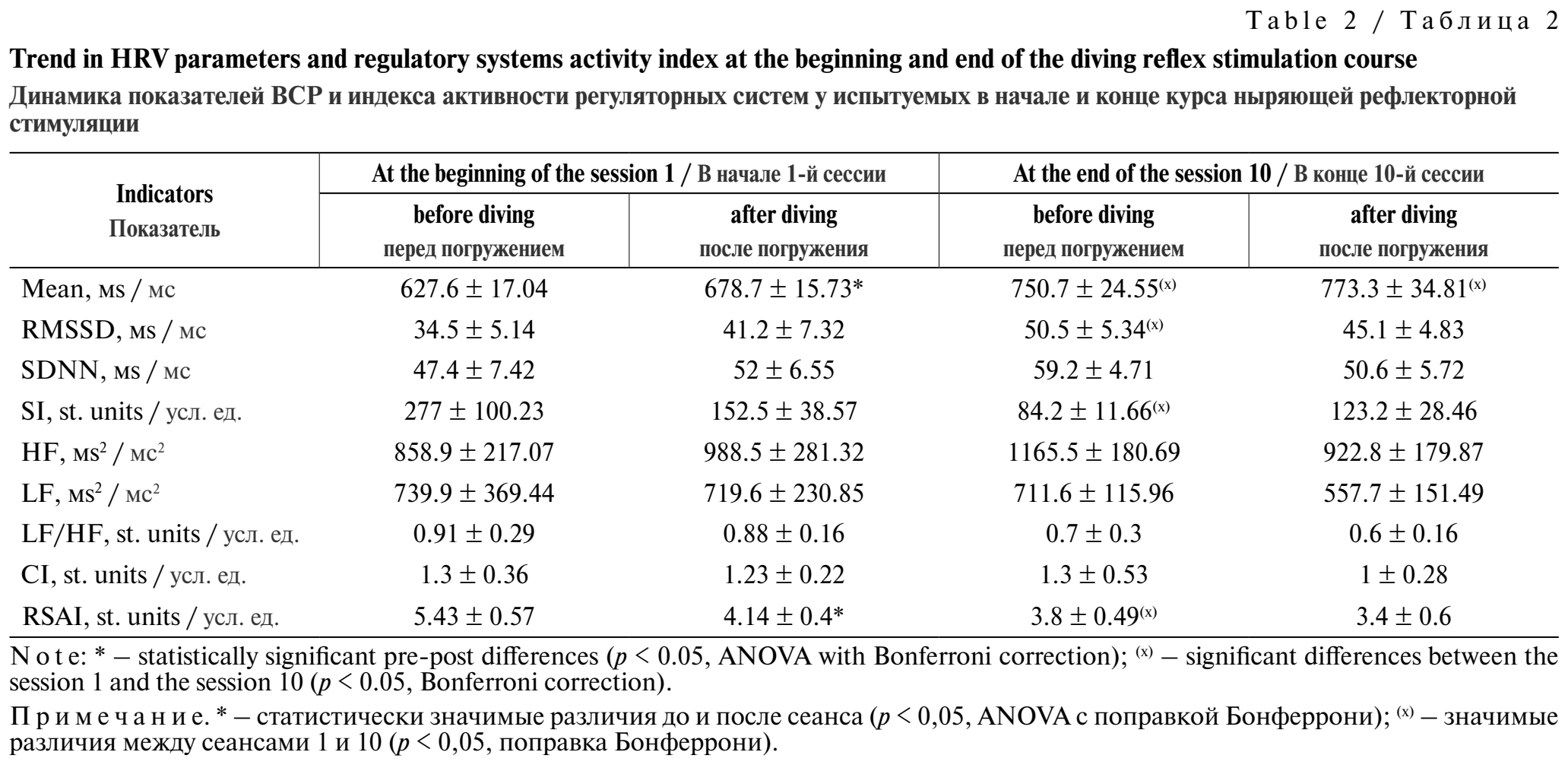
Table 2 shows the slight SI increase after the 10th session (from 84.2 ± 11.66 to 123.2 ± 28.46 st. units) with the total decrease of more than three times during the course (from 277 to 84.2). This short-term enhancement reflects physiological variability and may be related to the acute stress component of the procedure or the individual differences of the participants. The fluctuation does not contradict the overall positive dynamics: the key remains the SI reduction by more than three times from the initial level, which confirms the stable adaptive effect [29].
The long-term effect was confirmed with respect to other temporal and spectral HRV characteristics: SDNN increased from 47.4 ± 7.42 ms to 59.2 ± 4.71 ms (η² = 0.30; d = 1.03), and RMSSD increased from 34.5 ± 5.14 ms to 50.5 ± 5.34 ms (η² = 0.33; d = 1.18). It corresponds to the approximation to the upper limit of the physiological norm (20–50 ms) and indicates the increase in parasympathetic activity and in adaptive reserves. The decrease in the LF/HF ratio from 0.91 ± 0.29 to 0.70 ± 0.30 indicates the rebalancing of vegetative regulation towards vagal influence.
The RSAI dynamics deserves special attention: after the first session, the index decreased from 5.43 ± 0.57 to 4.14 ± 0.40 st. units (*), reflecting the transition from the expressed voltage of regulatory systems (RSAI = 5) to the state of moderate activation (RSAI = 4) [29]. By the tenth session, the further decrease was recorded to 3.4 ± 0.6 st. units (x) (F = 14.91; p < 0.001; η² = 0.43; d = 1.56), which corresponds to an approximation to the physiological norm (RSAI = 1–3) on the Baevsky scale and indicates the activation of adaptive reserves.
Thus, it was the cumulative effect of the 10-days course, and not just the short-term reaction to a single dive, that led to the expressed improvement in HRV and RSAI, reflecting the increase in the stability of vegetative regulation and the increase in the adaptive reactivity of the body [29].
The results of the analysis of professional burnout among the subjects according to the MBI showed that on the emotional exhaustion scale, the average values decreased from 29.5 ± 1.65 points (high level, ≥ 25 points) to 17.6 ± 2.2 points (average level, 16–24 points) immediately after completing the course, remaining at the similar level after 10 and 20 days – 18.3 ± 2.41 and 18.6 ± 2.1 points, respectively (both values correspond to the average level) (Table 3). ANOVA revealed the significant effect of time (F = 15.72; p < 0.001) with the high proportion of explained variance (η² = 0.42). Post hoc analysis with Bonferroni correction confirmed significant differences between the baseline and all subsequent measurements. The effect of the intervention was expressed: Cohen’s d was 1.85, and it corresponds to the strong effect.
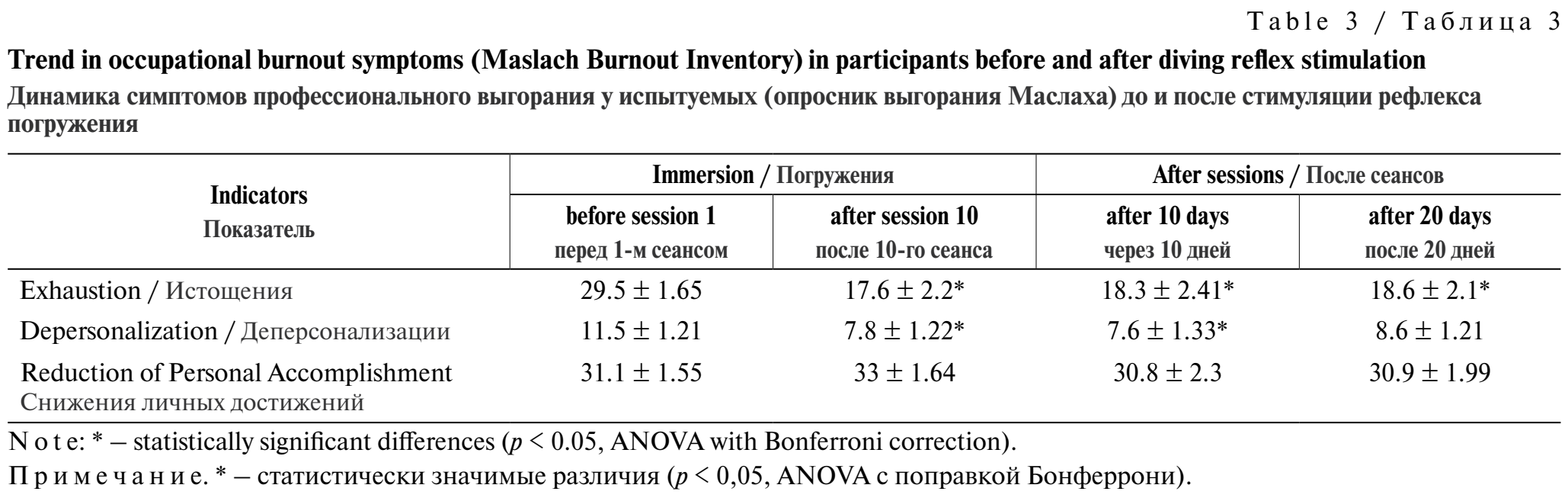
Changes in the reduction of personal accomplishment scale turned out to be statistically insignificant: the indicator remained within the average level (31–36 points) throughout the entire observation period, which may reflect the stability of the cognitive component of self-assessment of professional achievements.
The comparative analysis of the obtained data 10 and 20 days after the end of the intervention showed the effect stability. The level of emotional exhaustion in the subjects was 18.3 ± 2.41 and 18.6 ± 2.1 points (both values – the average level). ANOVA showed the persistence of the significant time effect (F = 10.82; p < 0.001; η² = 0.33). Post hoc analysis with Bonferroni correction confirmed the presence of significant differences between the baseline and both 10-day and 20-day subsequent values (p < 0.01), in the absence of significant differences between each other (p > 0.05), indicating the prolonged effect persistence. Cohen’s d for changes retained after 20 days was 1.72, which also corresponds to the strong effect.
Thus, diving reflex stimulation has the complex positive effect on the regulation of the cardiovascular and respiratory systems, contributing to a more flexible, adaptive and less stressful functioning of the autonomic nervous system, which manifests itself in the heart rate decrease, HRV increase, the breathing delay time extension and the burnout symptoms severity decrease. Comparative analysis with the literature [11, 12] suggests that the effectiveness of this intervention is comparable to that of respiratory and cold exposure techniques, with the added benefit of inducing rapid and marked physiological activation of adaptive mechanisms.
Discussion
The obtained results confirm the effectiveness of diving reflex stimulation as a physiological method that helps reduce the professional burnout symptoms, with the potential for further use in individual self-regulation and functional support programs. The proposed method led to statistically significant improvements in key Maslach Burnout Inventory subscales emotional exhaustion and depersonalization, as well as objective enhancements in heart rate variability and autonomic balance. These outcomes suggest that the diving reflex may serve not only as a reliable indicator of adaptive capacity but also as a regulatory mechanism that facilitates neurophysiological recovery, consistent with the conclusions presented in earlier studies [18, 31].
Unlike conventional psychological approaches, such as cognitive-behavioral therapy, coaching, or group-based interventions [32, 33], the physiological nature of this method offers several distinct advantages. Psychological programs are often resource-intensive, requiring time, qualified personnel, and financial input, which limits their accessibility to many professionals. Additionally, most psychological interventions are group-based [34], which complicates individual adaptation and restricts the frequency of application. In contrast, diving reflex stimulation does not require a trained therapist, can be performed at home, and involves minimal logistical complexity.
Another notable advantage is the method’s compatibility with validated assessment tools such as the Maslach Burnout Inventory [35], enabling objective evaluation of effectiveness and personalized adjustment of the stimulation protocol through feedback.
From a physiological perspective, the method’s effectiveness is attributed to activation of parasympathetic regulatory mechanisms. Immersion of the face in cold water triggers the diving reflex, leading to reflex bradycardia, peripheral vasoconstriction, and blood redistribution to vital organs. These processes reduce metabolic demand, increase hypoxia tolerance, and initiate restorative responses [36]. According to the concept of neurovegetative adaptation [37], such responses reflect the high plasticity of central regulatory circuits.
A particularly compelling aspect of this intervention is its ability to establish a stable autonomic response pattern through repeated stimulation of specific central regulatory pathways. [38]. With regular exposure, a negative feedback mechanism is activated, whereby the body’s response to stressors becomes progressively less intense. This aligns with models of stress-response desensitization [39], mediated through peripheral afferent and central autonomic pathways. The standardized nature of the protocol (water temperature, breath-hold duration, and session frequency) enables the development of a reproducible physiological pattern that supports the gradual restoration of adaptive reserves.
Within the framework of the proposed methodology, the steady positive dynamics of the survey indicators was demonstrated throughout the course and in the delayed period (after 10 and 20 days), which indicates the prolonged effect of the intervention and the formation of stable positive changes in the psychoemotional state of the participants.
Our findings are consistent with previous research on breathing practices [11], cold exposure [12], and physical training [13]. However, in contrast to these approaches, the diving reflex intervention demonstrated a more pronounced and reproducible effect, confirmed by both subjective assessments and objective physiological measures. Unlike physical exercise, which requires motivation, time commitment, and may carry contraindications, simulated diving is physiologically gentle and broadly accessible.
Importantly, this method can be effectively integrated into self-help and workplace prevention programs, particularly in settings where access to medical or psychological services is limited. Given the high prevalence of burnout among educators, healthcare professionals, and social workers, this technique offers a promising direction for applied occupational physiology.
In summary, the proposed intervention combines demonstrated efficacy, accessibility, individualization, and ease of implementation, making it a valuable addition to existing strategies for the prevention and rehabilitation of professional burnout.
Conclusion
The study results demonstrate the potential of the diving reflex stimulation technique as the physiological intervention that helps reduce the severity of certain symptoms of professional burnout and improve autonomic regulation. The statistically significant decrease in the level of emotional exhaustion and depersonalization, recorded using the Maslach Burnout Inventory, was accompanied by the improvement in the parameters of autonomic regulation of the cardiovascular system, increased heart rate variability, the decrease in the stress index, and the increase in respiratory retention time as a marker of functional activation of adaptive mechanisms.
A key advantage of this method lies in its accessibility, safety, simplicity, and potential for individualized use without the need for specialized training or the involvement of a professional therapist. The intervention does not require group participation and can be incorporated into personal self-regulation protocols, supplemented with dynamic self-assessment using validated questionnaires greatly increasing its applicability in resource-limited settings.
The physiological basis of the technique, namely the activation of the parasympathetic nervous system through the diving reaction, provides the rapid decrease in indicators of autonomic activation (heart rate, stress index) and contributes to the restoration of regulatory balance, reflected in the increase in heart rate variability and improved indicators of autonomous adaptation.
The repeatability and reproducibility of the procedure support the formation of a stable response pattern sustained through negative feedback mechanisms at the level of central autonomic regulation.
Therefore, the suggested method serves as the efficient instrument for mitigating the symptoms of professional burnout among specialists experiencing emotional stress, offering the potential for individual use and incorporation into psychophysiological health support programs. Nevertheless, since the study was limited to the homogeneous group of female students and did not include representatives of professional groups, men, or other age categories, the findings should be interpreted with caution. Additional research with more comprehensive and representative design is required to validate the method’s effectiveness across different social and professional settings.
1. Maslach C., Jackson S.E. The measurement of experienced burnout. J. Organ. Behav. 1981; 2(2): 99–113. https://doi.org/10.1002/job.4030020205
2. West C.P., Dyrbye L.N., Shanafelt T.D. Physician burnout: contributors, consequences and solutions. J. Intern. Med. 2018; 283(6): 516–29. https://doi.org/10.1111/joim.12752
3. Alahmari M.A. Prevalence of burnout in healthcare specialties: a systematic review using Copenhagen and Maslach burnout inventories. Med. Sci. Monit. 2022; 28: e938798. https://doi.org/10.12659/MSM.938798
4. Paudel N.R., Kc P., Ghimire R., Nygård C.H., Neupane S. Occupational burnout and their determinants among schoolteachers in Nepal: a cross-sectional study. BMC Psychiatry. 2024; 24(1): 472. https://doi.org/10.1186/s12888-024-05923-9
5. Horbatiuk I.B., Horbatiuk I.B. The main aspects of professional burnout syndrome. Colloquium-Journal. 2021; (25-1): 22–4. https://doi.org/10.24412/2520-6990-2021-25112-22-24 https://elibrary.ru/ypwbfg
6. Melamed S., Shirom A., Toker S., Berliner S., Shapira I. Burnout and risk of cardiovascular disease: evidence, possible causal paths, and promising research directions. Psychol. Bull. 2006; 132(3): 327–53. https://doi.org/10.1037/0033-2909.132.3.327
7. Salvagioni D.A.J., Melanda F.N., Mesas A.E., González A.D., Gabani F.L., Andrade S.M. Physical, psychological and occupational consequences of job burnout: A systematic review of prospective studies. PLoS One. 2017; 12(10): e0185781. https://doi.org/10.1371/journal.pone.0185781
8. Borisova M.V., Ansimova N.P. Key directions in the prevention and correction of occupational burnout. Yaroslavskii pedagogicheskii vestnik. 2011; 2(2): 212–5. https://elibrary.ru/pilhcv (in Russian)
9. Le Blanc P.M., Hox J.J., Schaufeli W.B., Taris T.W., Peeters M.C.W. Take care! The evaluation of a team-based burnout intervention program for oncology care providers. J. Appl. Psychol. 2007; 92(1): 213–27. https://doi.org/10.1037/0021-9010.92.1.213
10. Bakker A.B., Demerouti E., Sanz-Vergel A.I. Burnout and work engagement: The JD–R approach. Annu. Rev. Organ. Psychol. Organ. Behav. 2014; 1: 389–411. https://doi.org/10.1146/annurev-orgpsych-031413-091235
11. Brown R.P., Gerbarg P.L. Sudarshan Kriya yogic breathing in the treatment of stress, anxiety, and depression: Part II – clinical applications and guidelines. J. Altern. Complement. Med. 2005; 11(4): 711–7. https://doi.org/10.1089/acm.2005.11.711
12. Tipton M.J., Collier N., Massey H., Corbett J. Cold water immersion: kill or cure? Exp. Physiol. 2017; 102(11): 1335–55. https://doi.org/10.1113/EP086283
13. Peluso M.A.M., Andrade L.H.S.G. Physical activity and mental health: the association between exercise and mood. Clinics. 2005; 60(1): 61–70. https://doi.org/10.1590/S1807-59322005000100012
14. Gooden B.A. Mechanism of the human diving response. Integr. Physiol. Behav. Sci. 1994; 29(1): 6–16. https://doi.org/10.1007/BF02691277
15. Foster G.E., Sheel A.W. The human diving response, its function, and its control. Scand. J. Med. Sci. Sports. 2005; 15(1): 3–12. https://doi.org/10.1111/j.1600-0838.2005.00440.x
16. Berlov D.N., Spiridonov A.I., Baranova T.I. Influence of diving imitation test on the effectiveness of solving mental problems. In: All-Russian Conference on Cognitive Science KISE-2017: Conference Materials [Vserossiiskaya konferentsiya po kognitivnoi nauke KISE-2017: Materialy konferentsii]. Kazan’; 2017: 501–4. https://elibrary.ru/ytrvww (in Russian)
17. Podyacheva E.Yu., Zemlianukhina T.A., Simanovsky E.D., Fedorova E.Yu., Baranova T.I. Protective mechanisms against hypoxia in diving simulation in swimmers. Chelovek. Sport. Meditsina. 2020; 20(1): 29–35. https://doi.org/10.14529/hsm200104 https://elibrary.ru/yygabj (in Russian)
18. Zavarina L.B. Diving reflex: from animals to humans. Zhurnal evolyutsionnoi biokhimii i fiziologii. 2020; 56(7): 588–9. https://doi.org/10.31857/S0044452920071316 https://elibrary.ru/uxsftz (in Russian)
19. Baranova T.I. Mechanisms of adaptation to diving hypoxia: Diss. St. Petersburg; 2008. (in Russian)
20. Hiebert S.M., Burch E. Simulated human diving and heart response as a laboratory exercise rate: making the most of the diving. Adv. Physiol. Educ. 2003; 27(1-4): 130–45. https://doi.org/10.1152/advan.00045.2002
21. Ackermann S.P., Raab M., Backschat S., Smith D.J.C., Javelle F., Laborde S. The diving response and cardiac vagal activity: a systematic review and meta-analysis. Psychophysiology. 2023; 60: e14183. https://doi.org/10.1111/psyp.14183
22. Baus T.L., Ackermann S.P., Laborde S. Effects of adding facial immersion to chest-level water immersion on vagally-mediated heart rate variability. Sports (Basel). 2025; 13(3): 64. https://doi.org/10.3390/sports13030064
23. Ko Y., Seol S.H., Kang J., Lee J.Y. Adaptive changes in physiological and perceptual responses during 10-day heat acclimation training using a water-perfused suit. J. Physiol. Anthropol. 2020; 39(1): 10. https://doi.org/10.1186/s40101-020-00217-x
24. Kochanowicz M., Brzezinska P., Mieszkowski J., Kochanowicz A., Niespodzinski B., Surmiak M., et al. Single and consecutive 10-day remote ischemic preconditioning modify physical performance, post-exercise exerkine levels, and inflammation. Front. Physiol. 2024; 15: 1428404. https://doi.org/10.3389/fphys.2024.1428404
25. Marvanova A., Kasik P., Elsnicova B., Tibenska V., Galatik F., Hornikova D., et al. Continuous short-term acclimation to moderate cold elicits cardioprotection in rats, and alters β-adrenergic signaling and immune status. Sci. Rep. 2023; 13(1): 18287. https://doi.org/10.1038/s41598-023-44205-4
26. Obregon M., Luo J., Shelton J., Blevins T., MacDowell M. Assessment of burnout in medical students using the Maslach Burnout Inventory-Student Survey: a cross-sectional data analysis. BMC Med. Educ. 2020; 20(1): 376. https://doi.org/10.1186/s12909-020-02274-3
27. Chong L.Z., Foo L.K., Chua S.L. Student burnout: a review on factors contributing to burnout across different student populations. Behav. Sci. (Basel). 2025; 15(2): 170. https://doi.org/10.3390/bs15020170
28. Jagodics B., Szabó É. Student burnout in higher education: a demand-resource model approach. Trends Psychol. 2023; 31(4): 757–76. https://doi.org/10.1007/s43076-021-00137-4 https://elibrary.ru/npqlyr
29. Baevskii R.M., Berseneva A.P. Introduction to Prenosological Diagnosis [Vvedenie v donozologicheskuyu diagnostiku]. Moscow: Slovo; 2008. (in Russian)
30. Baevskii R.M., Ivanov G.G., Chireikin L.V., Gavrilushkin A.P., Dovgalevskii P.Ya., Kukushkin Yu.A., et al. Analysis of heart rate variability using different electrocardiographic systems. Methodological recommendations. Vestnik aritmologii. 2001; (24): 65–87. (in Russian)
31. Baranova T.I. Characteristics of the human cardiovascular system in the human diving response. Rossiiskii fiziologicheskii zhurnal imeni I.M. Sechenova. 2004; 90(1): 20–31. https://elibrary.ru/mprkxh (in Russian)
32. Sukhanova E.I. Prevention of occupational burnout. Neonatologiya: Novosti. Mneniya. Obuchenie. 2022; 10(3): 68–72. https://doi.org/10.33029/2308-2402-2022-10-3-68-72 https://elibrary.ru/htrdja (in Russian)
33. Tuillet P.S. The concept of the center for psychological support of resident doctors during the training period. Psikhologiya i psikhotekhnika. 2023; (4): 48–62. https://doi.org/10.7256/2454-0722.2023.4.44150 https://elibrary.ru/zxuwwf (in Russian)
34. Kotova E.V. Prevention of Emotional Burnout Syndrome [Profilaktika sindroma emotsional’nogo vygoraniya]. Krasnoyarsk; 2013. Available at: https://calameo.com/read/00424489374c803991316 (in Russian)
35. Erwan F., Iqbal M., Hasanuddin I., Zuhri S., Maydini C.M. Burnout Syndrome analysis among hospital nurses using Maslach Burnout Inventory – Human Service Survey (MBI-HSS): a case study. IOP Conf. Ser.: Mater. Sci. Eng. 2020; 931: 012025. https://doi.org/10.1088/1757-899X/931/1/012025
36. Baranova T.I., Rybyakova T.V., Dmitrieva M.O., Anisimov D.A., Tarasova M.S., Ogannisyan M.G. Specifics of reaction of human cardiovascular system to immersion in cold water. Extreme Medicine. 2023; 25(4): 106–15. https://doi.org/10.47183/mes.2023.053 (in Russian)
37. Baevsky R.М., Chernikova A.G. Heart rate variability analysis: physiological foundations and main methods. Cardiometry. 2017; (10): 66–76. https://elibrary.ru/ypotmp
38. Gutsol L.O., Guzovskaiia E.V., Serebrennikova S.N., Seminskу I.Z. Stress (general adaptation syndrome) lecture. Baikal’skii meditsinskii zhurnal. 2022; 1(1): 70–80. https://doi.org/10.57256/2949-0715-2022-1-70-80 https://elibrary.ru/qniekw (in Russian)
39. Foa E.B., Keane T.M., Friedman M.J. Effective Therapy for Post-Traumatic Stress Disorder: Practice Guidelines from the International Society for Traumatic Stress Studies. New York-London: The Guilford Press; 2000.
DSc (Medicine), professor, leading researcher, Research Park of Biotechnologies and Ecomonitoring, Karaganda National Research University named after Academician E.A. Buketov, Karagan, 100028, Republic of Kazakhstan
e-mail: msmagulov@yandex.ru
Researcher, Research Park of Biotechnologies and Ecomonitoring, Karaganda National Research University named after Academician E.A. Buketov, Karaganda, 100028, Republic of Kazakhstan
e-mail: ageevdimon88@mail.ru
Smagulov N.K., Ageyev D.V. Possibilities of the diving reflex reaction in the reduction of the severity of the occupational burnout symptoms. Hygiene and Sanitation. 2026;105(3):274-280. https://doi.org/10.47470/0016-9900-2026-105-3-274-280. EDN: epdyvy
Мы в ВК:

 Email this article (Login required)
Email the author (Login required)
Email this article (Login required)
Email the author (Login required) 141014, The Moscow region, Mytishchi, 2, Semashko street
Federal Scientific Center of Hygiene named after F.F. Erisman
Phone: +7 916 885 28 02
e-mail: gigsan@list.ru