Contents
Scroll to:
 Yuri A. Rakhmanin,
Oxana O. Sinitsyna,
Natalya A. Egorova,
Viktor V. Turbinsky,
Anna V. Alekseeva,
Nadezhda V. Kuz,
Irina N. Ryzhova,
Marina G. Kochetkova
Yuri A. Rakhmanin,
Oxana O. Sinitsyna,
Natalya A. Egorova,
Viktor V. Turbinsky,
Anna V. Alekseeva,
Nadezhda V. Kuz,
Irina N. Ryzhova,
Marina G. Kochetkova https://doi.org/10.47470/0016-9900-2026-105-1-6-14
EDN: ayfaal
Scroll to:
Introduction. Growing progress in scientific research into the impact of water pollution on public water supplies has necessitated continuous improvement in the methodology for developing standard values for new influencing factors and water use conditions, an assessment of which is the subject of this publication.
Materials and Methods. The study’s materials included publications and the results of own research on the hygienic regulation of chemicals in water bodies used for domestic and drinking water, the hygienic aspects of seawater desalination and the preparation of drinking water, as well as regulatory and methodological documents in the field of water hygiene.
Results. The article presents such main scientific achievements in the field of drinking water hygiene as development of coefficients of species-specific differences in laboratory animal health parameters during extrapolation of experimental data to humans, modern histomorphological, biochemical, and genetic methods and various functional loads on experimental animal bodies during toxicological studies, additional criteria for assessing drinking water quality, a six-stage scheme for standardizing essential elements, new biophysical indicators of drinking water quality, hygienic requirements for local systems of additional purification and disinfection of drinking water. Innovative proposals for the scientific substantiation of hygienic requirements for water with a limited purpose of use – domestic and domestic – are outlined, as well as an algorithm for taking into account the proportional contribution of uncertainty factors of its chemical composition in the hygienic assessment of the chemical safety of drinking water quality.
Limitations. The study is limited to the characteristics of water used for domestic and drinking water and domestic water use.
Conclusion. An analysis of the achievements of scientific research on the hygienic standardization of drinking water quality demonstrated its high effectiveness and determined the feasibility of further promising research in this area outlined in the article.
Compliance with ethical standards. This study does not require the approval of a biomedical ethics committee.
Contribution:
Rakhmanin Yu.A. – study concept and design, writing, editing;
Sinitsyna O.O. – material collection and data processing, writing, editing;
Egorova N.A. – material collection and data processing, illustrations;
Turbinsky V.V. – material preparation and data processing;
Alekseeva A.V., Ryzhova I.N. – material collection and data processing;
Kuz N.V. – material collection and illustration;
Kochetkova M.G. – illustration.
All authors are responsible for the integrity of all parts of the manuscript and approval of the manuscript final version.
Conflict of interest. The authors declare no conflict of interest.
Funding. The study had no sponsorship.
Received: December 10, 2025 / Revised: December 16, 2025 / Accepted: December 2, 2025 / Published: February 10, 2026
Rakhmanin Yu.A., Sinitsyna O.O., Egorova N.A., Turbinsky V.V., Alekseeva A.V., Kuz N.V., Ryzhova I.N., Kochetkova M.G. Achievements and promising directions of scientific research in the field of hygienic regulation of water quality in centralized water supply systems of populated areas. Hygiene and Sanitation. 2026;105(1):6-14. https://doi.org/10.47470/0016-9900-2026-105-1-6-14. EDN: ayfaal
Introduction
The creation of centralized water supply systems for populated areas necessitated the scientific substantiation of quality standards for water used for domestic and drinking purposes. The first such state standards were established in 1933 in the USA. In 1937, hygienic standards for drinking water were established in the USSR, initially based on five indicators – one bacteriological and four organoleptic (odor, taste, color, turbidity) [1]. The standardization of drinking water quality developed rapidly in many countries. The number of monitored water quality indicators increased, and internationally, the standardization of drinking water quality reached the level of the World Health Organization (WHO), first in the form of international standards (1958) [2], and then, considering the differences in the scientific-technological development of states and regional characteristics of water sources, as international recommendations (from 1972 to the present) [3–5].
Four main criteria are currently recognized for assessing drinking water quality: favorable aesthetic (organoleptic) properties, chemical harmlessness, radiation safety, and epidemic safety¹. For the latter three criteria, scientific research is primarily focused on determining and standardizing integral (complex) indicators, and then, if necessary, specific chemical or biological contaminants [6]. Thus, for the radiation safety criterion, gross α-activity and gross β-activity were prioritized, followed by the specific radioisotope composition. For the epidemic safety criterion, this primarily involves sanitary indicator bacteria of the coliform group, followed by pathogens of specific infections (dysentery, typhoid fever, cholera, salmonellosis, etc.). For the chemical harmlessness criterion, the main indicators became total salt content (mineralization), pH, oxygen content, biochemical oxygen demand (BOD) and chemical oxygen demand (COD), total organic carbon content, the ratio of nitrogen-containing radicals (NH₄, NO₂, and NO₃), total content of petroleum products and surfactants, followed by salt components (Ca, Mg, Na, K, chlorides, sulfates, carbonates, bicarbonates, phosphates, etc.) and hundreds of specific chemical substances (hereinafter – CS). For the scientific substantiation of permissible levels of these CS in drinking water, a scheme and algorithm for hygienic standardization² were organized in our country with the participation of A.N. Sysin and S.N. Cherkinsky, which were subsequently further developed³. At the same time, determining threshold levels for potential adverse effects of CS on public health requires specialized toxicological studies using at least two species of experimental animals under acute (single administration), subacute (daily administration for 30–45 days), and chronic (repeated administration for three to six months) sanitary-toxicological investigations. The goal is to establish a quantitative "dose – time – effect" relationship for each CS and determine its maximum no-effect concentration for the organism of warm-blooded animals.
However, over the last 50–60 years, a significant intensification of research in the field of hygienic standardization of CS in drinking water has become necessary. The main reasons are:
a sharp increase in the number of new CS (during the period 1957–1985 the US Chemical Abstracts Service Registry (CAS Registry⁴) registered an average of 300 thousand CS per year, from 1965 to 2015 – 2.5 million per year, and in the last three years – 10 million CS per year);
a high level of contamination of water sources, especially surface sources, gradually being turned into something akin to sewage ditches, with various CS (according to data from the Ministry of Natural Resources of Russia⁵, in 2020 cases of significant pollution were noted in Russia's largest rivers: 925 – Volga, 792 – Ob, 141 – Yenisei, 125 – Amur, and 121 – Dnieper);
a significant expansion of the analytical capabilities of modern identification chromatographic-mass spectrometric (up to 100 thousand or more CS) and other chemical analyses allows for the detection of hundreds and even thousands of CS in surface water sources, and tens and hundreds of CS in the water from these sources after treatment at centralized water supply stations in populated areas.
As a result of these studies, the system of sanitary-epidemiological supervision over safe conditions of water use for the country's population has now received scientifically substantiated maximum permissible levels (MPLs) in water for 1369 CS and tentative permissible levels (TPLs) in water for 446 CS, as well as standards for the content in water of three rocket fuel components, eight explosive substances, seven toxic substances, and one organophosphorus compound (OPC)⁶,⁷. Thus, the sanitary-epidemiological legislation of the Russian Federation includes hygienic standards for 1834 CS in various types of water.
Materials and Methods
The objects of the study were water quality indicators and methods for assessing its harmlessness, safety, and favorable properties for domestic drinking and household water use. The research materials included publications and results of the authors' own research in the field of hygienic standardization of chemical substances in water bodies used for drinking and recreational purposes, hygienic aspects of seawater desalination, and the production of drinking water quality water, as well as normative and methodological documents in the field of water use hygiene. Research methods: collection and analysis of information, expert assessment of materials.
Results
Based on experimental studies, significant differences in the toxic manifestations of a number of CS on the species sensitivity of experimental animals were demonstrated. This provided a basis for developing a methodology for the scientific substantiation of extrapolation coefficients and their consideration when transferring experimental data to humans, and is reflected in a corresponding monograph [6]. For example, differences in the toxic effect of α- and β-naphthols on rats, guinea pigs, rabbits, and cats reached 18-fold [7].
According to the experimental studies results on animals, various histomorphological, biochemical, and genetic research methods were developed, tested, and recommended. These included the use of different functional loads (with artificial radioactive iodine isotopes, galactose, phenol red, etc.) to identify prepathological conditions and assess the functional reserves of the organism in warm-blooded animals [8–13].
Considering the obtained data on the role of drinking water with elevated salt content in the development of hypertension, and water with elevated hardness salts (Ca, Mg) in the development of urolithiasis, desalination plants, typically of the ion-exchange and electrodialysis types, were recommended for water treatment. At the same time, the development of a large-scale desalination industry necessitated the study of the biological effects of distilled or nearly distilled, low-mineralized water on the organism. As a result, water with a high degree of demineralization was found unsuitable for constant drinking consumption [14–16]. This proved extremely important for water regeneration from moisture-containing materials under the conditions of a spacecraft and other specialized environments. For the first time in global practice, two new criteria for assessing drinking water quality were substantiated [17] – quality stability and physiological completeness. These criteria were reflected in a WHO document [18] and were further developed with the widespread introduction of packaged drinking water into water supply practice. Shelf life from the moment of bottling was established for this water (from 3 to 12 months), and for strategic reserves – up to 5 years, in contrast to tap water with a shelf life of 2–3 hours to 2–3 days, which emphasized the importance of water quality stability.
On the other hand, research conducted using the criterion of physiological completeness, which relates to standardizing the content of essential (vital) salt macro- and microelements in drinking water (primarily – total salt content, Ca, Mg, K, Na, F, I), allowed for the scientific substantiation of not only their maximum and minimum required levels (Fig. 1) but also optimal parameters for their content in drinking water for regular use [19]. This was also demonstrated for the bicarbonate ion (HCO₃–), which actively participates in maintaining normal acid-base balance in the body and the formation of bone and joint mass [20].
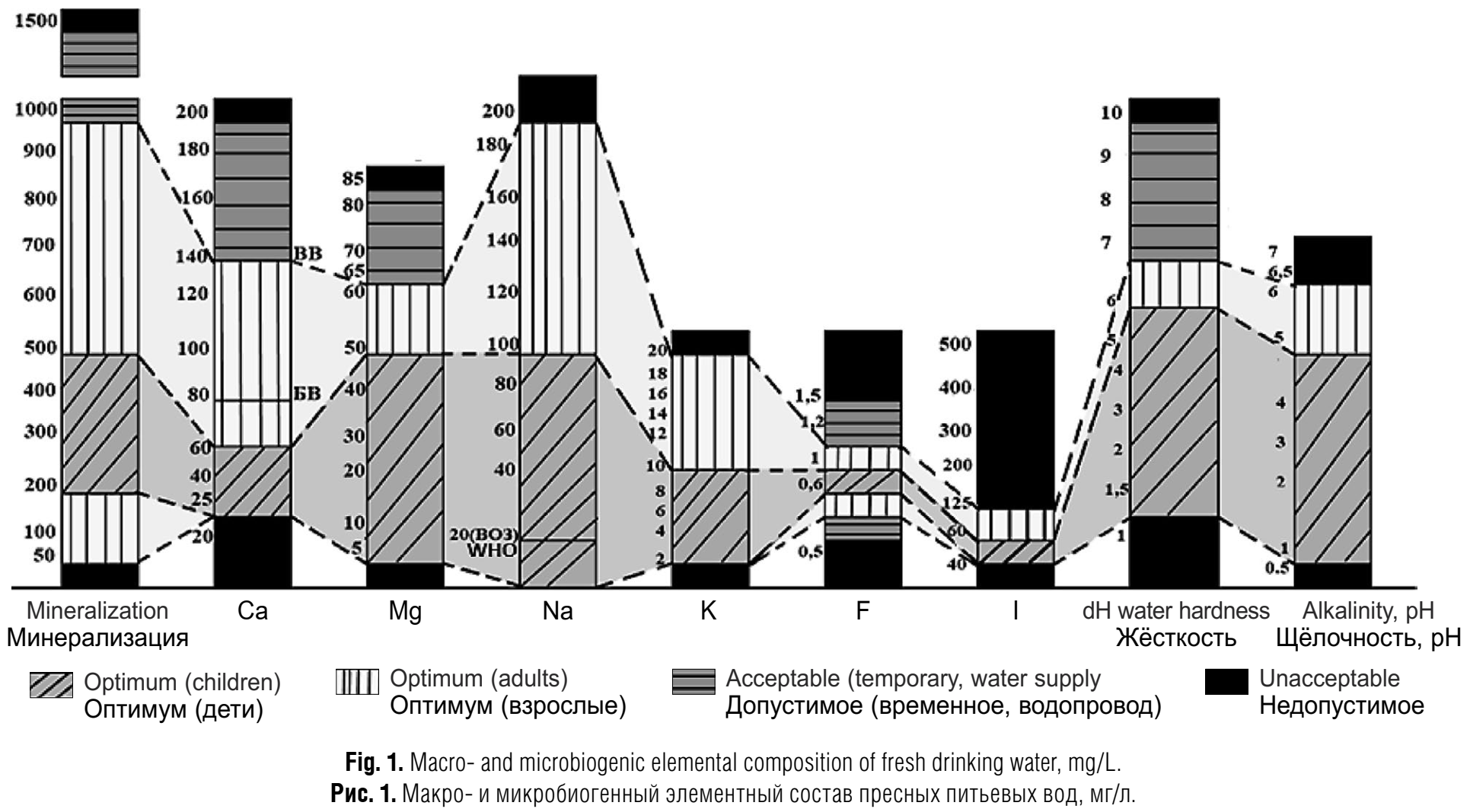
These studies made it possible to characterize physiologically complete drinking water as both preserving health (at levels not exceeding MPLs of salt components) and strengthening it (by providing additional nutritional components). Quality categories for drinking water, based not only on MPLs of CS (safety) but also on the optimal level of essential salt components (beneficial properties, physiological completeness), have begun to gain recognition in foreign countries as well. For example, Belgium regulates optimal levels of hardness and content of Ca, Mg, F, and the minimum content of bicarbonates; Switzerland regulates optimal levels of total salt content, hardness, and content of Ca and Mg [19].
The accumulated scientific data on packaged drinking water were expanded upon when substantiating hygienic requirements for local water treatment systems (individual, household, group devices for conditioning drinking water at points of direct consumption, including terminals in centralized water supply systems of populated areas), as well as for increasingly widespread water kiosks (aquamats) for dispensing drinking water into consumer containers⁸ [21]. These directions are particularly relevant for populated areas with regional characteristics of drinking water quality, limited water resources, or if water supply systems were destroyed as a result of extreme anthropogenic situations or natural disasters [22].
In connection with the sharp increase in the number of CS used in economic activities that can adversely affect public health, as well as the significant lag in scientific research on their hygienic assessment and regulation of their content in water sources, the development and implementation of integral indicators for hygienic monitoring of CS content in water (organoleptic, generalized, toxicological, radiation, and mutagenic complex indicators) are necessary (Fig. 2).
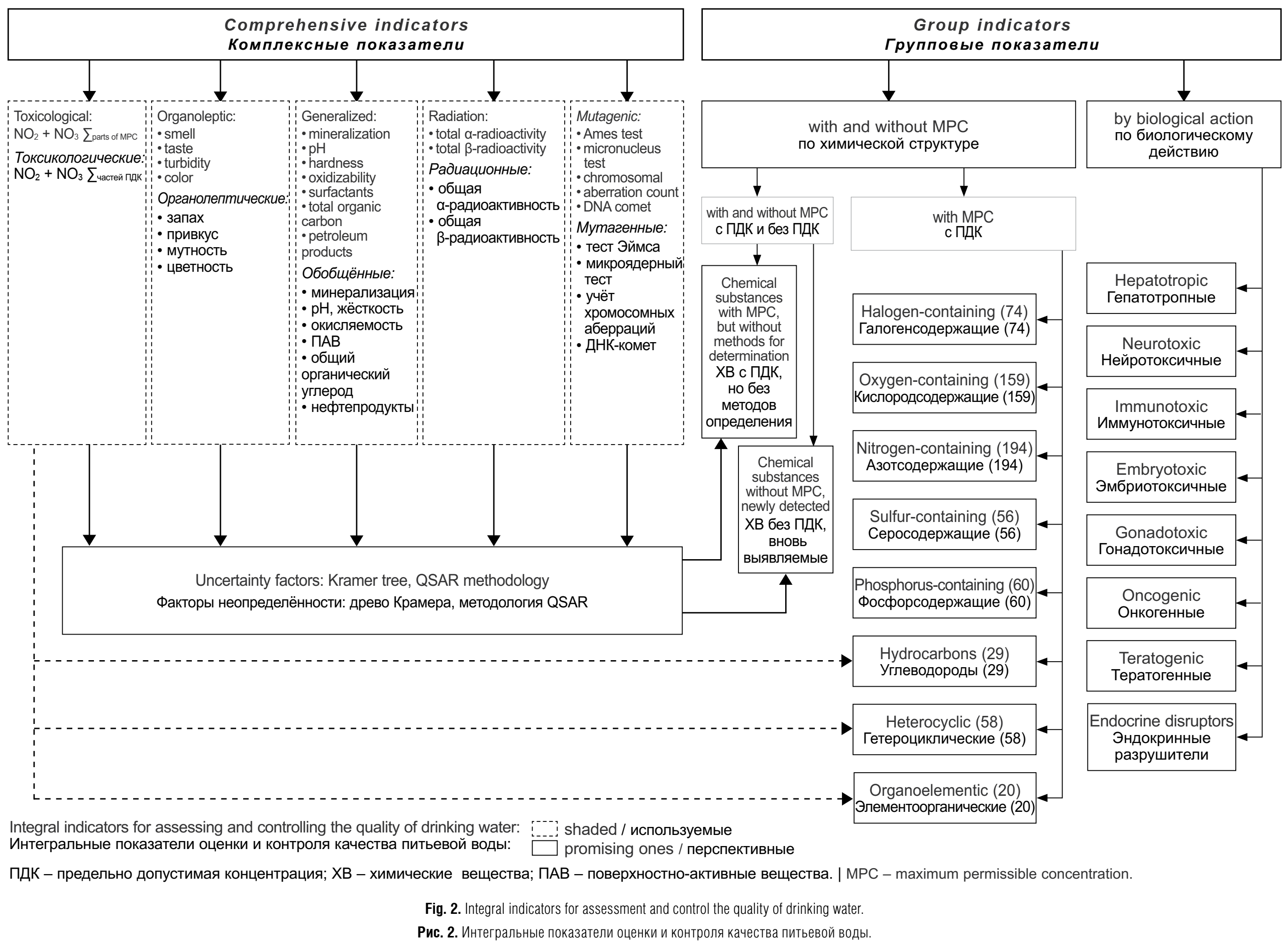
Behind each of these indicators, especially if they exceed the norm, lie dozens of various CS with their MPLs or TPLs, determined by one of the limiting hazard indicators: organoleptic (aesthetic) or sanitary-toxicological (including radiation). It should be noted with regret that Section III of Sanitary Rules and Norms 1.2.3685–216 "Standards for Quality and Safety of Water" lacks a summation formula for substances of the 1st and 2nd hazard classes, standardized according to the sanitary-toxicological limiting hazard indicator.
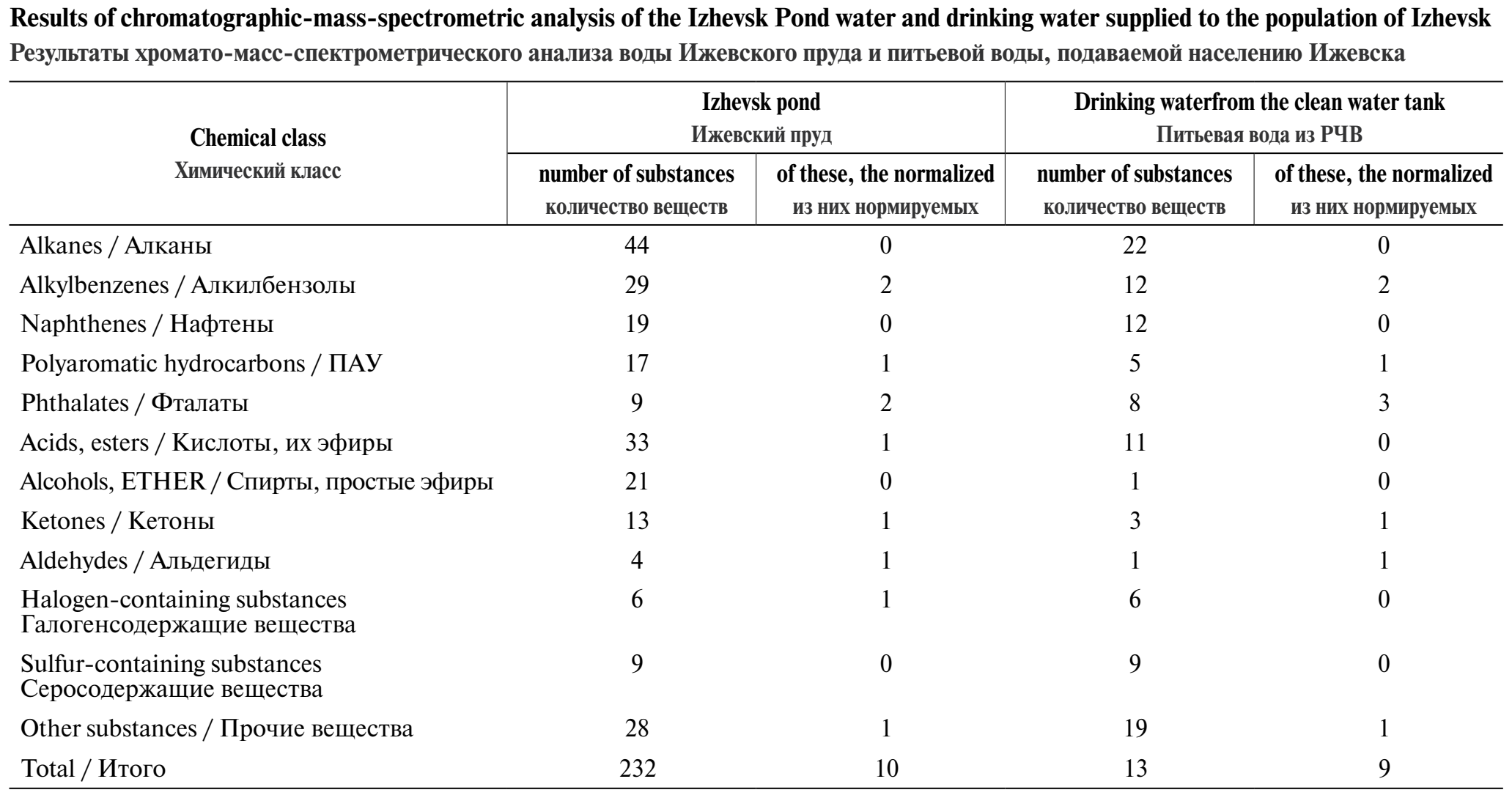
The introduction of modern analytical control methods into sanitary practice allows for the detection of hundreds and even thousands of various CS in water that have not received comprehensive hygienic evaluation and regulation. According to studies of water treatment in Izhevsk, conducted at the A.N. Sysin Research Institute of Human Ecology and Environmental Health, the number of such unregulated CS exceeds 200 in the source water and, most significantly, more than 100 in the already treated drinking water (see Table).
As a tool for assessing the risk of unstudied compounds, the QSAR (Quantitative Structure-Activity Relationship) methodology is increasingly being used. This computational approach (in silico) is based on constructing mathematical models that predict the biological activity and toxicity of a substance based on its chemical structure, thus avoiding labor-intensive experimental studies. For such calculations, open-source software exists, such as the QSAR Toolbox (version 4.8), which aggregates data on the properties of approximately 142.5 thousand chemical compounds from 63 databases, including information on 76,674 substances potentially hazardous to human health⁹.
Another promising direction for assessing the cumulative risk from numerous unstandardized substances could be the application of the Cramer tree methodology and its modifications [23–27]. This approach allows for the grouping of chemical substances by structural classes (e.g., hydrocarbons, heterocyclic and organoelement compounds, substances containing halogens, oxygen, nitrogen, sulfur, phosphorus) and assessing their total (proportional) contribution to potential toxicity based on comparative analysis. Subsequently, this could serve as a basis for developing group hygienic standards and standardized analytical control schemes for classes of compounds.
A logical development of the considered computational approaches is the transition to developing group indicators that consider not the structure, but the mechanism of toxic action. This means assessing the proportional contribution of pollutants based on the nature of their main biological effect: hepato-, neuro-, immuno-, embryo-, gonado-, onco-, teratogenic, or endocrine toxicity¹⁰. Such an approach, aligned with the current global trends, will allow for risk management based on their qualitative characteristics. Significant work has already been done in this direction; for example, several hundred chemical substances – endocrine disruptors – have been classified. The development and implementation of such group indicators based on the mechanism of toxic action is a promising area of domestic hygiene, which could become the foundation for a new generation of normative documents focused on preventing specific pathologies.
However, the implementation of any, even the most modern, standards runs up against the existing technological and infrastructural limitations of water supply systems. Thus, by the end of the implementation period (2024) of the federal project "Clean Water"¹¹, only seven subjects of the Russian Federation achieved 100% provision of the population with quality drinking water meeting the requirements of Sanitary Rules and Norms 1.2.3685–216. In 11 subjects, provision was within 60–80%, and in the rest – at a level above 95%. The difficulty of achieving guaranteed water quality in centralized domestic drinking water supply systems for populated areas, even based on the number of indicators mandatory for quality monitoring, raises the question of whether such water can be fully considered "drinking water", and whether its quality control should be held to the requirements of Sanitary Rules and Norms 1.2.3685-21. If not, what should this water be called? This creates a problem of adequately qualifying such water and finding ways to minimize risks to public health.
In this context, the development of differentiated standards for water intended for household purposes, especially for regions with water scarcity (semi-arid territories), appears to be a promising scientific and practical direction. The rationale for this approach is provided by data on a fundamentally different – cutaneous-resorptive – route of entry for chemical substances upon contact with water not intended for drinking (washing, bathing, laundry). A preliminary analysis conducted showed that when considering the dermal route of exposure [28] as the limiting factor, the standard levels for most chemical indicators (except microbiological ones) could be revised. This opens up possibilities for adjusting the quality requirements for water used for household needs.
Discussion
Thus, an analysis of contemporary challenges – the progressive pollution of water sources and the tightening of hygienic requirements – indicates the need to search for new organizational and technological models of water supply. One such debated concept, actively discussed in the professional community, is a differentiated approach to the standardization and use of water, based on its purpose of application.
The ever-increasing pollution of water sources, especially surface ones, and the expansion of hygienic requirements for drinking water quality, which in many populated areas make it impossible to guarantee centralized water supply with safe, let alone physiologically complete, drinking water, have essentially formed a new system of organized water supply for the population. This system is based on providing higher quality packaged or dispensed (via water vending machines) water12 for drinking and food preparation purposes, and tap water supplied to apartments for household purposes. For the first category, additional quality criteria and standards have been scientifically substantiated; for the second, the limiting sanitary-toxicological hazard indicator should be determined not by oral, but by the cutaneous-resorptive action of chemical substances on the body. This will allow for the establishment of adequate and realistic standards corresponding to the actual nature of the impact of such water on human health.
Long-term analysis of water quality in centralized water supply systems indicates significant constant or temporary non-compliance with established hygienic requirements, which calls into question its qualification as drinking water. However, water management organizations constantly raise the issue of increasing water tariffs. The proposed development of quality standards for household water will significantly contribute to solving this problem as well. Discussions on tariff increases would only be justified in the case of guaranteed compliance of the centralized system's water quality with all requirements of Sanitary Rules and Norms 1.2.3685–21. In other cases, the water is expected to meet safety criteria based on cutaneous-resorptive effects on the human body, which would not correlate with the need to complicate water treatment technology and, consequently, change the cost of water.
Methodologically, when scientifically substantiating subthreshold levels based on the cutaneous-resorptive action of CS, alongside generally accepted methods of testing on animal skin [28] and mucous membranes, the in vitro HET-CAM test (on the chorioallantoic membrane of fertilized chicken eggs), successfully used for evaluating medical devices and cosmetic products, could be utilized [29].
In parallel with solving current tasks, a new fundamental scientific direction in hygiene is emerging – the biophysics of water. It studies subtle characteristics of water, such as isotopic composition and molecular-cluster structure, which can be altered by physical factors (temperature, cavitation, magnetic field, electromagnetic or plasma exposure, etc.) [30]. Studies [31, 32] have shown the possibility of activating the biological properties of water through these factors, including its ability to improve reproductive function and significantly prolong the life not only of aquatic organisms but also of experimental warm-blooded animals. Five new biophysical indicators have been proposed as potential objects for hygienic regulation: oxidation-reduction potential (Eh) of water, its biocatalytic activity (concentration of HO₂–), dynamic viscosity (µ), degree of structuring (q), and energy parameters of the structured phase. Determining the permissible and optimal values of these indicators could be the next step in the evolution of drinking water quality standards.
In a generalized form, the main domestic innovative achievements in the field of hygienic standardization, assessment, and control of the quality of drinking water supplied to centralized domestic drinking water systems, or packaged in containers, are presented in the following areas.
1. Improvement of the methodology of toxicological studies and standardization:
2. Development of a system of criteria and indicators for drinking water quality:
3. Creation of a regulatory framework for new forms of water supply and technologies:
4. Conceptual development of the standardization system:
Conclusion
The susceptibility of water sources (especially surface sources) to pollution, coupled with the simultaneous expansion of scientific knowledge and analytical capabilities, has driven the intensive development of research in the field of water quality standardization according to its intended purpose, while unconditionally ensuring human health safety. Many proposals by Russian scientists on hygienic standardization, assessment, and control of drinking water quality for the purpose of preserving human health are pioneering in the international community, placing our country at the forefront. At the same time, in certain areas, such as the development of integral indicators for assessing the chemical safety of numerous detected but unstandardized CS, it is advisable to adapt advanced foreign experience, including refined in silico methodologies and schemes like the Cramer tree.
The widespread introduction into water supply practice of packaged and dispensed drinking water that meets the criteria of safety and physiological completeness, alongside the inability of many centralized water supply systems to guarantee the delivery of water fully complying with hygienic standards (including due to the presence of unstandardized CS), determines the feasibility of transitioning to a two-tiered water supply system. This model implies a separation of flows: for domestic drinking purposes – using high-quality packaged and dispensed water; for household needs – using water from centralized supply.
As a result, the population would receive not only safe but also physiologically complete, including functionally oriented, water for drinking, chosen individually. Water for household purposes, safe according to different criteria, would also be available.
It is predicted that the demand for such a separation will increase as water supply infrastructure ages, especially in large urban agglomerations. In this regard, further improvement of the regulatory framework is necessary, including the scientific substantiation of subthreshold levels of CS content not only for oral intake but also for cutaneous-resorptive exposure. Preliminary estimates indicate that such a revision could affect more than 50% of the indicators included in the sanitary-hygienic monitoring system. Furthermore, a differentiated approach to standardization and quality assessment will create an objective basis for addressing the issue of tariffs for water supplied by centralized systems, as it will allow for consideration of differences in its actual quality and intended use.
¹ Article 19 of Federal Law No. 52-FZ of March 30, 1999 (as amended on December 26, 2024) “On the Sanitary and Epidemiological Welfare of the Population” (with amendments and additions, effective from September 1, 2025).
² Methodological Guidelines for the Development and Scientific Substantiation of Maximum Permissible Concentrations of Harmful Substances in Water Bodies (approved by the Ministry of Health of the USSR on April 15, 1975, No. 1296-75).
³ Methodological Guidelines. MU 2.1.5.720–98. “Substantiation of Hygienic Standards for Chemical Substances in Water Bodies Used for Domestic Drinking and Recreational Purposes” (approved by the Chief State Sanitary Physician of the Russian Federation on October 15, 1998).
⁴ CAS REGISTRY; https://www.cas.org/cas-data/cas-registry (accessed: November 26, 2025).
⁵ Ministry of Natural Resources names the most polluted rivers in Russia; https://ria.ru/20210910/reki-1749474987.html (accessed: November 23, 2025).
⁶ Sanitary Rules and Norms 1.2.3685–21 “Hygienic Standards and Requirements for Ensuring Safety and (or) Harmlessness of Environmental Factors to Humans,” approved by Decree No. 2 of the Chief State Sanitary Physician of the Russian Federation dated January 28, 2021 (registered with the Ministry of Justice of Russia on January 29, 2021, registration No. 62296), as amended by Decrees of the Chief State Sanitary Physician of the Russian Federation No. 24 dated December 30, 2022 (registered with the Ministry of Justice of Russia on March 9, 2023, registration No. 72558), No. 12 dated December 16, 2024 (registered with the Ministry of Justice of Russia on April 8, 2025, registration No. 81783) – hereinafter referred to as Sanitary Rules and Norms 1.2.3685–21.
⁷ Paragraph 10 of the Appendix to Decree No. 2 of the Chief State Sanitary Physician of the Russian Federation dated March 17, 2025. Registered with the Ministry of Justice of Russia on May 19, 2025. Registration No. 82236. Amendments being introduced to Sanitary Rules and Norms 1.2.3685–21.
⁸ Recommendations for Ensuring the Safety of Dispensed Drinking Water. Appendix to Letter No. 02/21285-2022-32 of the Federal Service for Surveillance on Consumer Rights Protection and Human Wellbeing dated October 27, 2022.
⁹ Databases. QSAR TOOLBOX; https://qsartoolbox.org/resources/databases/ (accessed: November 23, 2025).
¹⁰ Methodological Recommendations MR 1.2.0313–22 “Assessment and Classification of the Hazard of Endocrine Disruptors”.
¹¹ Federal Project “Clean Water”; https://raww.ru/deyatelnost/realizacziya-otraslevyix-gosprogramm/federalnyij-proekt-«chistaya-voda.html (accessed: November 24, 2025).
¹² Association of Dispensed Drinking Water Producers; https://aqua-vend.ru/ (accessed: November 24, 2025).
1. Cherkinskii S.N., ed. Sanitary Protection of Reservoirs from Pollution by Industrial Wastewater [Sanitarnaya okhrana vodoemov ot zagryazneniya promyshlennymi stochnymi vodami]. Moscow: Medgiz; 1949. (in Russian)
2. WHO. International standards for drinking water; 1958.
3. Cherkinskii S.N. The fundamental principles of hygienic rationing of drinking water quality in domestic drinking water supply sources. In: Cherkinskii S.N., ed. Guidelines for Communal Hygiene. Volume 2 [Rukovodstvo po kommunal’noi gigiene. Tom 2]. Moscow: Medgiz; 1962: 72–84. (in Russian)
4. Directive 2020/2184 of the European Parliament and of the Council "On the quality of water intended for human consumption (as amended)"; 2020. Available at: https://base.garant.ru/403816028/ (in Russian)
5. Mamonov R.A., Lebed-Sharlevich Ya.I., Manaeva E.S., Pechnikova I.A., Sinitsyna O.O. Hygienic regulation of harmful chemicals in water – a view through the prism of research by the A.N. Sysin Research Institute. Gigiena i Sanitaria (Hygiene and Sanitation, Russian journal). 2024; 103(10): 1261–72. https://doi.org/10.47470/0016-9900-2024-103-10-1261-1272 https://elibrary.ru/vsyubw (in Russian)
6. Krasovskii G.N., Rakhmanin Yu.A., Egorova N.A. Extrapolation of Toxicological Data from Animals to Humans [Ekstrapolyatsiya toksikologicheskikh dannykh s zhivotnykh na cheloveka]. Moscow: Meditsina; 2009. (in Russian)
7. Rakhmanin Yu.A. Experimental materials for hygienic regulation of ɑ- and ß-naphthol in water bodies. Gigiena i Sanitaria (Hygiene and Sanitation, Russian journal). 1965; 44(6): 22–7. (in Russian)
8. Guidelines for studying the influence of water chemical composition on the health of the population. Moscow; 1997.
9. Sycheva L.P., Zhurkov V.S., Rakhmanin Yu.A. A new approach to the diagnosis of mutagenic and carcinogenic properties of environmental factors. Gigiena i Sanitaria (Hygiene and Sanitation, Russian journal). 2003; 82(6): 87–91. (in Russian)
10. Belyaeva N.N., Rakhmanin Yu.A., Gorelova Zh.Yu., Aleksandrova V.P., Aleksandrovskii S.B., Shamarin A.A., et al. Informative value of determining the cytological status of the nasal and oral mucous membranes in assessing water quality. Gigiena i Sanitaria (Hygiene and Sanitation, Russian journal). 2005; 84(6): 40–2. (in Russian)
11. Sycheva L.P, Rakhmanin Yu.A. Polyorgan Micro-Nuclear Test in Ecological and Hygienic Studies [Poliorgannyi mikroyadernyi test v ekologo-gigienicheskikh issledovaniyakh]. Moscow: Genius; 2007. (in Russian)
12. Sycheva L.P., Muraveva L.V., Zhurkov V.S., Mikhailova R.I., Savostikova O.N., Alekseeva A.V., et al. Study of cytogenetic and cytotoxic effects of nanosilver and silver sulfate in germ cells of mice in vivo. Nanotechnologies in Russia. 2016; 11(3–4): 256–62. https://doi.org/10.1134/S1995078016020191 https://elibrary.ru/wwfqez
13. Sycheva L.P., Mikhailova R.I., Belyaeva N.N., Zhurkov V.S., Yurchenko V.V., Savostikova O.N., et al. Study of mutagenic and cytotoxic effects of multiwalled carbon nanotubes and activated carbon in six organs of mice in vivo. Nanotechnologies in Russia. 2015; 10(3–4): 311–7. https://doi.org/10.1134/S1995078015020184 https://elibrary.ru/ufuteb
14. Rakhmanin Yu.A. Hygienic principles of desalination and subsequent conditioning of highly mineralized waters for the population in arid territories. Gigiena i Sanitaria (Hygiene and Sanitation, Russian journal). 2025; 104(9): 1229–43. https://doi.org/10.47470/0016-9900-2025-104-9-1229-1243 https://elibrary.ru/rosslk (in Russian)
15. Rakhmanin D.V., Mikhailova R.I. Hygienic bases for management of bottled drinking water quality. Gigiena i Sanitaria (Hygiene and Sanitation, Russian journal). 011; 90(3): 53–7. https://elibrary.ru/nwgpgh (in Russian)
16. Rakhmanin Yu.A., Mikhailova R.I. Differentiated regulation of drinking water quality. Metody otsenki sootvetstviya. 2012; (3): 10–5. https://elibrary.ru/oxhcbh (in Russian)
17. Rakhmanin Yu.A., Mikhailova R.I., Alekseeva A.V. Bottled drinking water as a factor in improving the quality of life. Kontrol kachestva produktsii. 2015; (9): 14–9. https://elibrary.ru/ugdbsl (in Russian)
18. Directive of the European Parliament and of the Council 2009/54/EC "On the use and placing on the market of natural mineral waters (as amended)"; 2009. Available at: https://base.garant.ru/70256050/ (in Russian)
19. Kozisek F. Regulations for calcium, magnesium or hardness in drinking water in the European Union member states. Regul. Toxicol. Pharmacol. 2020; 112: 104589. https://doi.org/10.1016/j.yrtph.2020.104589
20. Budeev I.A. Hygienic aspects of water supply for the population of the southern part of Western Siberia in connection with the composition of groundwater: Diss. Moscow; 1978. (in Russian)
21. Sinitsyna O.O., Bragina I.V., Gildenskiold O.A., Strekacheva L.V., Turbinsky V.V. Hygienic assessment of the quality and safety of bottled drinking water. Gigiena i Sanitaria (Hygiene and Sanitation, Russian journal). 2025; 104(5): 595–600. https://doi.org/10.47470/0016-9900-2025-104-5-595-600 https://elibrary.ru/vpifrg (in Russian)
22. Rakhmanin Yu.A., Mikhailova R.I., Kamenetskaya D.B. The quality of drinking water supply in the Russian Federation. Kontrol’ kachestva produktsii. 2015; (9): 7–13. https://elibrary.ru/ugdbsb (in Russian)
23. Cramer G.M., Ford R.A., Hall R.L. Estimation of toxic hazard – a decision tree approach. Food Cosmet. Toxicol. 1978; 16(3): 255–76. https://doi.org/10.1016/s0015-6264(76)80522-6
24. Nelms M.D., Patlewicz G. Derivation of new threshold of toxicological concern values for exposure via inhalation for environmentally-relevant chemicals. Front. Toxicol. 2020; 2: 580347. https://doi.org/10.3389/ftox.2020.580347
25. Munro I.C., Renwick A.G., Danielewska-Nikiel B. The Threshold of Toxicological Concern (TTC) in risk assessment. Toxicol. Lett. 2008; 180(2): 151–6. https://doi.org/10.1016/j.toxlet.2008.05.006
26. More S.J., Bampidis V., Benford D., Bragard C., Halldorsson T.I., Hernández-Jerez A.F., et al. Guidance on the use of the Threshold of Toxicological Concern approach in food safety assessment. EFSA J. 2019; 17(6): e05708. https://doi.org/10.2903/j.efsa.2019.5708
27. Rakhmanin Yu.A., Dodina N.S., Alekseeva A.V. Modern methodological approaches to assessing public health risks due to chemicals exposure. Health Risk Analysis. 2023; (4): 33–41. https://doi.org/10.21668/health.risk/2023.4.03.eng https://elibrary.ru/hjdjot
28. Goncharov S.I., Krasovsky G.N., Shvets G.N., Dergacheva T.S. Methodology for determining the expediency of experimental study of the dermal-resorptive effect of chemicals in water. Gigiena i Sanitaria (Hygiene and Sanitation, Russian journal). 1993; 72(11): 64–5.
29. Valamina I.E., Koznova A.E., Ugryumova E.M., Aksoi D.I., Bakai E.D. Chicken embryo as a model for testing new substances. Vestnik Ural’skogo gosudarstvennogo meditsinskogo universiteta. 2023; (1): 58–65. (in Russian)
30. Rakhmanin Yu.A., Kondratov V.K., et al. Water is a Cosmic Phenomenon. Cooperative Properties. Biological Activity [Voda – kosmicheskoe yavlenie. Kooperativnye svoistva. Biologicheskaya aktivnost’]. Moscow; 2002. (in Russian)
31. Rakhmanin Yu.A., Stekhin A.A., Yakovleva G.V. Biophysics of Water. Quantum Nonlocality in Water Treatment Technologies. The Regulatory Role of Associated Water in Cellular Metabolism. Rationing of Bioenergetic Activity of Drinking Water [Biofizika vody. Kvantovaya nelokal’nost’ v tekhnologiyakh vodopodgotovki. Regulyatornaya rol’ assotsiirovannoi voda v kletochnom metabolizme. Normirovanie bioenergeticheskoi aktivnosti pit’evoi vody]. Moscow: Lenand; 2016. https://elibrary.ru/njxuec (in Russian)
32. Stekhin A.A., Yakovleva G.V., Rakhmanin Yu. Systemic View of Longevity. The Water Paradigm of Life [Sistemnyi vzglyad na dolgoletie. Vodnaya paradigma zhizni]. Moscow: Lenand; 2024. (in Russian)
DSc (Medicine), professor, academician of the RAS, Honored Scientist of the Russian Federation, chief researcher, A.N. Sysin Research Institute of Human ecology and Environmental Health, Center for Strategic Planning of the Federal medical and biological agency of the Russia, Moscow, 119121, Russian Federation; Federal Scientific Center of Hygiene named after F.F. Erisman, Mitishchi, 1410014, Russian Federation
e-mail: YuRakhmanin@cspmz.ru
DSc (Medicine), professor, corresponding member of the RAS, deputy director, Federal Scientific Center for Hygiene named after F.F. Erisman, Mytishchi, 141014, Russian Federation
e-mail: sinitsyna.oo@fncg.ru
DSc (Medicine), leading researcher, Center for Strategic Planning of the Federal medical and biological agency of the Russia, Moscow, 119121, Russian Federation
e-mail: NEgorova@cspmz.ru
DSc (Medicine), associate professor, head, Department of water hygie Federal Scientific Center for Hygiene named after F.F. Erisman, Mytishchi, 141014, Russian Federation
e-mail: turbinskii_vv@fncg.ru
Ph.D., leading researcher, Center for Strategic Planning of the Federal medical and biological agency of the Russia, Moscow, 119121, Russian Federation
e-mail: AAlekseeva@cspmz.ru
PhD (Medicine), Head, Municipal Hygiene Department,Center for Hygiene and Epidemiology in Moscow, Moscow, 129626, Russian Federation; Center for Hygiene and Epidemiology in city of Moscow, Moscow, 129626, Russian Federation
e-mail: nadezhda.v.k@gmail.com
PhD (Medicine), leading specialist, Center for Strategic Planning of the Federal medical and biological agency of the Russia, Moscow, 119121, Russian Federation
e-mail: IRyzhova@cspmz.ru
Researcher, Center for Strategic Planning of the Federal medical and biological agency of the Russia, Moscow, 119121, Russian Federation
e-mail: MKochetkova@cspmz.ru
Rakhmanin Yu.A., Sinitsyna O.O., Egorova N.A., Turbinsky V.V., Alekseeva A.V., Kuz N.V., Ryzhova I.N., Kochetkova M.G. Achievements and promising directions of scientific research in the field of hygienic regulation of water quality in centralized water supply systems of populated areas. Hygiene and Sanitation. 2026;105(1):6-14. https://doi.org/10.47470/0016-9900-2026-105-1-6-14. EDN: ayfaal
Мы в ВК:

 Email this article (Login required)
Email the author (Login required)
Email this article (Login required)
Email the author (Login required) 141014, The Moscow region, Mytishchi, 2, Semashko street
Federal Scientific Center of Hygiene named after F.F. Erisman
Phone: +7 916 885 28 02
e-mail: gigsan@list.ru