Contents
Scroll to:
 Nurnaningsih Herya Ulfah,
Sapto Adi,
Mika Vernicia Humairo,
Melati Nastiti Ningrum Abidin,
Aisya Nur Fadilah,
Anu Surach
Nurnaningsih Herya Ulfah,
Sapto Adi,
Mika Vernicia Humairo,
Melati Nastiti Ningrum Abidin,
Aisya Nur Fadilah,
Anu Surach https://doi.org/10.47470/0016-9900-2026-105-5-493-498
EDN: dijykh
Scroll to:
Introduction. The increasing demand for laundry services in various regions presents challenges in managing wastewater generated by the laundry industry. Wastewater from laundry operations contains pollutant levels that can cause environmental pollution if not properly treated. Two key parameters found in laundry wastewater are Biochemical Oxygen Demand (BOD) and Chemical Oxygen Demand (COD).
Objective – to identify and analyze research findings related to the use of natural filtration combinations in environmentally friendly and sustainable laundry wastewater treatment.
Materials and methods. This research is a literature review using secondary data from articles published in the Springer Link (n = 64), ProQuest (n = 91), and Google Scholar (n = 49) databases over the past ten years and relevant to the topic. Inclusion and exclusion criteria were applied during the article selection process. A total of 204 articles were initially identified based on the search terms, and 200 articles were excluded based on the predetermined inclusion and exclusion criteria, leaving 4 articles for narrative synthesis.
Results. The analysis revealed that combinations of natural filtration media, including activated charcoal, zeolite, and other supplementary materials such as silica sand and gravel, exhibited considerable efficacy in reducing BOD and COD concentrations in laundry wastewater. The pollutant removal efficiency ranged from 20% to 85.67% for BOD, while COD reduction reached up to 87.80%, depending on the composition and ratio of the filtration materials used. These results indicate that the proper selection and combination of filtration media significantly influence the final quality of the treated wastewater.
Limitations. The limited number of reviewed articles and differences in filtration material composition and treatment parameters may affect the comparability of the findings.
Conclusion. Natural filtration combinations demonstrate potential as environmentally friendly and sustainable methods for laundry wastewater treatment. The use of activated charcoal, zeolite, silica sand, and gravel contributes to the reduction of BOD and COD levels, while the effectiveness of treatment depends on the composition and ratio of filtration materials applied.
Contribution:
Ulfah N.H. – concept of the study, supervision, editing;
Adi S. – validation, supervision;
Humairo M.V. – data curation, supervision;
Abidin M.N.N. – data collection, visualization;
Fadilah A.N. – data analize, writing text;
Surach A. – conceptual advice.
All co-authors – approval of the final version of the article, responsibility for the integrity of all parts of the article.
Acknowledgment. The authors gratefully acknowledge the support provided by State University of Malang throughout the course of this research. The facilities, academic environment, and resources offered by the institution played a vital role in the successful completion of this study.
Conflict of interest. The authors declare no conflict of interest.
Received: December 9, 2025 / Accepted: March 24, 2026 / Published: June 18, 2026
Ulfah N., Adi S., Humairo M., Abidin M., Fadilah A., Surach A. Effectiveness of natural filtration combinations in reducing BOD and COD levels in laundry wastewater: a systematic review. Hygiene and Sanitation. 2026;105(5):493-498. (In Russ.) https://doi.org/10.47470/0016-9900-2026-105-5-493-498. EDN: dijykh
Introduction
Rapid urbanization and increased population density across regions have substantially intensified the demand for laundry services, giving rise to considerable environmental challenges, particularly in managing laundry wastewater. Laundry effluent is characterized by high concentrations of organic pollutants, including surfactants and other chemical compounds, resulting in high levels of Biochemical Oxygen Demand (BOD) and Chemical Oxygen Demand (COD) in receiving water bodies. Elevated BOD and COD levels can lead to oxygen depletion in aquatic ecosystems, disturb ecological equilibrium, and pose serious risks to environmental health [1].
The growing demand for laundry services aligns with urban expansion and population growth. This has become one of the primary challenges for developing countries, including Indonesia, in addressing wastewater management issues. According to Statista (2024), Indonesia’s laundry market is projected to grow annually by 3.65% until 2024. A report by the Ministry of Environment and Forestry (2020) found that approximately 70% of Indonesia’s rivers are polluted by domestic and industrial waste, with the laundry sector contributing significantly. This not only contaminates water bodies but also puts pressure on the existing wastewater treatment infrastructure, which is often insufficient to handle increasing volumes and more complex pollutants.
Laundry wastewater typically contains surfactants, chemicals, and organic matter that contribute to elevated BOD and COD levels in aquatic environments. BOD measures the amount of oxygen required by microorganisms to break down organic matter in water, while COD measures the chemical oxidation needed to degrade both organic and inorganic matter [2]. High BOD and COD concentrations in laundry wastewater indicate a significant organic impact that may cause eutrophication and potential harm to aquatic ecosystems [3].
Conventional methods for treating laundry wastewater generally focus on reducing surfactants and other organic compounds. However, these approaches often fail to address the persistent problem of high BOD and COD levels [4]. Recently, attention has shifted toward using natural materials as environmentally friendly alternatives for wastewater treatment. Zeolite and charcoal are two materials widely studied for their ability to adsorb chemicals and organic substances. Zeolite, with its unique porous structure, has a high ion-exchange capacity, enabling it to bind specific ions in wastewater, including those that contribute to BOD and COD [5]. Charcoal, on the other hand, has a large surface area and high porosity, making it effective in absorbing complex organic compounds [6].
Several studies have demonstrated the success of using zeolite and charcoal individually to reduce BOD and COD levels. For example, research by Pungut et al. (2021) found that zeolite could reduce COD levels by up to 30%. Meanwhile, a study by Palilingan et al. (2019) reported that charcoal reduced BOD levels by 53%. However, most of these studies focused on surfactant removal, overlooking the broader impact on BOD and COD reduction. This study focuses specifically on BOD and COD removal using natural filtration materials — zeolite and charcoal. While these findings are promising, further research is necessary to develop more efficient and sustainable methods for treating laundry wastewater. This study aims to identify, analyze, and synthesize research findings on natural filtration materials to support the development of environmentally friendly laundry wastewater treatment techniques.
Study Design
This research employs a systematic review method following the Preferred Reporting Items for Systematic Reviews and Meta-Analyses (PRISMA) framework [7]. It aims to analyze existing studies on the use of natural filtration combinations—specifically charcoal and zeolite—to reduce BOD and COD levels in laundry wastewater.
Search Strategy
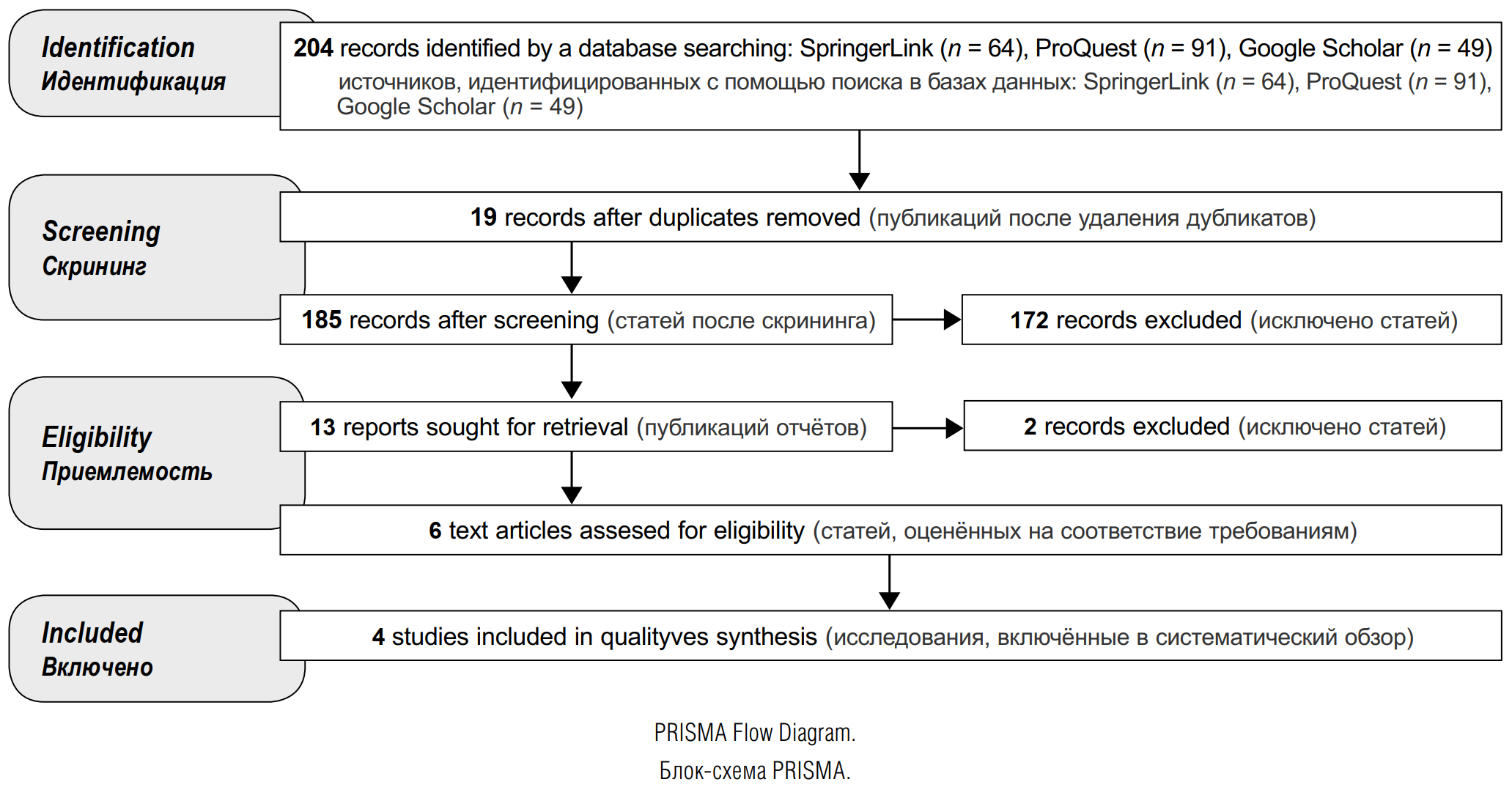
Literature searches were conducted across several international online databases, including SpringerLink, ProQuest, and Google Scholar (figure). The search used a combination of keywords with Boolean operators: “Laundry Wastewater” AND “COD” OR “Chemical Oxygen Demand” AND “BOD” OR “Biochemical Oxygen Demand” AND “Charcoal” OR “Carbon” AND “Zeolite.” Articles published within the last 10 years (2015–2025) in English or Indonesian were prioritized. Cross-references from relevant articles were also examined to ensure comprehensive coverage.
Eligibility Criteria
Inclusion criteria for the systematic review were: 1) primary research; 2) inclusion of experimental or laboratory testing methods; and 3) quantitative data on BOD and COD measurements. Articles in the form of reviews, theses, reports, or those with limited accessibility were excluded from the analysis.
Data Extraction
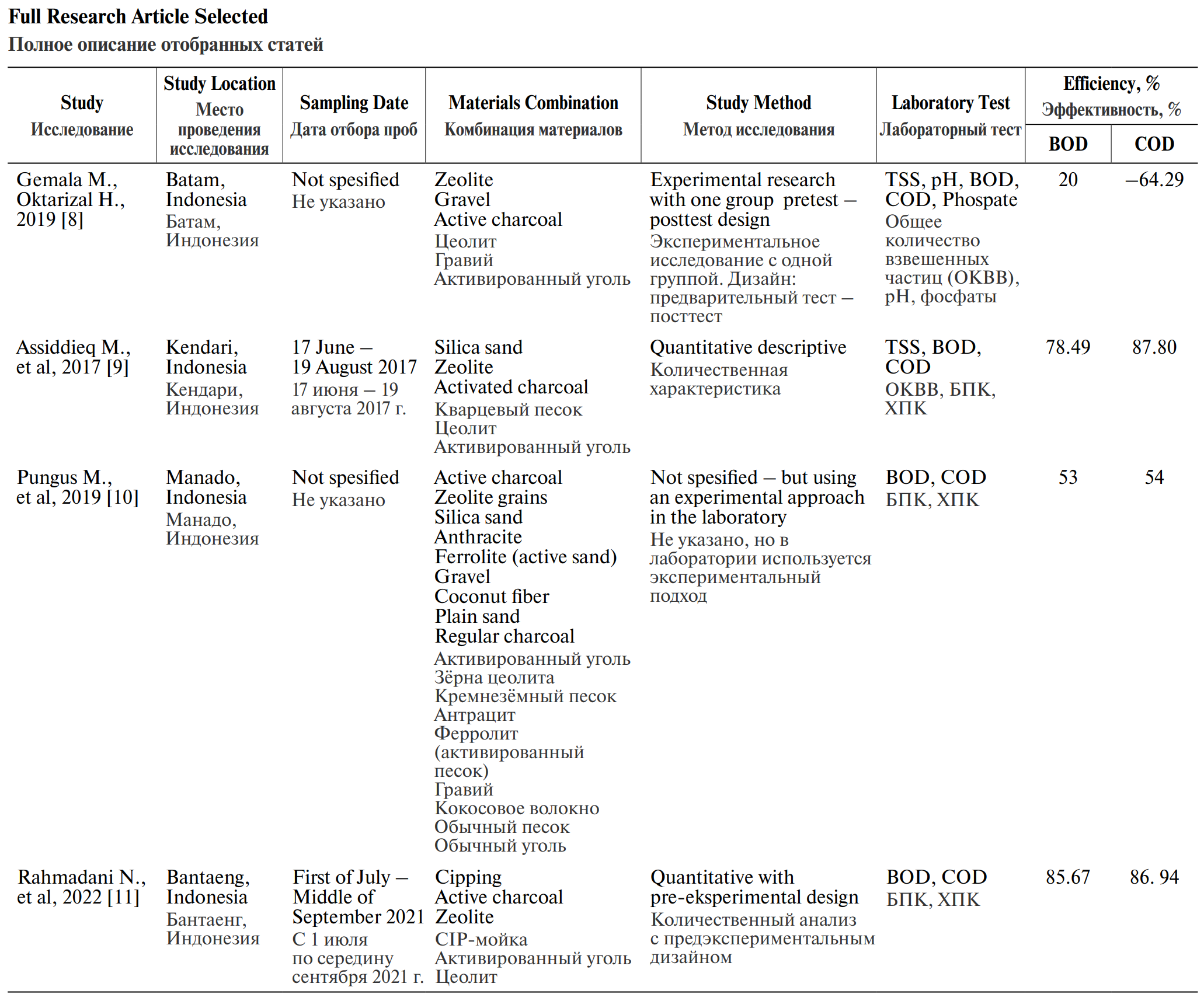
Data extracted from each article included the authors, year of publication, article title, study location, research method, and the effectiveness of BOD and COD reduction in laundry wastewater. Additional data, including treatment methods, filtration material combinations, and laboratory test parameters, were also collected. Initial and final BOD and COD values, along with key conclusions from each study, were organized into tables for easy comparison (table).
Data Analysis
Descriptive data analysis was performed to compare the effectiveness of BOD and COD reduction across charcoal and zeolite types and conditions of use. Quantitative data were summarized in tables to visualize general patterns. Narrative analysis was used to explore the advantages, limitations, and influencing factors of the reviewed studies.
Quality Assessment
Article quality was assessed based on clarity of research objectives, methodological rigor, appropriateness of data analysis, and transparency of data presentation. Two independent reviewers evaluated each study, and only those deemed valid were included in the final analysis to ensure the review’s validity and reliability.
Characteristics of the Studies Reviewed
Initially, 204 articles were identified from SpringerLink, ProQuest, and Google Scholar. After removing 19 duplicates, 186 articles remained. Of these, 172 were excluded for not meeting eligibility criteria, such as lacking focus on laundry wastewater or not being primary research. Thirteen articles underwent further review, and ultimately, four studies were included in the final analysis.
The included studies varied in their filtration material combinations, including gravel, silica sand, coconut fiber, anthracite, and ferrolite, in addition to charcoal and zeolite. Charcoal is recommended as a filtration medium due to its proven efficiency in reducing physicochemical pollutants [12]. Zeolite is widely used due to its high ion exchange capacity, making it suitable for removing various pollutants in wastewater [13].
Laundry Wastewater Characteristics
Laundry wastewater is domestic waste resulting from washing activities that involve the use of cleaning agents such as detergents and soaps. Physically, it appears grayish, cloudy, and odorous [14]. These characteristics indicate the presence of organic substances and persistent chemical compounds in the water
Laundry wastewater has high pollution potential due to the presence of organic substances, chemicals, and suspended solids. Based on Table 1, the parameters used to assess laundry wastewater quality include Total Suspended Solids (TSS), phosphate, pH, BOD, and COD. High BOD and COD values indicate a significant organic impact. For example, Mafhum (2023) reported BOD and COD values of 492 mg/L and 1500 mg/L, respectively, with a pH of 7.5 and TSS of 424 mg/L [15].
If untreated, the content of laundry wastewater may severely pollute the environment. TSS can interfere with photosynthesis in water [16]. High phosphate concentrations can lead to eutrophication [17]. Elevated BOD and COD levels reduce dissolved oxygen, potentially causing the death of aquatic organisms [18]. Hence, these compounds necessitate efficient wastewater treatment to minimize environmental impact.
Efficiency of BOD and COD Reduction
The efficiency of filtration material combinations depends on the ratio and types of materials used. The efficiency of filtration material combinations depends on both the ratio and type of materials used. Moreover, the effectiveness of a filtration method also depends on the specific characteristics of the wastewater. This aligns with the study by Dewangan (2025), which integrated advanced oxidation processes with physical methods and membrane filtration in the treatment of pharmaceutical wastewater. Dewangan highlighted that this integrated approach offers a promising solution. Nevertheless, the most suitable procedure depends on the quality and volume of the wastewater, the residual compounds, and their potential hazards [19].
Based on the reviewed articles, it was found that reducing BOD levels in laundry wastewater requires a combination of natural filtration materials. According to a study by Gemala et al. (2019), a combination of activated carbon from coconut shells, zeolite, and gravel successfully reduced BOD levels from 25 mg/L to 20 mg/L, showing a BOD reduction efficiency of 20%. However, the same combination altered COD levels from 84 mg/L to 138 mg/L. According to Gemala, the increase in COD levels was still within the quality standard limits and therefore not considered effective [8]. This indicates that effective COD reduction in laundry wastewater also requires an appropriate combination of natural filtration materials.
Assiddieq et al. (2017) reported that the combination of activated carbon, zeolite, and silica sand reduced BOD levels from 98.6 mg/L to 21.20 mg/L, resulting in a BOD reduction efficiency of 78.49%. In addition to being effective in reducing BOD, this combination also demonstrated a COD reduction efficiency of 87.80%, lowering COD levels from 210 mg/L to 25.60 mg/L. The study by Assiddieq et al. (2017) explained that the quantity of filtration materials used significantly influences the filtration efficiency of laundry wastewater [9].
Pungus et al. (2019) used a different combination of filtration materials for laundry wastewater, including activated carbon, zeolite granules, silica sand, anthracite, ferrolite, gravel, palm fiber (ijuk), sand, and regular charcoal. This combination achieved a BOD reduction efficiency of 53%, lowering the initial BOD concentration from 263 mg/L to 125 mg/L. It also showed a COD reduction efficiency of 54%, from an initial COD concentration of 952 mg/L to 443 mg/L. The findings suggest that this filtration method can also reduce other organic pollutants present in laundry wastewater [10].
A high level of BOD and COD reduction was demonstrated by Rahmadani et al. (2022), who used a combination of cipping (wood chips), activated carbon, and zeolite. This combination reduced BOD levels by 85.67%, from 325.00 mg/L to 46.55 mg/L, and COD levels by 86.94%, from 648.80 mg/L to 84.69 mg/L. The results of this study indicate that the treated water met the established quality standards [11].
The review reveals that various natural filtration combinations in laundry wastewater treatment are effective to differing extents in reducing BOD and COD. Common media include activated charcoal, zeolite, silica sand, and gravel, each with unique mechanisms and effectiveness depending on wastewater characteristics and filtration design.
Activated Charcoal
Activated charcoal is an adsorptive medium widely used in various industries to remove pollutants from wastewater. It is utilized as a filtration medium due to its higher adsorption capacity compared to biochar, particularly in reducing dissolved Chemical Oxygen Demand (COD) in wastewater treatment [19]. Several studies show that activated charcoal effectively reduces both COD and BOD concentrations.
Melian (2023) stated that filtration using activated charcoal is both cost-efficient and effective in reducing COD levels in laundry wastewater to an acceptable level [20]. In laundry wastewater treatment, Mukti et al. (2024) demonstrated that activated charcoal effectively reduced BOD by 96.66% and COD by 93.07% [21]. Similarly, Mongiovi (2024) reported that activated charcoal reduced COD and BOD concentrations in laundry wastewater by more than 70% and 60%, respectively [22].
The level of effectiveness is influenced by the dosage of activated charcoal used. Zahmatkesh (2023) applied activated charcoal as a filtration medium in varying doses—0.15, 0.2, and 0.25. The study revealed that the 0.25 dose had the highest effectiveness, with COD and BOD removal rates of 91% and 93%, respectively [23].
Zeolite
Zeolite is a crystalline microporous aluminosilicate, whose framework consists of TO₄ tetrahedra and possesses highly useful properties as a catalyst and adsorbent due to its crystal structure and composition [24]. Zeolite functions as an adsorbent by utilizing its porous three-dimensional framework structure, which allows small molecules to enter and become trapped within [25].
As an adsorptive medium, zeolite primarily affects suspended solids and organic compounds present in laundry wastewater [26]. Its use in improving water quality has been widely adopted, as zeolite is a natural material that has been studied for various parameters such as Fe, Mn, organic substances, CO, and other pollutants [27]. Pirsaheb (2019) demonstrated that filtration using zeolite in wastewater can reduce BOD levels by up to 68% and COD levels by 78% [28]. In laundry wastewater, Ma’ruf (2019) reported the effectiveness of zeolite as a filtration medium, showing a BOD reduction of 83.38% and a COD reduction of 89.86% [29].
Silica Sand
The use of a combination of silica sand with other natural materials, such as zeolite and activated carbon, as a filtration medium for contaminated water has proven effective in reducing various pollutant parameters, including physical, chemical, and organic content. This aligns with the study conducted by Rahman et al. (2022), which used a combination of manganese zeolite, activated carbon, and silica sand as a filtration media to treat contaminated water, making it suitable for daily use [30].
In the filtration process of laundry wastewater, silica sand is capable of reducing Total Suspended Solids (TSS), turbidity, and phosphate levels. A study by Wicaksono and Rosariawari (2025) showed that silica sand was more effective in reducing phosphate levels in laundry wastewater, achieving a reduction of 83.48%, compared to recycled glass, which only achieved a reduction of 46.74% [31].
Gravel
Gravel is one of the commonly used filtration media in wastewater treatment due to its ability to filter organic substances that are difficult to degrade. The filtration method using gravel has been shown to reduce Chemical Oxygen Demand (COD) levels by 83.9% in leachate using the Upflow Gravel Filtration (UGF) method [32]. In another study, gravel combined with quartz sand and rubber powder achieved an effectiveness of 92–98% in removing suspended solids from wastewater [33].
Previous studies have shown that gravel plays a supportive role in the filtration of laundry wastewater, although its effectiveness in reducing pollutants is not as strong as that of active media such as zeolite. In a study using the Multi Soil Layering (MSL) method, the gravel layer contributed to a significant reduction in pollutants, with COD removal efficiency reaching 95%, although the zeolite layer generally produced higher results [14]. This highlights that while gravel does not possess high adsorptive capacity, its presence remains crucial in supporting the overall performance of the filtration media.
Limitations and Variation Findings
Although this review provides an overview of the effectiveness of combining activated carbon and zeolite in reducing BOD and COD levels in laundry wastewater, several limitations should be considered:
Variation in Reviewed Research Methods
The literature used in this study comes from various sources employing different research methods. Differences in experimental design, types of carbon and zeolite used, as well as other environmental parameters, may influence the reported outcomes.
Limitations in Experimental Data
This review relies on previously published literature and does not include direct experimental testing. Therefore, the effectiveness of the activated carbon and zeolite combination under specific conditions—such as variations in pH, temperature, and specific pollutant concentrations—requires further investigation through laboratory experiments.
Lack of Information on Regeneration and Long-Term Effectiveness
Most of the reviewed studies assess only the short-term effectiveness of natural carbon and zeolite, without discussing the potential for reuse or the efficiency of material regeneration.
Conclusion
Based on the review findings, the combination of activated carbon and zeolite filtration media shows significant potential in reducing BOD and COD levels in laundry wastewater. Activated carbon is effective in adsorbing organic compounds and contaminants, while zeolite plays an important role in reducing organic matter and heavy metal ions through its microporous crystalline structure. Additionally, supporting media such as silica sand and gravel enhance the filtration process by trapping suspended particles and maintaining system stability. Nevertheless, variations in research methodologies and the lack of experimental data present challenges in drawing uniform conclusions. Therefore, further experimental studies are needed to evaluate the long-term effectiveness and regeneration potential of the filtration media in order to support sustainable and environmentally friendly laundry wastewater treatment.
1. Gavrilescu M., Demnerová K., Aamand J., Agathos S., Fava F. Emerging pollutants in the environment: present and future challenges in biomonitoring, ecological risks and bioremediation. N. Biotechnol. 2015; 32(1): 147–56. https://doi.org/10.1016/j.nbt.2014.01.001
2. Tchobanoglous G., Burton F.L., Stensel D.H. Wastewater Engineering: Treatment and Reuse. New York: Metcalf & Eddy; 2014.
3. Sawyer C.N., McCarty P. Chemistry for Environmental Engineering and Science. 5th ed. Tata McGraw-Hill Publishing Company Ltd.; 1978.
4. Laitala K., Klepp I.G., Kettlewell R., Wiedemann S. Laundry care regimes: Do the practices of keeping clothes clean have different environmental impacts based on the fibre content? Sustainability. 2020; 12(18): 7537. https://doi.org/10.3390/su12187537
5. Haggerty G.M., Bowman R.S. Sorption of chromate and other inorganic anions by organo-zeolite. Environ. Sci. Technol. 1994; 28(3): 452–8. https://doi.org/10.1021/es00052a017
6. Panwar K., Dadhich I., Dave M., Sharma Y., Shaik N. Effective waste water treatment by the application of natural coagulants. Adv. Mater. Sci. Eng. 2022; (3): 1–5. https://doi.org/10.1155/2022/3023200
7. Page M.J., McKenzie J.E., Bossuyt P.M., Boutron I., Hoffmann T.C., Mulrow C.D., et al. The PRISMA 2020 statement: an updated guideline for reporting systematic reviews. BMJ. 2021; 372: n71. https://doi.org/10.1136/bmj.n71
8. Gemala M., Oktarizal H. Rancang bangun alat penyaringan air limbah laundry. Chempublish J. 2019; 4(1): 38–43. https://doi.org/10.22437/chp.v4i1.6910 (in Indonesian)
9. Assiddieq M., Darmayani S., Kudonowarso W. The use of silica sand, zeolite and active charcoal to reduce BOD, COD, and TSS of laundry waste water as a biology learning resources. JPBI (Jurnal Pendidikan Biologi Indonesia). 2017; 3(3): 202–7. https://doi.org/10.22219/JPBI.V3I3.4864
10. Pungus M., Palilingan S.C., Tumimomor F. Penurunan kadar BOD dan COD dalam limbah cair laundry menggunakan kombinasi adsorben alam sebagai media filtrasi. Fullerene J. Chem. 2019; 4(2): 54–60. (in Indonesian)
11. Rahmadani N., Syafri M., Mustari S., Nur N.H. The effectiveness of simple filtering with cipping media, activated charcoal, and zeolite in stabilizing BOD and COD levels of liquid waste for household laundry business. Media Publikasi Promosi Kesehatan Indonesia (MPPKI). 2022; 5(4): 447–52. https://doi.org/10.56338/MPPKI.V5I4.2209 (in Indonesian)
12. Musa A., Saleh S., Mohammed K., Labaran Y.H., Yau J.Z., Mato H. Evaluation of potential use of charcoal as a filter material in water treatment. Int. Res. J. Eng. Technol. (IRJET). 2020; 7(5): 1930–9.
13. Manoharmayum V.S., Ningombam D. Zeolites as versatile material for sustainable water purification: a review. EQA – Int. J. Environ. Qual. 2025; 65: 25–34. https://doi.org/10.6092/issn.2281-4485/20297
14. Hadrah H., Kasman M., Septiani K.T. Analisis penurunan parameter pencemar limbah cair laundry dengan Multi Soil Layering (MSL). Jurnal Daur Lingkungan. 2019; 2(1): 36–41. (in Indonesian)
15. Arrazi M.M. Penurunan Kadar BOD Dan COD Pada Limbah Cair Penatu Menggunakan Adsorben Betonit. UIN Ar-Raniry Banda Aceh; 2024. (in Indonesian)
16. Kamajaya G.Y., Putra I.D.N.N., Putra I.N.G. Analisis Sebaran Total Suspended Solid (TSS) Berdasarkan Citra Landsat 8 Menggunakan Tiga Algoritma Berbeda Di Perairan Teluk Benoa, Bali. J. Mar. Aquat. Sci. 2021; 7(1): 18. https://doi.org/10.24843/jmas.2021.v07.i01.p03 (in Indonesian)
17. Pratiwi N., Handoyo G., Indrayanti E. Hubungan Kandungan Fosfat dan Parameter Lingkungan di Muara Sungai Mrican, Pekalongan. Indones. J. Oceanogr. 2025; 7(1): 54–60. https://doi.org/10.14710/ijoce.v7i1.25527 https://elibrary.ru/nybpmb (in Indonesian)
18. Turambi J.S., Naharia O., Gedoan S.P., Mokosuli Y.S. Analisis pengujian Biological Exygen Demand (BOD) dan Chemical Oxygen Demand (COD) di Inlet dan Outlet Instalasi Pengolahan Air Limbah (IPAL) RSU GMIM Tonsea Airmadidi. Jurnal Pendidikan Tambusai. 2024; 8(2): 36710–20. (in Indonesian)
19. Huggins T.M., Haeger A., Biffinger J.C., Ren Z.J. Granular biochar compared with activated carbon for wastewater treatment and resource recovery. Water Res. 2016; 94: 225–32. https://doi.org/10.1016/j.watres.2016.02.059
20. Melián E.P., Santiago D.E., León E., Reboso J.V., Herrera-Melián J.A. Treatment of laundry wastewater by different processes: Optimization and life cycle assessment. J. Environ. Chem. Eng. 2023; 11(2): 109302. https://doi.org/10.1016/J.JECE.2023.109302
21. Mukti A.D., Yosilia R., Septiawati E. Utilization of coconut shell activated charcoal in adsorbing laundry wastewater. Indones. J. Environ. Sustain. Issues. 2024; 1(1): 2024. https://doi.org/10.70211/ijesi.v1i1.129 https://elibrary.ru/jazuns
22. Mongioví C., Morin-Crini N., Lacalamita D., Crini G. Impact of carbon technology on chemical and biochemical oxygen demand values as water quality indicators of physico-chemical treated laundry effluents. Case Stud. Chem. Environ. Eng. 2024; 10: 101012. https://doi.org/10.1016/J.CSCEE.2024.101012
23. Zahmatkesh S., Gholian-Jouybari F., Klemeš J.J., Bokhari A., Hajiaghaei-Keshteli M. Sustainable and optimized values for municipal wastewater: The removal of biological oxygen demand and chemical oxygen demand by various levels of geranular activated carbon- and genetic algorithm-based simulation. J. Clean Prod. 2023; 417(10): 137932. https://doi.org/10.1016/J.JCLEPRO.2023.137932
24. Pérez-Botella E., Valencia S., Rey F. Zeolites in adsorption processes: state of the art and future prospects. Chem. Rev. 2022; 122(24): 17647–95. https://doi.org/10.1021/acs.chemrev.2c00140
25. Renni C., Mahatmanti F., Widiarti N. Pemanfaatan Zeolit Alam Teraktivasi sebagai Adsorben Ion Logam Fe(III) dan Cr(VI). Indones. J. Chem. Sci. 2018; 7(1): 64–70. (in Indonesian)
26. Fang X., Xu Z., Luo Y., Ren L., Hua W. Removal of radionuclides from laundry wastewater containing organics and suspended solids using inorganic ion exchanger. Procedia Environ. Sci. 2016; 31: 375–81. https://doi.org/10.1016/J.PROENV.2016.02.053
27. Yanto Y. Penggunaan zeolit sebagai media penyaring pada pengolahan air limbahdomestik. Dinamika Rekayasa. 2011; 7(2): 28. (in Indonesian)
28. Pirsaheb M., Hossaini H., Amini J. Evaluation of a zeolite/anaerobic buffled reactor hybrid system for treatment of low bio-degradable effluents. Mater. Sci. Eng. Mater. Biol. Appl. 2019; 104: 109943. https://doi.org/10.1016/j.msec.2019.109943
29. Ma’Ruf A., Fathoni M.A.S.A., Purnawanto A.M., Astiyani I. Ultrafiltration of laundry wastewater using natural zeolite-PVA hybrid membrane. IOP Conf. Ser. Mater. Sci. Eng. 2020; 771(1): 012042. https://doi.org/10.1088/1757-899X/771/1/012042
30. Rahman A., Salman A., Ansharuddin A., Nainggolan R., Siregar S.A., Ghani M.A.A. Water treatment process using manganese zeolite filter, activated carbon filter, and silica sand filter. Int. J. Tech. Voc. Eng. Technol. 2023; 3(3): 1–7.
31. Wicaksono P., Rosariawari F. Utilization of recycled glass as an alternative to silica sand filter media in reducing Total Suspended Solids (TSS), Turbidity, and Phosphates in Laundry Wastewater. J. Serambi Eng. (JSE). 2025; 10(1).
32. Galvão R.B., da Silva Moretti A.A., Fernandes F., Kuroda E.K. Post-treatment of stabilized landfill leachate by upflow gravel filtration and granular activated carbon adsorption. Environ. Technol. 2021; 42(26): 4179–88. https://doi.org/10.1080/09593330.2020.1746838
33. Umarov U., Quvondiqov Q., Obidjonov A., Babaev A., Ochildiyev O. Selecting wastewater treatment filters using local raw materials. E3S Web of Conf. 2023; 401: 03019. https://doi.org/10.1051/e3sconf/202340103019
Ph.D, Assist. Prof., State University of Malang, 65145, Malang, Republic of Indonesia
e-mail: nurnaherya.fik@um.ac.id
M.Kes, Prof. Dr. State University of Malang, 65145, Malang, Republic of Indonesia
M.PH, State University of Malang, 65145, Malang, Republic of Indonesia
S.KM, State University of Malang, 65145, Malang, Republic of Indonesia.
S.KM, State University of Malang, 5 Semarang Rd, 65145, Malang, Republic of Indonesia.
Ph.D, Assist. Prof, Ramkhamhaeng University, 282 Ramkhamhaeng Rd, 10240, Bangkok, Kingdom of Thailand.
Ulfah N., Adi S., Humairo M., Abidin M., Fadilah A., Surach A. Effectiveness of natural filtration combinations in reducing BOD and COD levels in laundry wastewater: a systematic review. Hygiene and Sanitation. 2026;105(5):493-498. (In Russ.) https://doi.org/10.47470/0016-9900-2026-105-5-493-498. EDN: dijykh
Мы в ВК:

 Email this article (Login required)
Email the author (Login required)
Email this article (Login required)
Email the author (Login required) 141014, The Moscow region, Mytishchi, 2, Semashko street
Federal Scientific Center of Hygiene named after F.F. Erisman
Phone: +7 916 885 28 02
e-mail: gigsan@list.ru