Contents
Scroll to:
https://doi.org/10.47470/0016-9900-2026-105-5-507-513
EDN: wynodu
Scroll to:
Introduction. The relevance of the study is due to the importance and insufficient study of the health risks of exposure to rare earth elements (REE) and the likelihood of REE triggering immunogenetic mechanisms of vascular aging.
Materials and methods. The observation group included fifty three employees of the main production who were exposed to REE. Workplace air was found to contain lanthanum, 0.00028–0.0039 mg/m³; praseodymium, 0.000044–0.00070 mg/m³, terbium, <0.000007 mg/m³; yttrium, <0.00001 mg/m³. The reference group consisted of 64 administrative workers who did not come into contact with REE. The study involved using the allergosorbent test, flow cytometry, ELISA, and PCR. Statistical data analysis was performed with Statistica 10.0. Data analysis included the Student’s t-test, R², RR, OR, and 95% CI; the significance of intergroup differences was taken at p<0.05.
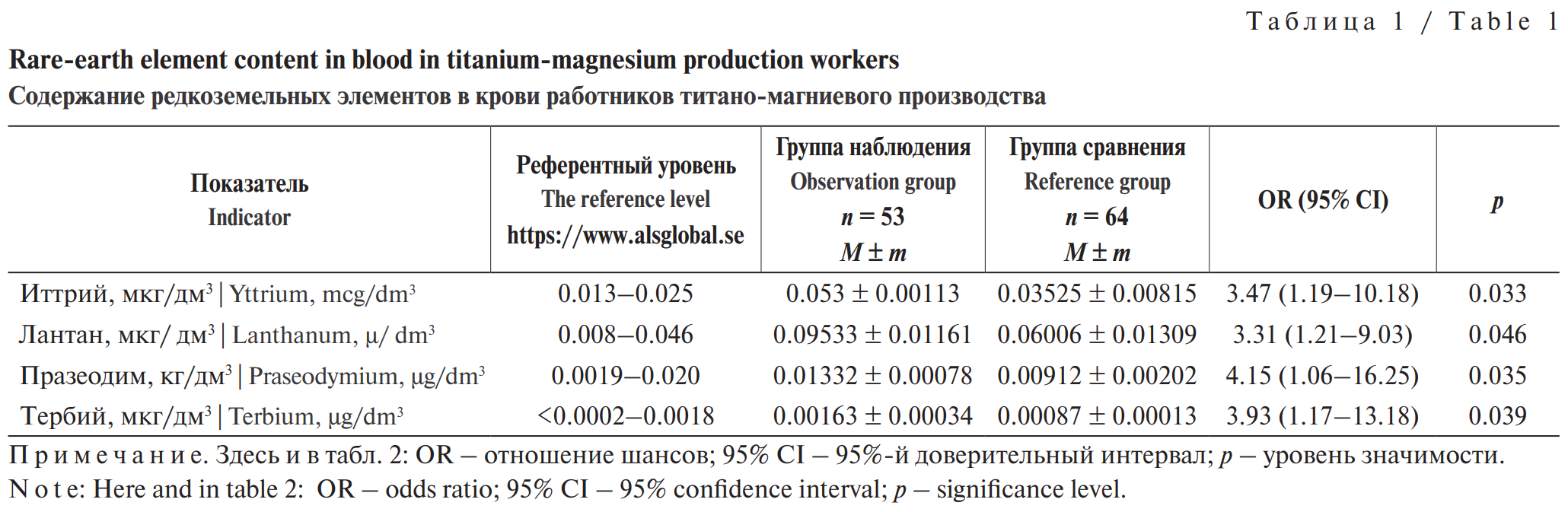
Results. In the observation group, elevated REE levels detected in the workers’ blood (1.46–1.87 times; p<0.05), was associated with an increase in CD277+-lymphocyte expression (R²=0.53–0.89; p<0.05) and higher OR of IgG hyperproduction to lanthanides and TNF-α (OR=2.38–7.71). Significant differences were found in the polymorphism of the AGT Thr174Met (CT; OR=2.96, CI=1.33–6.59) and ApoE Cys130Arg (TC; OR=9.07, CI=1.93–42.67) genes.
Limitations. Limited sampling of the main group of workers; limited number of modern reports concerning the assessment of immune mechanisms of vascular aging associated with exposure to REE.
Conclusion. Exposure to REE in main production workers is accompanied by increased levels of butyrophilin, lanthanide IgG, and an increased relative risk of developing disorders associated with single-nucleotide polymorphism of angiotensinogen and apolipoprotein vascular aging genes (RR=2.07–7.25). The identified immunological and genetic indicators can be recommended for early diagnosis and prevention of work-related diseases involving implementation of immunological pathways of early vascular aging under exposure to REE.
Compliance with ethical standards. The study was conducted in accordance with the principles stated in the Declaration of Helsinki. The study protocol and design were approved by the Local Ethics Committee of the Federal Scientific Center for Medical and Preventive Health Risk Management Technologies on March 13, 2024 (Protocol No. 2).
Contribution:
Zaitseva N.V. – study concept and design;
Chelakova Yu.A. – data collection and analysis, writing and editing the text; study concept and design;
Dolgikh O.V. – editing the text.
All authors are responsible for the integrity of all parts of the manuscript and approval of the manuscript final version.
Conflict of interest. The authors declare no conflict of interest.
Funding. The study had no sponsorship.
Received: February 25, 2026 / Revised: April 16, 2026 / Accepted: May 20, 2026 / Published: June 18, 2026
Zaitseva N.V., Chelakova Yu.A., Dolgikh O.V. Exposure to rare earth elements and single nucleotide substitutions as risk factors for early vascular aging in workers employed at titanium-magnesium production. Hygiene and Sanitation. 2026;105(5):507-513. https://doi.org/10.47470/0016-9900-2026-105-5-507-513. EDN: wynodu
Introduction
The widespread use of rare-earth elements (REEs) in high-technology industries has led to a steady increase in their production and, consequently, a rise in the number of workers exposed to them in the workplace [1, 2]. Despite their growing prevalence, the assessment of health risks associated with exposure to REEs remains understudied [3]. This issue is of particular relevance to non-ferrous metallurgy plants, especially those specialising in titanium and magnesium production, where workers may be exposed to a combination of aerosols, salts, and oxides of titanium and REEs during the reduction, distillation, and alloying of titanium and rare metals [4]. Lanthanides, when inhaled, have the ability to accumulate in organs and tissues [5]. The biological effects of REEs are associated with their capacity to induce oxidative stress, disrupt mitochondrial function, and trigger apoptotic processes and vascular ageing [3]. Studies in animal models and limited epidemiological data suggest that REEs can modulate the immune response, causing both suppression and hyperactivation of its individual components, thereby triggering the immune mechanisms of atherogenesis [6]. Contemporary research in occupational medicine is based on the application of molecular genetic analysis methods, which enable the development of highly informative markers to assess the risk of developing occupation-related conditions [7]. Polymorphisms in genes, encoding key proteins involved in metabolic and regulatory processes (for example, the angiotensinogen AGT gene and apolipoprotein ApoE gene), can significantly influence the body’s susceptibility to the effects of harmful factors through various means, including modifications to the immune profile [8]. Until recently, toxicological and immunological studies into the health effects of REEs have been relatively scarce, and many questions remain unanswered, particularly regarding the adverse effects of occupational exposure to REEs [9].
The aim of the present study was to assess the immunogenetic characteristics of vascular ageing in workers (using titanium-magnesium production as a case study) exposed to rare-earth elements (REEs), for the purposes of early diagnosis and prevention of occupation-related diseases.
Materials and Methods
A comprehensive immunological and genetic examination of 117 workers (71 women and 46 men) was carried out at a titanium-magnesium plant. The main group comprised 53 workers (21 women and 32 men) aged 54.42 ± 1.55 years, employed in the technological processes of reduction and distillation of titanium and rare metals and exposed to rare-earth elements (hazard class 2). This group included representatives of the following occupations: equipment and workshop repair foremen, furnace operators, electric and gas welders, distillation, neutralisation and purification plant operators, and electricians specializing in the repair and maintenance of electrical equipment. At all workplaces surveyed, the presence of lanthanides in the air of the working area was detected at concentrations not exceeding occupational exposure limits (maximum acceptable concentrations [MAC] and occupational exposure limits [OEL]). The maximum concentrations, converted to oxides, were determined within the following ranges: for lanthanum 0.00028–0.0039 mg/m³ (OEL = 6 mg/m³), praseodymium 0.000044–0.0007 mg/m³ (OEL = 6 mg/m³), terbium < 0.000007 mg/m³ (OEL = 4 mg/m³), and yttrium < 0.00001 mg/m³ (MACm.s. = 2 mg/m³). The comparison group comprised 64 administrative staff members of the enterprise (50 women and 14 men) aged 48.42 ± 1.63 years, who had no occupational exposure to harmful industrial factors. All study participants gave their voluntary informed consent to take part in the study.
The study was conducted using peripheral blood samples from the workers under investigation. The concentration of rare-earth element was determined by inductively coupled plasma mass spectrometry (ICP-MS) using an Agilent 7900 instrument (Agilent Technologies Inc., USA).
Lymphocyte phenotyping was performed using a FACSCalibur flow cytometer (Becton Dickinson, USA) with CellQuest.PrO software. Quantitative assessment of lymphocyte populations and subpopulations (CD277+) was performed by membrane immunofluorescence, recording at least 10,000 events.
To determine the concentration of tumour necrosis factor alpha (TNF-α), an enzyme-linked immunosorbent assay (ELISA) was performed on a TECAN Sunrise analyzer (Austria) using a test kit from Vector-Best (Russia). The content of lanthanide-specific immunoglobulin G (IgG) was determined using an enzyme-labelled allergosorbent assay*.
Extraction of DNA from peripheral blood was carried out using the DNA-Sorb-B kit (NextBio, Russia). Genotyping of the Thr174Met rs4762 polymorphism in the angiotensinogen (AGT) gene and the Cys130Arg rs429358 polymorphism in the apolipoprotein (ApoE) gene was carried out by real-time PCR on a CFX96 amplifier (Bio-Rad, Singapore) using SNP-Screen kits (Sintol, Russia). The amplification protocol comprised a denaturation step at 95 °C for 3 minutes, followed by 40 cycles at 95 °C (15 s) and 63 °C (40 s).
Statistical analysis of the results was performed using the Statistica 10.0 software package (StatSoft, USA). Inferential statistics were used for data analysis: Student’s t-test, correlation and regression analysis, and Fisher’s F-test. The results of logistic modelling are presented as the coefficient of determination (R²) and the level of statistical significance (p). To assess the association between the studied indicators and the impact of factors, the odds ratio (OR) was calculated with a 95% confidence interval (CI), and to characterise the risk of developing disorders under conditions of chemical exposure, the relative risk (RR) was calculated. Differences were considered significant at p ≤ 0.05.
Results
An investigation into the levels of rare-earth elements in the bodies of workers in the titanium-magnesium industry revealed a marked increase in the levels of certain metals compared with administrative staff: yttrium – 1.5 times higher (ratio to the upper limit of the reference range – 2.12), lanthanum – 1.59 times (ratio to the upper limit of the reference range – 2.07), praseodymium – 1.46 times (ratio to the upper limit of the reference range – 0.67), and terbium – 1.87 times (ratio to the upper limit of the reference range – 0.91) (Table 1).
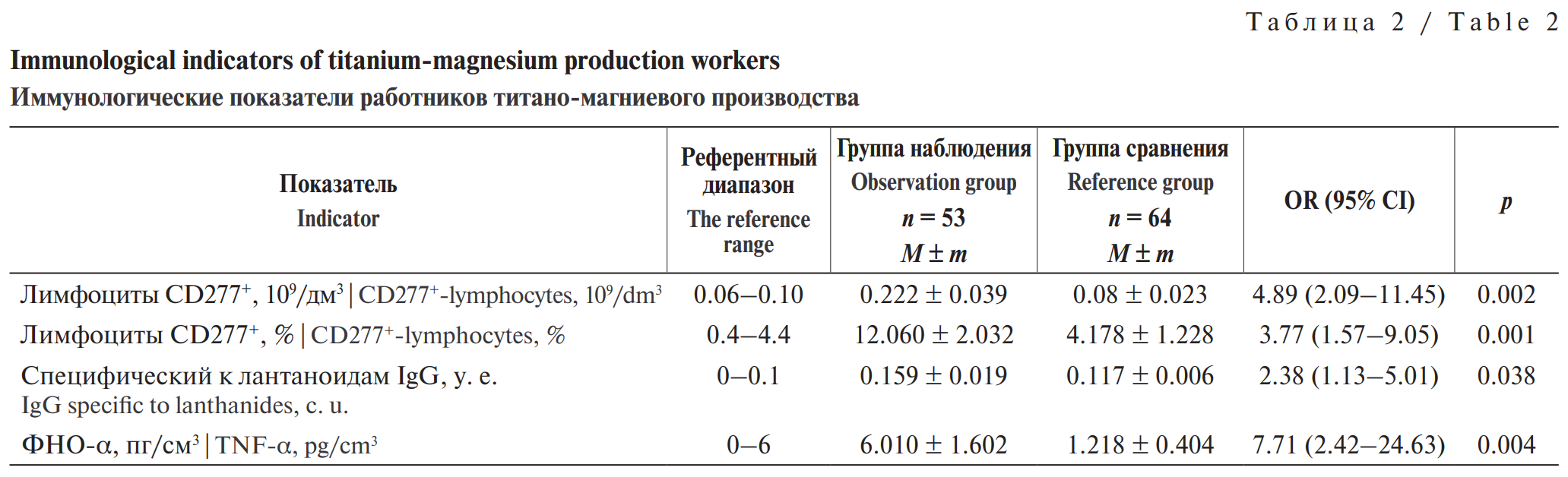
A comparative analysis of immunological parameters in workers from the observation and control groups at a non-ferrous metallurgy plant (harmful occupational factor – REEs) revealed pronounced signs of cellular dysregulation, primarily due to the overexpression of the butyrophilin regulatory cluster (CD277+ lymphocytes). Thus, in the main group, the absolute content of CD277+ was 2.78 times higher than that of the comparison group (p = 0.002), whilst the percentage was 2.89 times higher (p = 0.001) (Table 2).
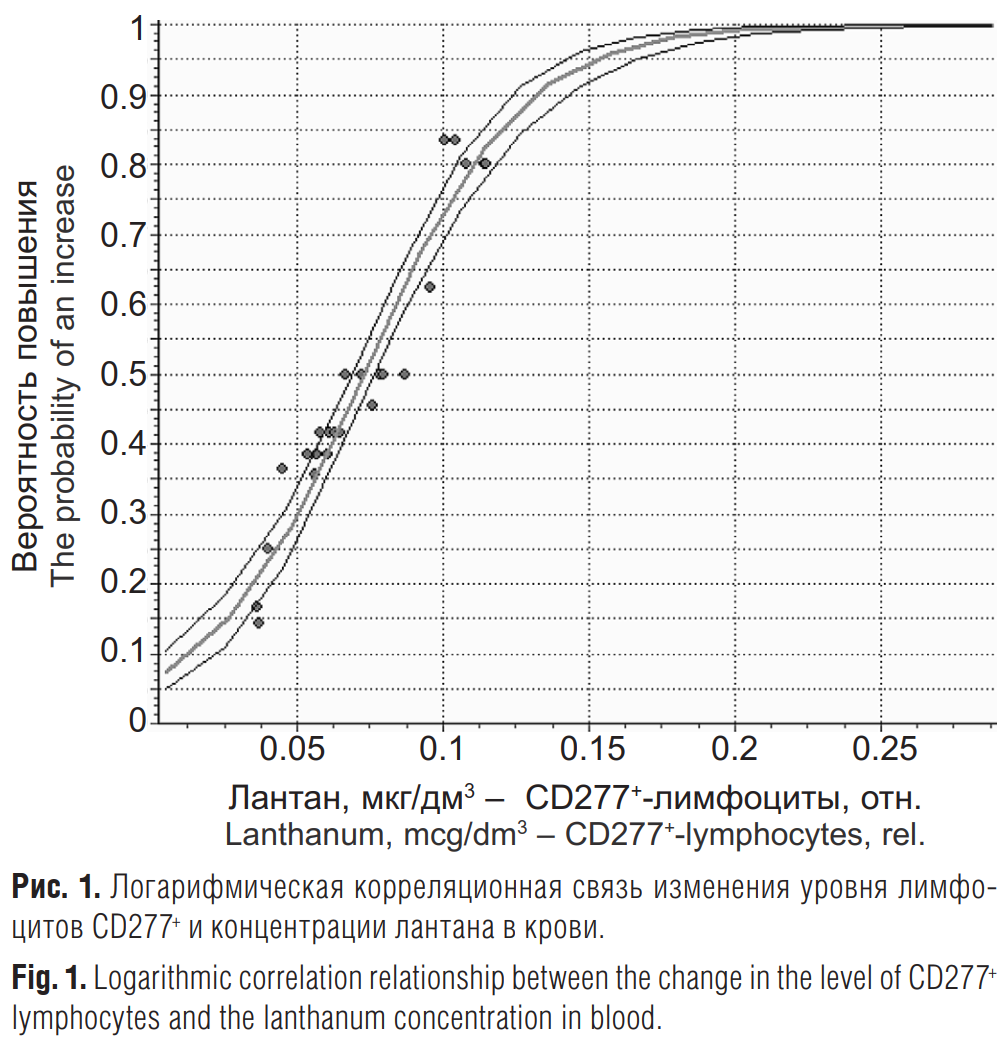
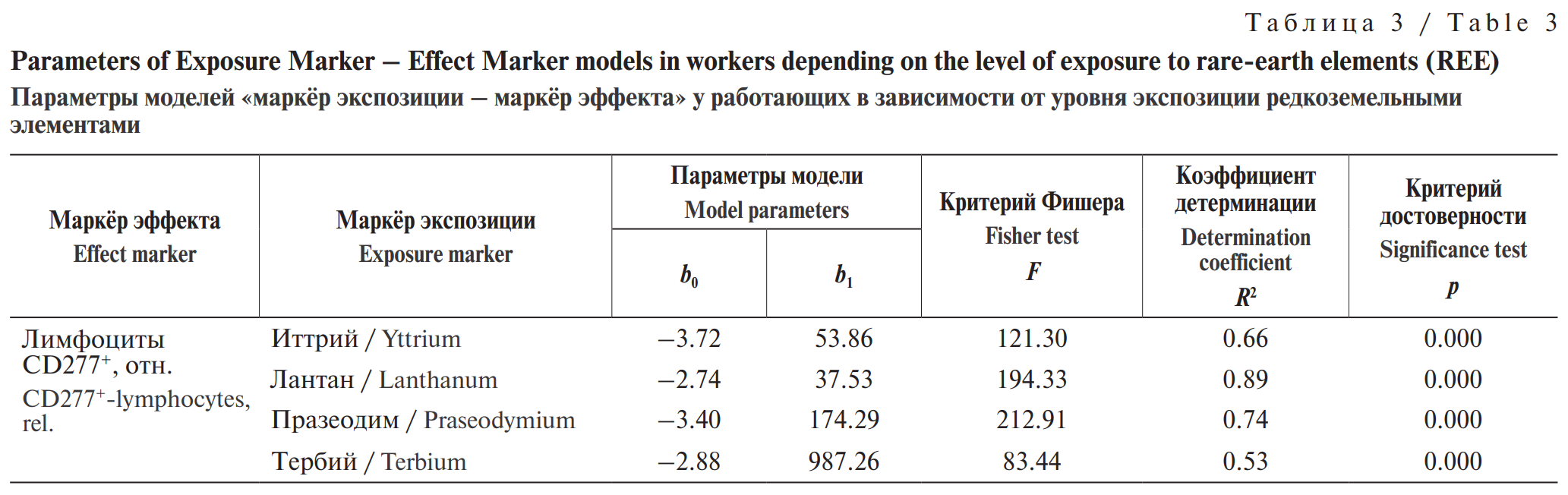
A statistically significant causal relationship was identified between changes in cellular immunity parameters (CD277+) and increasing concentrations of contaminants in biological media. A statistically significant (p ≤ 0.05) increase in the proportion of CD277+ lymphocytes was observed with rising concentrations of yttrium and lanthanum (Fig. 1), as well as praseodymium and terbium in the blood (R²= 0.53–0.89) (Table 3)
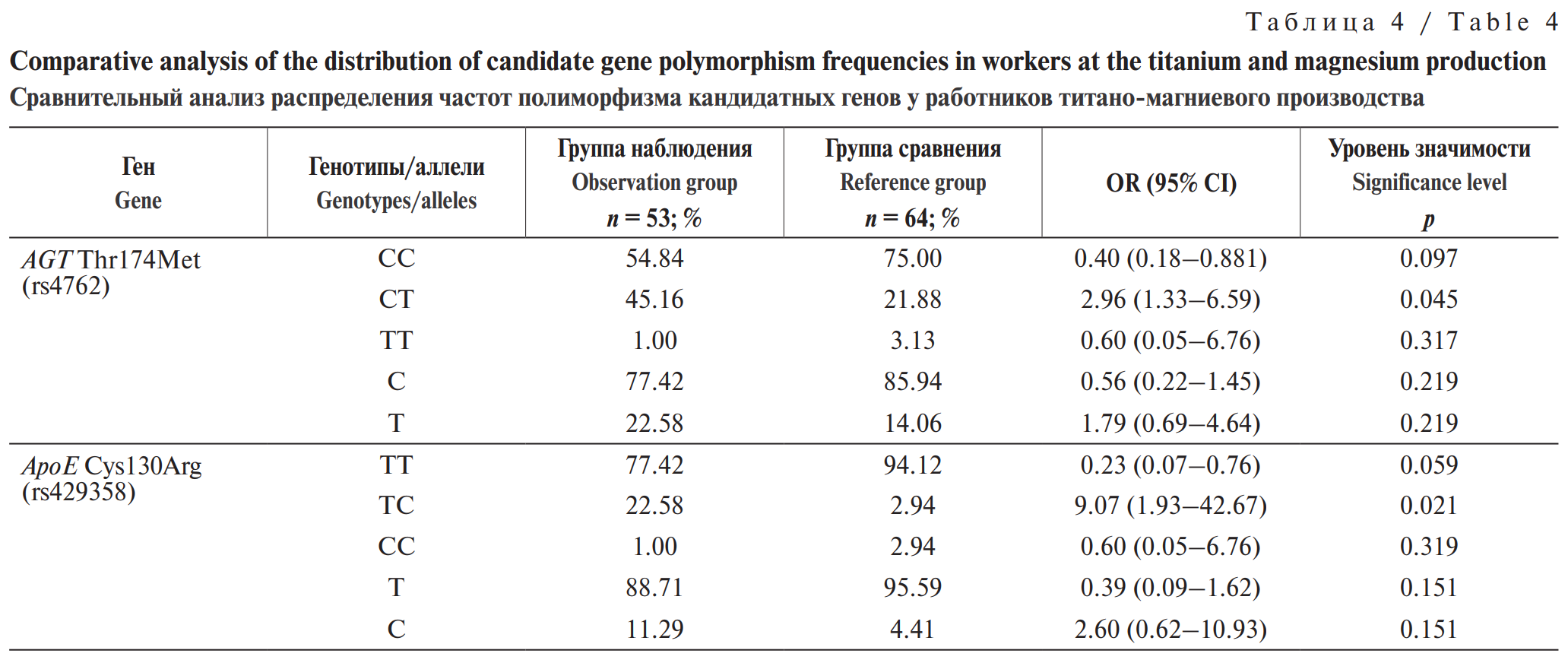
Elevated levels of lanthanide-specific immunoglobulin G were detected in 60.6% of workers in the main group. The mean values of this indicator in the study group were statistically significantly higher than the corresponding values in the comparison group by a factor of 1.36 (p = 0.038). An odds ratio analysis showed that exposure to rare-earth elements is associated with an increased likelihood of hyperproduction of IgG specific to lanthanides (OR = 2.38; 95% CI = 1.13–5.01).
Elevated tumour necrosis factor expression relative to the reference range was recorded in 33.3% of workers in the main group and in only 6.7% of those in the comparison group. The level of this marker in the observation group was 4.9 times higher than the control values (p = 0.004). An odds ratio analysis showed that an increase in blood REE concentrations was accompanied by a significant rise in TNF-α levels among workers in the study group (OR = 7.71, 95% CI = 2.42–24.63).
It was found that polymorphisms in the angiotensinogen gene AGT Thr174Met (CT heterozygote – OR = 2.96, 95% CI = 1.33–6.59, p ≤ 0.05) and the apolipoprotein ApoE Cys130Arg (TC heterozygote – OR = 9.07, 95% CI = 1.93–42.67, p ≤ 0.05) act as risk factors for the development of disorders associated with the functional domain of the candidate genes. Furthermore, the presence of the AGT Thr174Met (rs4762) and ApoE Cys130Arg (rs429358) polymorphisms increases the risk of the initiation of immune-mediated mechanisms of vascular ageing (atherogenesis) by a factor of four among front-line production workers compared with administrative staff (RR = 2.07–7.25) (Table 4).
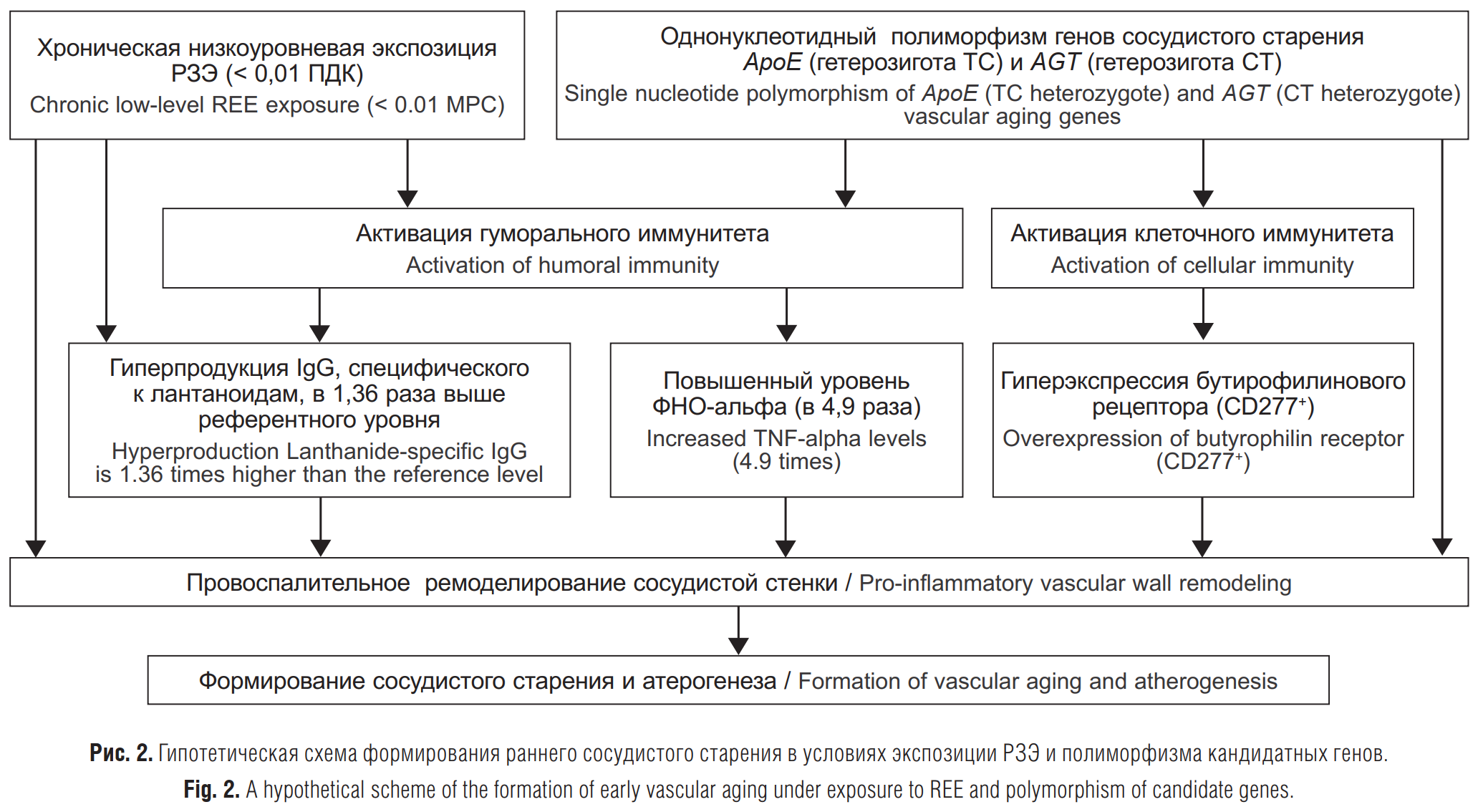
The results obtained in this study provided a basis for a hypothetical algorithm explaining the development of early vascular ageing under conditions of exposure to rare-earth elements and polymorphisms in candidate genes (Fig. 2).
Discussion
The results of this study have identified significant changes in immunological and genetic profile indicators, which correspond with data from the scientific literature and reflect the characteristics and modification of the immunogenetic mechanisms of atherogenesis (vascular ageing) in workers at non-ferrous metallurgy enterprises [10–24]. According to the studies conducted, elevated levels of REEs lead to increased TNF-α, specific antibodies to lanthanides, and the expression of the pro-inflammatory butyrophilin receptor on gamma-delta T-lymphocytes (CD277+) in the context of AGT and ApoE gene polymorphisms, and to the development of a pro-inflammatory and pro-atherogenic state among workers in the main production facilities of a titanium-magnesium complex.
Studies [10, 11] have demonstrated that elevated levels of the pro-inflammatory cytokine TNF-α are a key mediator of inflammation in cardiovascular diseases. TNF-α can induce endothelial dysfunction, contribute to the development and progression of atherosclerosis, and promote adverse cardiac remodelling following myocardial infarction and heart failure [12]. The heterozygous form of the AGT Thr174Met (rs4762, CT) gene polymorphism identified in our study directly exacerbates the pro-inflammatory state, a finding supported by data from the international literature. Thus, hyperactivation of the renin-angiotensin-aldosterone system (RAAS) may be a cause of the development of hypertension, heart failure, and renal dysfunction against a background of an inflammatory process. It is important to note that angiotensin II, the end product of this cascade reaction, itself possesses pro-inflammatory properties, stimulating the production of TNF-α and other cytokines, thereby creating a ‘inflammation–RAAS hyperactivation–inflammation’ link [13, 14].
The findings from our study regarding the effect of REEs on TNF-α levels are consistent with the literature, which indicates the activation of pro-inflammatory processes following exposure to occupational chemical agents. In particular, a study by Chen T.H. et al. demonstrated that chronic exposure to heavy metals and industrial chemical agents significantly increases serum TNF-α levels. This reflects persistent systemic inflammation and impaired immune regulation in workers exposed to metals and toxic elements [15].
The overexpression of CD277+ identified in our study may serve as an indicator of the activation of the butyrophilin-mediated pro-inflammatory pathway of the gamma-delta (γδ) T-lymphocytes, associated with endothelial dysfunction and atherogenesis, in workers exposed to lanthanides (< 0.01 MAC), which corroborates the findings reported by some authors [16–18]. Harly C. and colleagues hypothesised that CD277+ may act as an activator of Vγ9Vδ2 T-lymphocytes – a population of innate lymphocytes that respond to cellular and metabolic disturbances [16]. According to other sources, it has been established that the activation of Vγ9Vδ2 T-cells leads to the overproduction of pro-inflammatory cytokines, including TNF-α [17], which, in the opinion of a number of authors, reflects the immune mechanism underlying the development of atherosclerosis and the role of the innate immune system in atherogenesis [18].
The most significant genetic risk factor in the context of cardiovascular disorders is the heterozygous polymorphism of the ApoE Cys130Arg gene (rs429358, TC) in workers exposed to low-level REEs (< 0.01 MAC), as identified in this study. Scientists believe [19] that this genotype is also associated with dyslipidaemia and an increased risk of developing coronary heart disease and cerebrovascular disease. The study by Kudayeva I.V. also shows that, in workers exposed to chemical agents, the ApoE Cys130Arg polymorphism is significantly associated with an increased cardiovascular risk. This points to the modifying role of the ApoE gene polymorphism in the development of chemical-induced vascular pathology [20].
Although a direct link between antibodies to lanthanides and specific pathologies is not described in the scientific literature, the very fact of a humoral immune response to rare-earth haptens indicates specific sensitization of the body to lanthanides. Data from the scientific literature confirm that chronic exposure to lanthanides in industrial settings can sustain systemic inflammation in workers, increase the risk of immune complex formation, and create conditions conducive to vascular damage. This subsequently leads to destabilization of the vascular wall and the development of occupation-related diseases (affecting the cardiovascular system) [21]. The authors [22–24] note that rare-earth elements can cause the aggregation of inflammatory cells and the release of pro-inflammatory factors. This leads to disturbances in haematopoietic function and vasoconstriction, and has a negative impact on the structure and function of the cardiovascular system.
Based on the data obtained and scientific literature, it can be hypothesized that exposure to REEs in workers with genetically modified expression of endothelial-associated proteins (AGT and ApoE polymorphisms) induces a chronic immune inflammatory response characterised by the production of specific antibodies (IgG against lanthanides), activation of CD277+, and a persistent increase in the levels of pro-inflammatory cytokines (TNF-α). Taken together, these findings characterize the immunogenetic manifestations of vascular ageing and atherogenesis.
The data obtained in this study indicate the accumulation of REEs in the biological fluids of workers and the development of immuno-inflammatory effects at exposure levels that do not exceed current occupational health standards (maximum permissible concentrations and occupational exposure limits). The established level of bioexposure to REEs in workers’ blood, which is 1.46–1.87 times higher than that of the control group (p < 0.05), indicates that even low concentrations of REEs in the workplace air (< 0.01 MAC) pose a risk of metal accumulation in the body, whilst low-level chronic exposure itself poses risks of developing premorbid disorders, which are not fully reflected in assessments of workplace quality. The results presented demonstrate significant correlations between REEs concentrations and the expression of CD277+ lymphocytes (R²= 0.53–0.89). Together with increased levels of TNF-α and lanthanide-specific IgG, this indicates the presence of a chronic immune inflammatory process. One of the factors explaining the development of the identified vasculotropic effects at concentrations within regulatory limits is the genetic predisposition of workers. The detected polymorphisms in the AGT Thr174Met (rs4762) and ApoE Cys130Arg (rs429358) genes, which are associated with an increased risk of vascular disorders (RR = 2.07–7.25), can significantly modify individual sensitivity to chemical factors; therefore, even low-level exposure is capable of triggering specific immunological cascades in genetically predisposed individuals.
Thus, the body of evidence suggests that chronic exposure to REEs, even at levels below occupational safety standards, may lead to excessive bioexposure, subsequently triggering immunogenetic mechanisms of vascular ageing.
Limitations of the study. The limited sample size of the main group of workers and the scarcity of recent publications assessing the immune mechanisms of vascular ageing associated with exposure to REEs.
Conclusion
It has been shown that workers in primary production, compared with administrative staff, exhibit increased activation of the immune system, as confirmed by excessive expression of the TNF-α ligand [OR = 7.71 (CI = 2.42–24.63)] and IgG specific to lanthanides [OR = 2.38 (CI = 1.13–5.01)]. Direct correlations have been established between the concentrations of individual rare-earth elements (yttrium, lanthanum, praseodymium, and terbium) and the level of the pro-inflammatory atherogenic CD277+ (R2= 0.53–0.89 at p ≤ 0.05), which is associated with endothelial dysfunction.
The heterozygous polymorphism in the AGT Thr174Met (CT) and ApoE Cys130Arg (TC) in workers on the main production line at the titanium-magnesium plant are considered hypothetical risk factors for the development of pro-inflammatory cellular and vascular alterations. The presence of heterozygous variants in the genotype significantly increases the likelihood of adverse effects (OR = 2.96 and 9.07, respectively), which almost quadruples the risk of developing disorders associated with the functional domain of the candidate genes (RR = 2.07–7.25), which mediate the immunogenetic mechanism of vascular ageing (AGT gene, ApoE gene).
The identified indicators of genetic and immune status may be recommended as markers of the effect and sensitivity of endothelial dysfunction, the risk of vascular ageing and atherogenesis, for the purposes of early diagnosis, identifying at-risk groups, and preventing occupation-related health disorders among workers in the titanium and rare metals recovery and distillation industry.
* Russian Federation Patent for Invention No. 2185626 dated 20 July 2002, ‘Method for assessing sensitization to metal allergens’. The modified competitive enzyme-linked immunosorbent assay (ELISA) method is described in MR 111–14/55–04–02.
1. Haxel G.B., Hedrick J.B., Orris G.J. Rare earth elements – critical resources for high technology. USGS Fact Sheet 087-02; 2002. Available at: https://pubs.usgs.gov/fs/2002/fs087-02/
2. Brouziotis A.A., Giarra A., Libralato G., Pagano G., Guida M., Trifuoggi M. Toxicity of rare earth elements: An overview on human health impact. Front. Environ. Sci. 2022; 10: 948041. https://doi.org/10.3389/fenvs.2022.948041
3. Wang X., Wang F., Yan L., Gao Z., Yang S., Su Z., et al. Adverse effects and underlying mechanism of rare earth elements. Environ. Health. 2025; 24(1): 31. https://doi.org/10.1186/s12940-025-01178-3
4. Vorobieva A.A., Vlasova E.M., Leshkova I.V., Gorbushina O.Yu., Ustinova O.Yu. Impact of the industrial environment on the health of workers in titanium and magnesium production. Sanitarnyi vrach. 2022; (11): 840–53. https://doi.org/10.33920/med-08-2211-05 https://elibrary.ru/nynrfp (in Russian)
5. Blomqvist L., Nordberg G.F., Nurchi V.M., Aaseth J.O. Gadolinium in medical imaging-usefulness, toxic reactions and possible countermeasures – a review. Biomolecules. 2022; 12(6): 742. https://doi.org/10.3390/biom12060742
6. Wang W., Yang Y., Wang D., Huang L. Toxic effects of rare earth elements on human health: a review. Toxics. 2024; 12(5): 317. https://doi.org/10.3390/toxics12050317
7. Zaitseva N.V., Dolgikh O.V., Kostarev V.G., Shirinkina A.S. Genomic and Postgenomic Technologies for Early Diagnosis of Workers’ Health Disorders Related to Harmful Working Conditions [Genomnye i postgenomnye tekhnologii rannei diagnostiki narushenii zdorov’ya rabotnikov, svyazannykh s vrednymi usloviyami truda]. Perm’; 2022. https://elibrary.ru/bkqnzz (in Russian)
8. Christiani D.C., Mehta A.J., Yu C.L. Genetic susceptibility to occupational exposures. Occup. Environ. Med. 2008; 65(6): 430–6. https://doi.org/10.1136/oem.2007.033977
9. Dai L., Ge J., Wang L., Wan X., Guo G., Liang T., et al. Hair-biomonitoring assessment of rare-earth-element exposure in residents of the largest rare-earth mining and smelting area of China. Environ. Int. 2023; 179: 108177. https://doi.org/10.1016/j.envint.2023.108177
10. Gonzalez A.L., Dungan M.M., Smart C.D., Madhur M.S., Doran A.C. Inflammation resolution in the cardiovascular system: arterial hypertension, atherosclerosis, and ischemic heart disease. Antioxid. Redox. Signal. 2024; 40(4–6): 292–316. https://doi.org/10.1089/ars.2023.0284
11. Ahmed I., Gupta S.K., Ramakrishnan L., Singh P., Das P. NT-proBNP and other blood biomarkers in patients after Fontan Surgery: Prognostic, diagnostic, and management implications. Int. J. Cardiol. Congenit. Heart Dis. 2026; 24: 100670. https://doi.org/10.1016/j.ijcchd.2026.100670
12. Uršić D., Kolobarić N., Drenjančević I., Mihaljević Z., Šušnjara P., Stupin A., et al. Carnosine-enriched chicken meat improves microvascular function and anti-inflammatory phenotype in patients with chronic coronary syndrome. Nutrients. 2026; 18(6): 928. https://doi.org/10.3390/nu18060928
13. Shahid M., Rehman K., Akash M.S.H., Suhail S., Kamal S., Imran M., et al. Genetic polymorphism in angiotensinogen and its association with cardiometabolic diseases. Metabolites. 2022; 12(12): 1291. https://doi.org/10.3390/metabo12121291
14. Mastana S., Halai K.C., Akam L., Hunter D.J., Singh P. Genetic polymorphisms and genetic risk scores contribute to the risk of coronary artery disease (CAD) in a North Indian population. Int. J. Mol. Sci. 2024; 25(15): 8552. https://doi.org/10.3390/ijms25158552
15. Chen T.H., Huang J.J., Kung W.S., Lee S.S., Sun H.Y., Chuang H.Y. The association of serum TNF-α levels and blood multi-elements modified by TNF-α gene polymorphisms in metal industrial workers. Int. J. Environ. Res. Public Health. 2019; 16(21): 4079. https://doi.org/10.3390/ijerph16214079
16. Harly C., Guillaume Y., Nedellec S., Peigné C.M., Mönkkönen H., Mönkkönen J., et al. Key implication of CD277/butyrophilin-3 (BTN3A) in cellular stress sensing by a major human γδ T-cell subset. Blood. 2012; 120(11): 2269–79. https://doi.org/10.1182/blood-2012-05-430470
17. Wo J., Zhang F., Li Z., Sun Ch., Zhang W., Sun G. The role of gamma-delta T cells in diseases of the central nervous system. Front. Immunol. 2020; 11: 580304. https://doi.org/10.3389/fimmu.2020.580304
18. Fadeev G.A., Fatykhov R.G., Tsibulkin N.A., Mikhoparova O.Yu., Oshchepkova O.B., Abdrakhmanova A.I. Inflammatory mechanisms in genesis of atherosclerosis. Vestnik sovremennoi klinicheskoi meditsiny. 2020; 13(6): 62–7. https://doi.org/10.20969/VSKM.2020.13(6).62-67 https://elibrary.ru/xpljti (in Russian)
19. Sukhanov A.V., Denisova D.V., Maksimov V.N., Gafarov V.V. The effect of APOE gene polymorphism on cognitive functions in people aged 14–17 and 25–44 years. Ateroskleroz. 2023; 19(3): 316–8. https://doi.org/10.52727/2078-256X-2023-19-3-316-318 https://elibrary.ru/yypvim (in Russian)
20. Kudaeva I.V., Lakhman O.L., Lysenko A.A., Belik V.P., Prokhorova P.G., Starkova A.S., et al. Role of gene polymorphism in the development of disorders of the lipid profile in individuals exposed to chemicals. Gigiena i Sanitaria (Hygiene and Sanitation, Russian journal). 2024; 103(9): 980–6. https://doi.org/10.47470/0016-9900-2024-103-9-980-986 https://elibrary.ru/nuomhj (in Russian)
21. Dolgikh O.V., Zaitseva N.V., Letyushev A.N., Chelakova Yu.A. Features of the polymorphism of the VEGFa G634C gene and the expression of the vasculodothelial growth receptor (cd304+) as risk factors for angiogenesis disorders in conditions of rare earth elements. Meditsina truda i promyshlennaya ekologiya. 2024; 64(7): 447–52. https://doi.org/10.31089/1026-9428-2024-64-7-447-452 (in Russian)
22. Zhao Y., Liang J., Meng H., Yin Y., Zhen H., Zheng X., et al. Rare earth elements lanthanum and praseodymium adversely affect neural and cardiovascular development in zebrafish (Danio rerio). Environ. Sci. Technol. 2021; 55(2): 1155–66. https://doi.org/10.1021/acs.est.0c06632
23. Gao J., Wang S., Tang G., Wang Z., Wang Y., Wu Q., et al. Inflammation and accompanied disrupted hematopoiesis in adult mouse induced by rare earth element nanoparticles. Sci. Total. Environ. 2022; 831: 155416. https://doi.org/10.1016/j.scitotenv.2022.155416
24. Pang Y., Jiang J., Li K., Yan L., Feng Y., Wang J., et al. Effects of rare earth elements on blood pressure and their exposure biomarkers: evidence from animal experiments. Int. J. Environ. Res. Public Health. 2021; 18(18): 9836. https://doi.org/10.3390/ijerph18189836
DSc (Medicine), professor, academician of the RAS, scientific director, Federal Scientific Center for Medical and Preventive Health Risk Management Technologies, Perm, 614045, Russian Federation
e-mail: znv@fcrisk.ru
Researcher, Department of immunobiological diagnostic methods Federal Scientific Center for Medical and Preventive Health Risk Management Technologies, Perm, 614045, Russian Federation
e-mail: chelakovayu@yandex.ru
DSc (Medicine), associate professor, head, Department of immunobiological diagnostic methods Federal Scientific Center for Medical and Preventive Health Risk Management Technologies, Perm, 614045, Russian Federation
e-mail: oleg@fcrisk.ru
Zaitseva N.V., Chelakova Yu.A., Dolgikh O.V. Exposure to rare earth elements and single nucleotide substitutions as risk factors for early vascular aging in workers employed at titanium-magnesium production. Hygiene and Sanitation. 2026;105(5):507-513. https://doi.org/10.47470/0016-9900-2026-105-5-507-513. EDN: wynodu
Мы в ВК:

 Email this article (Login required)
Email the author (Login required)
Email this article (Login required)
Email the author (Login required) 141014, The Moscow region, Mytishchi, 2, Semashko street
Federal Scientific Center of Hygiene named after F.F. Erisman
Phone: +7 916 885 28 02
e-mail: gigsan@list.ru