Contents
Scroll to:
 Nina V. Zaitseva,
Vadim B. Alekseev,
Svetlana V. Kleyn,
Irina V. May,
Maxim V. Glukhikh,
Dmitry A. Kiryanov
Nina V. Zaitseva,
Vadim B. Alekseev,
Svetlana V. Kleyn,
Irina V. May,
Maxim V. Glukhikh,
Dmitry A. Kiryanov https://doi.org/10.47470/0016-9900-2026-105-1-68-77
EDN: dmeepo
Scroll to:
Introduction. The relevance of this study is determined by the need for a scientific basis to support decision-making aimed at achieving the Russian Federation’s national goal of increasing life expectancy (LE) to 78 years by 2030 through the management of sanitary and epidemiological well-being.
The aim of this study is to conduct a comprehensive hygienic analysis to substantiate tools for supporting managerial decisions in the field of sanitary and epidemiological well-being.
Materials and methods. Data obtained from 85 regions of the Russian Federation for the period 2010–2023 were analyzed. Methods employed included regression analysis, econometric analysis, neural network modeling, cascade modeling, and GIS technologies.
Results. A strong association was identified between urbanization rates and life expectancy (LE) (R² = 0.71; r = 0.84). Significant regional differentiation in LE was established, reaching up to 12.8 years. The primary risk factors were identified as ambient air pollution, drinking water contamination, food pollution, and soil contamination. In 2024, the control, surveillance, and preventive activities of the Federal Service for Surveillance on Consumer Rights Protection and Human Wellbeing (Rospotrebnadzor) prevented an estimated 33.9 thousand deaths and 4.56 million cases of the disease. The economic efficiency of these activities was calculateeighty five at 18.5 RUB per 1 RUB invested. A forecasted deficit in LE growth by 2030 was estimated at 3.06 years. However, the potential growth in LE due to the projected trend in influencing factors by 2030 is 2.1 years. The maximum potential growth from the complete elimination of associated cases attributable to sanitary-epidemiological factors is 3.8 years. The achievable target levels of LE by 2030 across regions were demonstrated, with a projected range from 92.3% to 100.9% of the goal. A prototype for a “digital twin” model of a Russian region was proposed as a tool to support managerial decision-making.
Limitations. This study relied on official statistical data; consequently, inaccuracies in the precision of regional estimates and forecasts are possible. The predictive models are based on retrospective data, and their results are susceptible to the influence of changing external conditions.
Conclusion. Managerial decisions in the field of sanitary and epidemiological well-being play a crucial role in achieving LE targets in Russia. This underscores the necessity of developing and implementing targeted, evidence-based strategies that account for the specificities of specific Russian regions.
Compliance with ethical standards. The study did not require the conclusion of a biomedical ethics committee or other documents (the study was performed using publicly available official statistics).
Contribution:
Zaitseva N.V., Alekseev V.B., Kleyn S.V. – concept and design of the study, editing, approval of the final version of the article;
May I.V., Kiryanov D.A. – writing text, editing, approval of the final version of the article;
Glukhikh M.V. – collection and processing of material, statistical data processing, and writing text.
All authors are of the manuscript and approval of the manuscript final version.
Conflict of interest. The authors declare no conflict of interest.
Funding. The study had no sponsorship.
Received: November 20, 2025 / Accepted: December 2, 2025 / Published: February 10, 2026
Zaitseva N.V., Alekseev V.B., Kleyn S.V., May I.V., Glukhikh M.V., Kiryanov D.A. Hygienic analysis and digital forecasting as the tools for managing sanitary-epidemiological wellbeing to achieve target indicators of life expectancy in the population of the Russian Federation. Hygiene and Sanitation. 2026;105(1):68-77. https://doi.org/10.47470/0016-9900-2026-105-1-68-77. EDN: dmeepo
Introduction
By the Decree¹ of the President of the Russian Federation, national development goals of the country for the period until 2030 and in the long term until 2036 have been defined. Among them is the goal of “preserving the population, strengthening health and improving people’s well-being, and supporting the family”, with the target indicator of increasing life expectancy to 78 years by 2030 and to 81 years by 2036, including accelerated growth in healthy life expectancy. The goals and objectives set forth in the Decree are comprehensive in nature, covering various aspects of life and aimed at ensuring sustainable economic and social development with the unconditional priority of human well-being. Instruments for achieving these goals include national and federal projects² that concretely define the essence of the tasks set and detail their step-by-step implementation. One of the indicator measures of population health status is the integral public health indicator — life expectancy at birth³ (hereinafter LE). Within the framework of national projects, improvement of this indicator is envisaged both quantitatively (reducing regional differentiation by 25.0%, reducing the gap between urban and rural populations to 1.48 years) and qualitatively (increasing healthy life expectancy (HALE) to 68 years). Project activities are systemic, multifaceted, and sequential, and are intended to address infrastructural, organizational, scientific-methodological (including in-depth research), and technological tasks (remote monitoring, secure data transmission networks, and the creation of a unified digital platform). Key principles and terms characterizing activities in this area include proactivity, preventive medicine, pre-risk assessment, and health preservation. These approaches and principles are consistent with, and in many respects overlap with, the goals and objectives of hygienic science, including the concept⁴ of the development of social-hygienic monitoring.
Planned (project-based) activities aimed at improving population health and quality of life have traditionally been on the agenda of international organizations [1, 2] and are actively implemented by many national health systems, including Healthy People 2030 (USA) [3], Healthy China 2030 (China) [4], Health 2030 (Switzerland) [5], Health Plan 2030 (the Republic of Korea) [6], and others.
A fundamental principle embedded in many such programs is comprehensiveness, meaning recognition of the multifactorial determinants of human health, consideration of its qualitative (social) component, and a shift from purely pharmacological and clinical approaches toward multisectoral strategies that incorporate preventive and health-preserving interventions and technologies, for example through the “One Health” approach [7, 8]. According to this concept, a global inde⁵ has been calculated, in which Russia ranks 23rd among 143 countries (49.16 points), with a maximum score of 70.28 (Australia) and a minimum of 8.5 (Turkmenistan). This indicates both achieved successes and opportunities for further improvement in well-being [9].
The One Health approach substantiates the need to develop epidemiological models of population health status that consider multiple heterogeneous factors (sanitary-epidemiological, medical, socio-economic, and climatic), enabling forecasting and multilevel territorial analysis [10].
Thus, contemporary understanding of population health, emerging challenges and risks threatening it, as well as technological opportunities for unconventional solutions to the stated national objectives, can be implemented through scientific methods characterized by systematical, complex and multidisciplinary factors, which are inherent to hygienic research [11–13].
The aim of the study was to conduct a comprehensive hygienic analysis to substantiate decision-support tools for managing sanitary and epidemiological well-being. These tools will be used to achieve target life expectancy indicators in the Russian Federation.
Materials and Methods
The design of the present study was a comprehensive systemic hygienic investigation conducted at the population level, based on retrospective data analysis for 85 constituent entities of the Russian Federation. Data were collected from the official statistics (Rosstat and Rospotrebnadzor) for the period 2010–2023, as well as from open sources of international organizations (World Bank panel data). Data from social-hygienic monitoring, including information on the state of ambient air, drinking water, soil, and physical factors (noise), were used. More than 200 indicators were analyzed, including socio-demographic, economic, morbidity indicators, environmental conditions (sanitary-epidemiological factors), and lifestyle characteristics. The total number of data units analyzed exceeded 170,000.
Life expectancy forecasting was performed based on a methodological approach that involves the use of artificial neural networks in the form of a complex of analytical models ‘environmental factors – life expectancy’, ‘environmental factors – age-specific mortality from diseases of the circulatory system – life expectancy’, as well as the calculation of life expectancy through cases of disease and death prevented by the activities of Rospotrebnadzor and associated with the quality of the environment. Visualization and analysis of the spatial distribution of results with an assessment of regional differentiation were performed based on spatiotemporal analysis and geographic information systems. Statistical processing of information to establish the strength and significance (p ≤ 0.05) of the relationships between population size (b1), level of urbanization (b2), GDP per capita (b3) and life expectancy was performed using multiple regression analysis. Estimates of working time losses in the form of temporary incapacity for work, disability, premature mortality with corresponding economic damage (underproduced GDP) associated with the impact of environmental factors were calculated in accordance with methodological recommendations⁶.
Using the developed methodology⁷, elasticity coefficients were calculated for 148 environmental factors in terms of various groups (sanitary and epidemiological, socio-demographic, weather and climatic, etc.), and the 20 most significant factors (in terms of their effect on life expectancy) were used to cluster (using the k-means method for 4 clusters) the subjects of the Russian Federation.
Data analysis was carried out with specialized statistical software, GIS packages, and neural-network modeling environments (MS Excel 2010, RStudio, ArcGIS).
Results
As of 2023, the global average LE for the total population was 73.3 years [14]: 70.9 years for males and 75.8 years for females. In the context of state "development"⁸, values in the most successful countries exceed 85 years, while in the least developed nations, they do not reach 55 years. Contributing factors to the growth of this indicator in leading countries include favorable living environment and conditions, accessible healthcare, diverse diet, and safety. Constraining factors in the latter group are poverty, inequality, armed conflicts, shortages of medicines (vaccines), threats to food security, and low sanitation levels [15].
Data from the scientific literature [16] and the performed regression analysis indicate a consistent relationship between the level of territorial urbanization and the LE indicator (R² = 0.43; r = 0.65) based on country-level data since the year 1990 (Fig. 1).
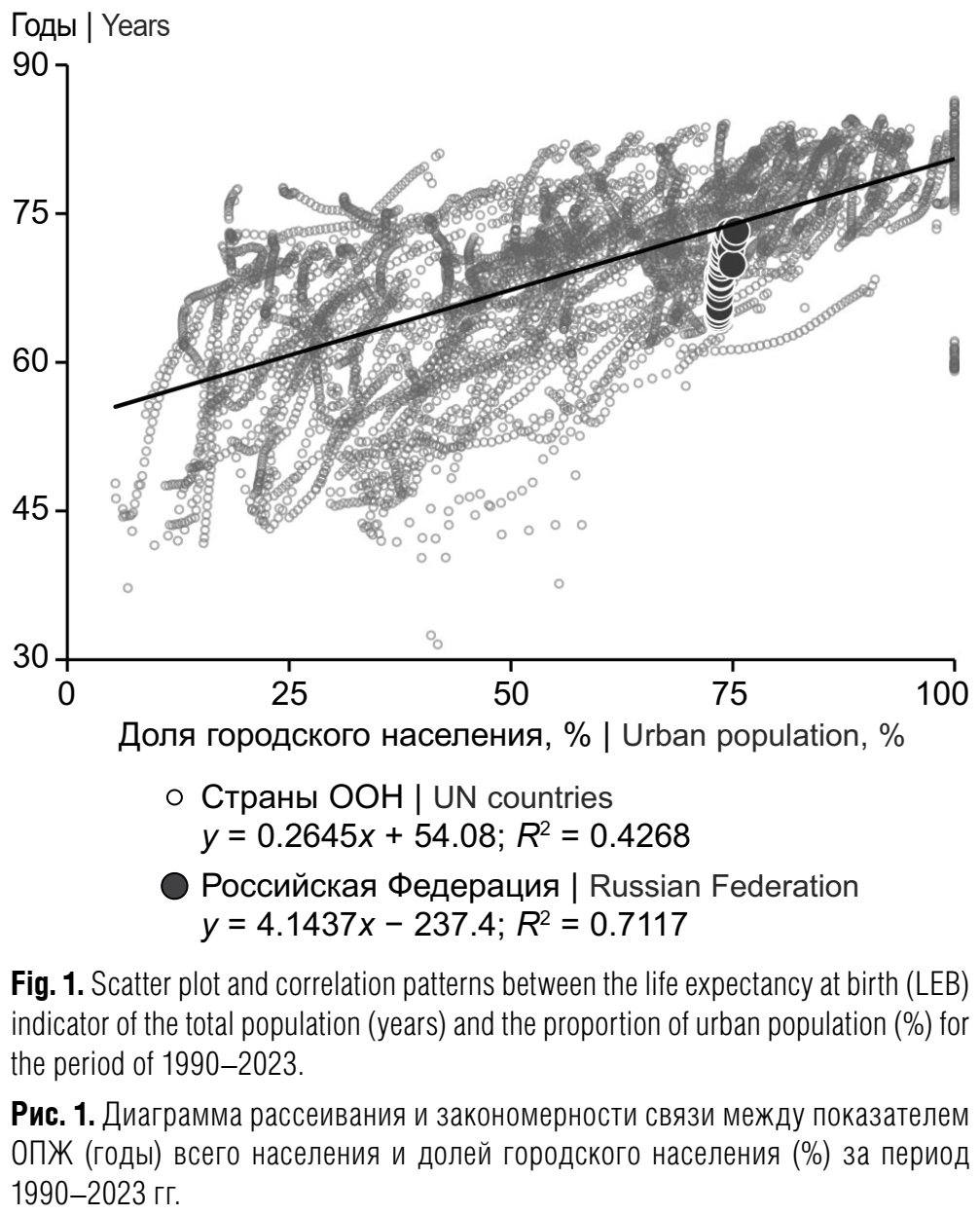
According to the obtained data, this (pairwise) relationship is even more pronounced in Russia (R² = 0.71; r = 0.84). Urbanization acts both as a natural consequence and a stimulus for economic development, which is evident when comparing developed countries with states characterized by low per capita income. According to the obtained multiple model (b0 = 55.93; b1 = 0.00015; b2 = 0.194; b3 = 4.97 · 10−9; R² = 0.45; p < 0.05), each percentage point increase in the share of the urban population, in line with the global trends, is associated with an increase in LE of 71 days (0.19 years). At the same time, urbanization processes are inextricably linked with an increased burden on the environment, which impacts public health in the form of additional morbidity and mortality rates associated with the quality of the living environment (Fig. 2, a, b).
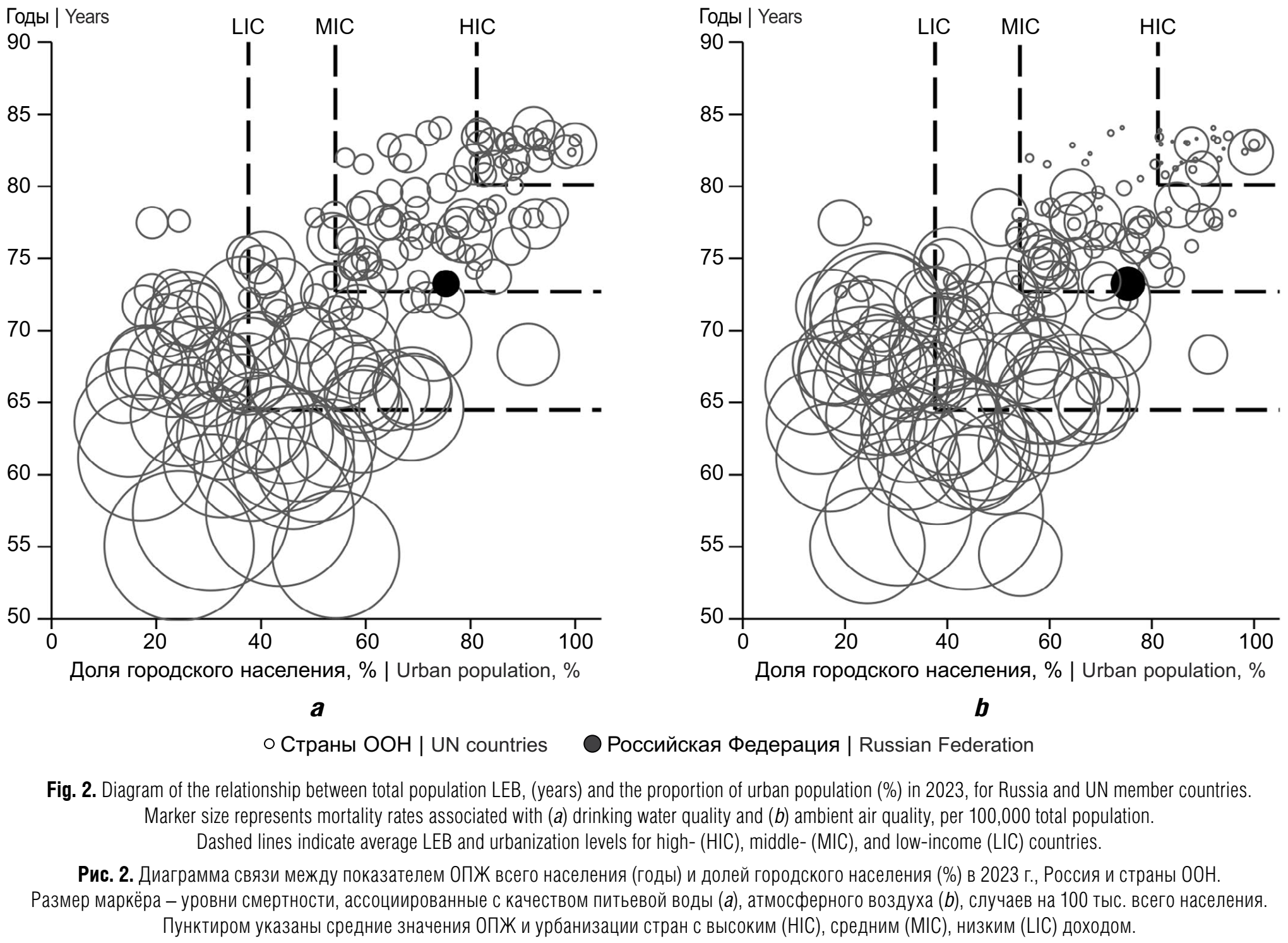
According to the World Bank, Russia is classified as a developed country with a high income level. However, compared to other countries in this group, it exhibits lower LE and urbanization levels. Simultaneously, the Russian Federation records relatively low mortality rates associated with poor ambient air and drinking water quality (Fig. 2, a, b).
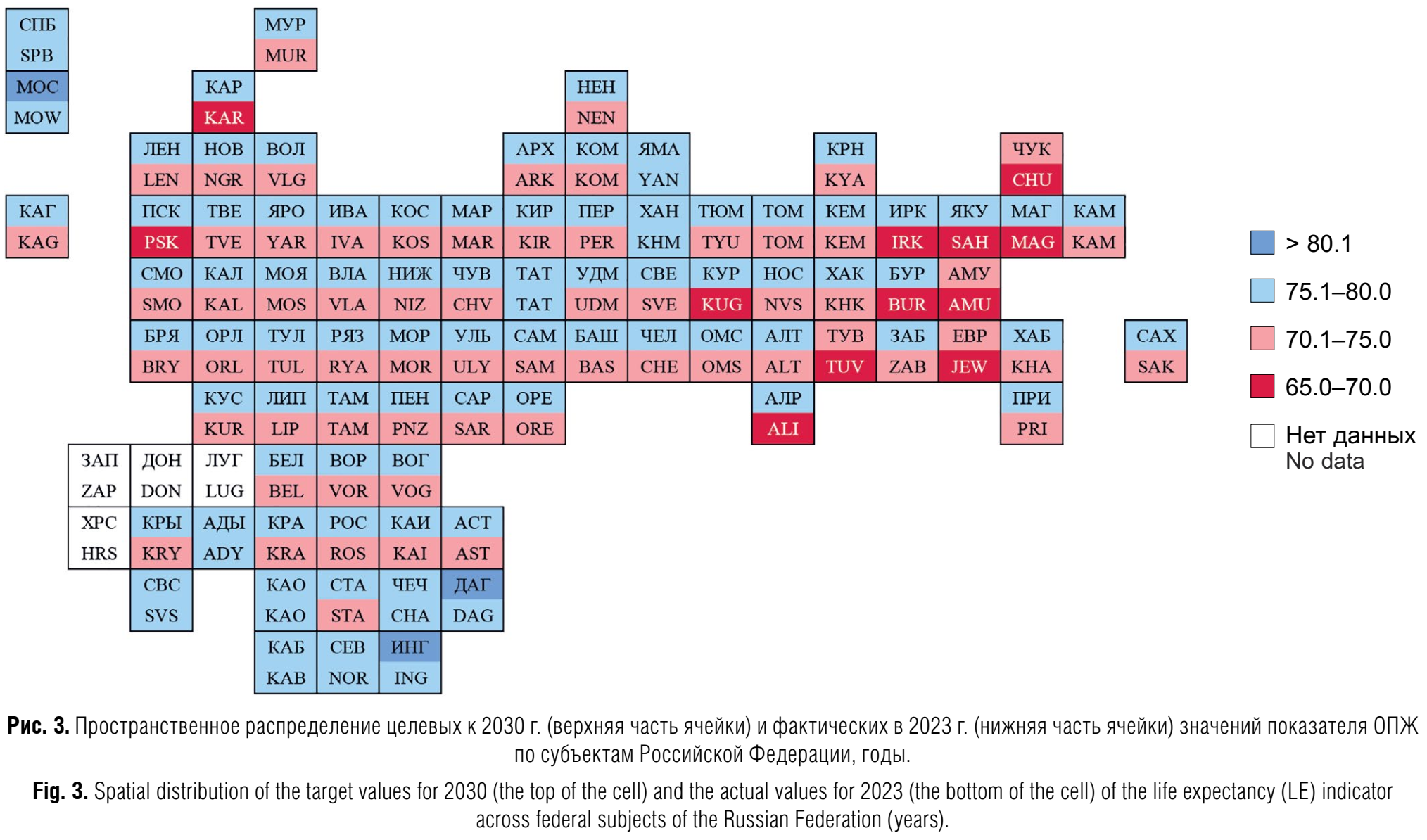
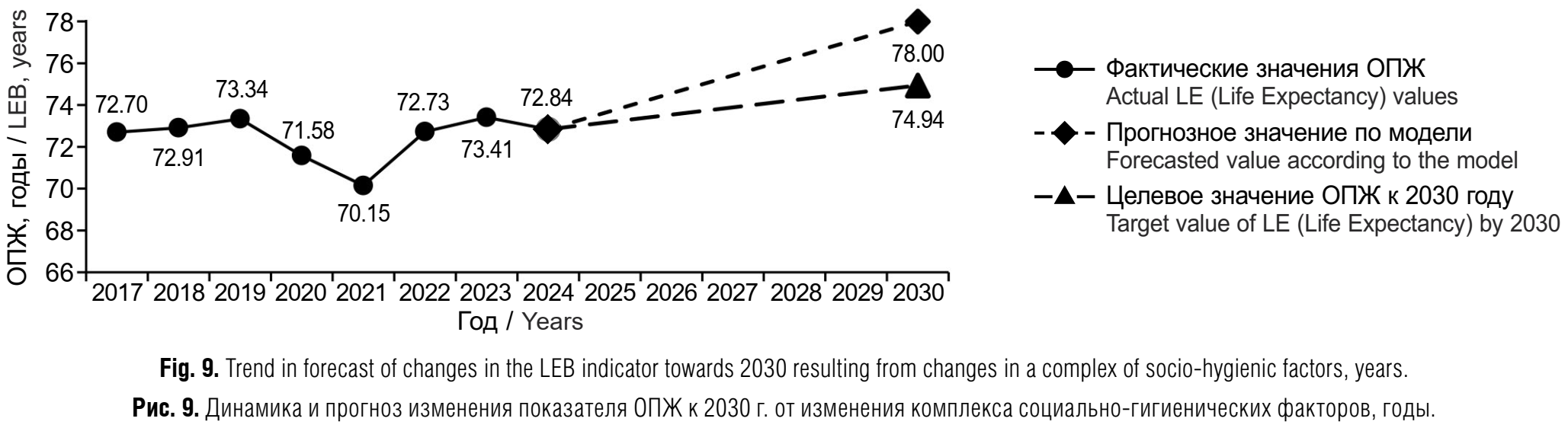
Analysis of the current situation regarding the LE indicator in Russia showed that its actual value in 2023 was 73.41 years. There is pronounced regional differentiation (12.8 years) between leading regions with LE values exceeding 76 years (Moscow, the Republics of Dagestan and Ingushetia, St. Petersburg, the Chechen Republic, etc.) and "outsiders" – regions with indicator values below 70 years (Chukotka Autonomous Okrug, the Republic of Tyva, the Jewish Autonomous Okrug, Amur Oblast, Zabaykalsky Krai). To achieve the established target LE indicator (78 years) by 2030, a cumulative increase of 4.59 years over 7 years from 2024 is required (≈ 0.66 years annually), along with a reduction of the regional gap for this indicator by 25.0% (to a minimum of 9.6 years) (Fig. 3).
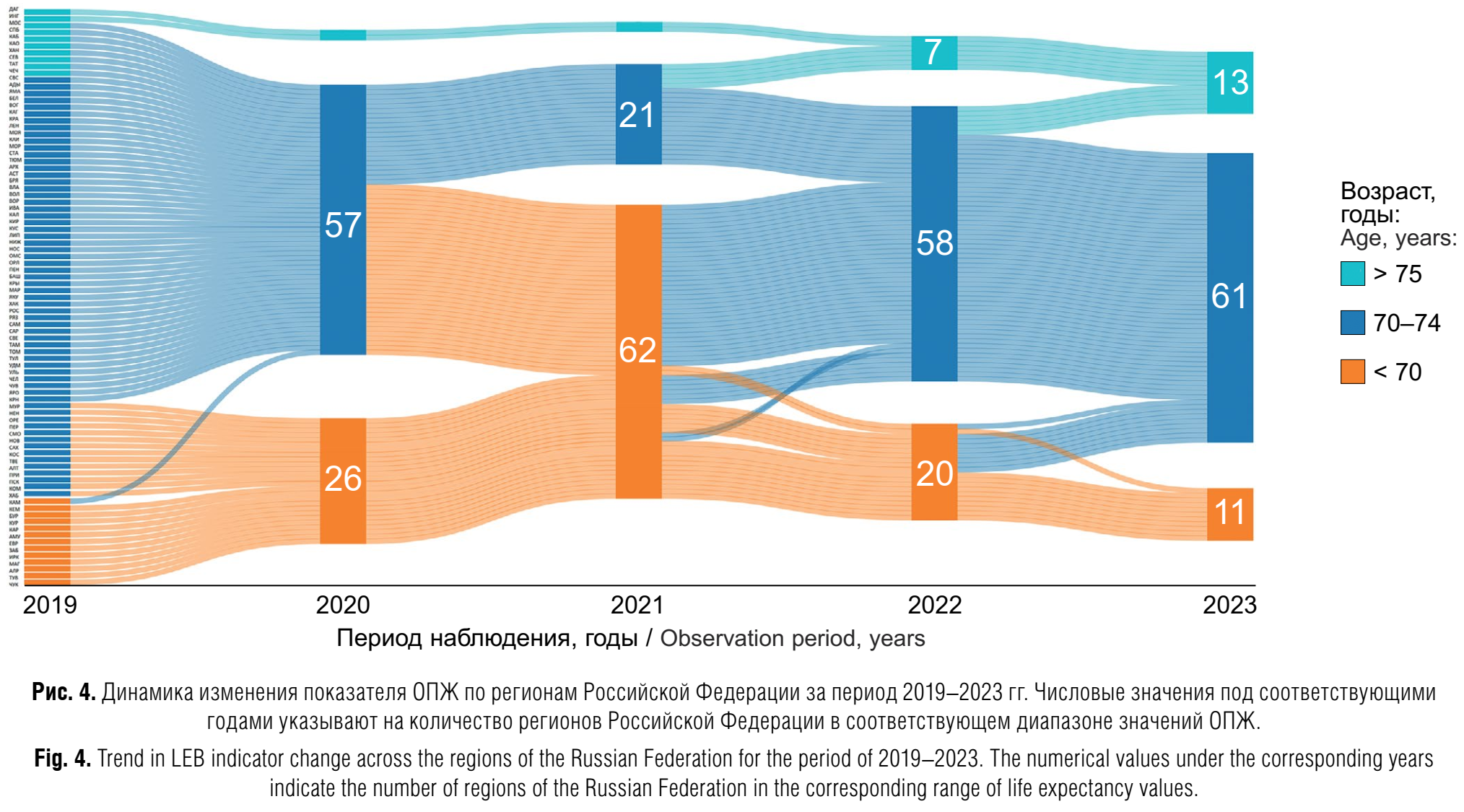
The unfavorable epidemiological situation related to the COVID-19 pandemic significantly contributed to the dynamics of the LE indicator, disrupting the positive upward trend and substantially reducing it over the period 2020–2023 (Fig. 4).
Results from calculating associated cases in 2024 showed that the priority sanitary-epidemiological factors forming medico-demographic losses continue to be chemical, biological, and physical contamination of environmental objects [ambient air (morbidity – 579.8; mortality – 4.6 cases per 100,000 total population), drinking water (morbidity – 948.4; mortality – 7.4 cases per 100,000 total population), food products (morbidity – 950.8 cases per 100,000 total population), soils in residential areas (morbidity – 357.3; mortality – 1.91 cases per 100,000 total population)], and the impact of physical factors (morbidity – 19.1; mortality – 2.5 cases per 100,000 total population) (Fig. 5).
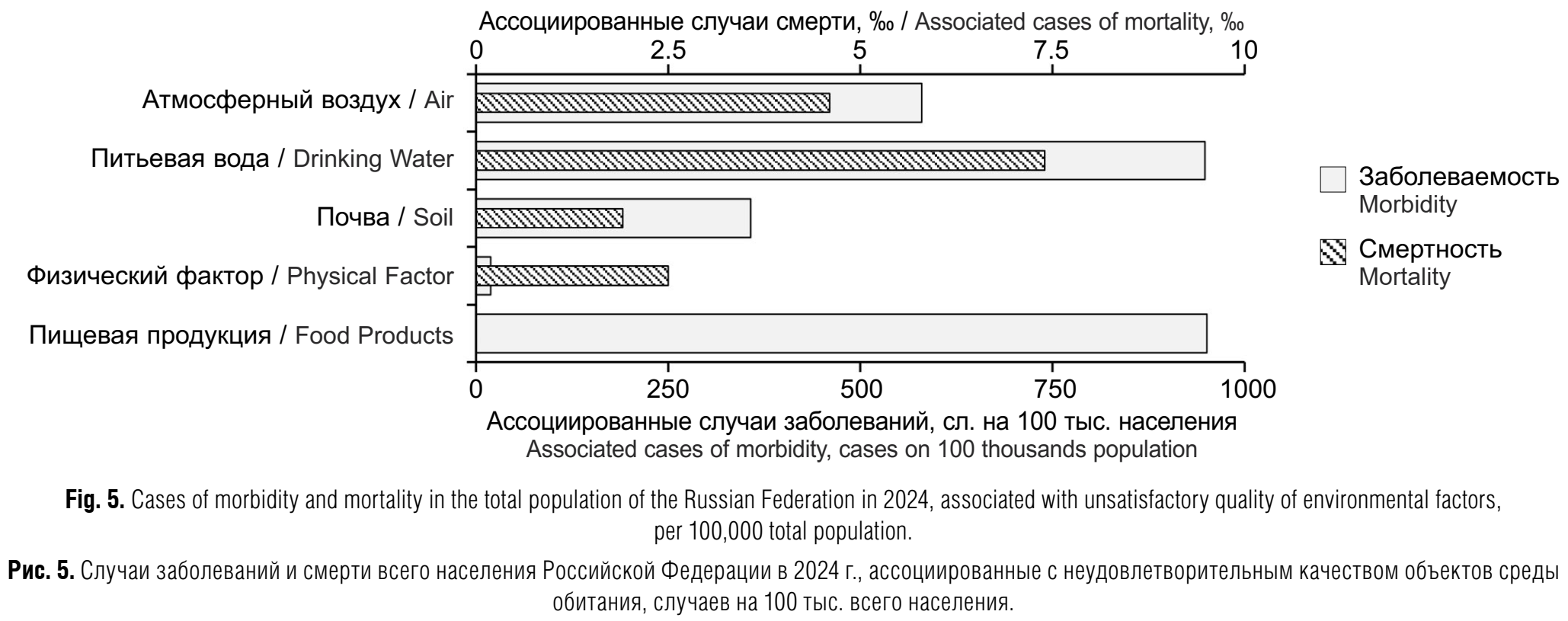
In the structure of losses across Russia, stable associations of additional deaths were identified in five disease classes: malignant neoplasms, diseases of the circulatory system, diseases of the respiratory system, diseases of the digestive system, and certain infectious and parasitic diseases. The maximum value of this indicator (7.4 additional cases per 100,000 total population) is associated with drinking water quality.
Despite a pronounced downward trend in non-standard samples of environmental objects over the last 10 years, current levels lead to the formation of additional associated cases of morbidity and mortality in the population, which inevitably entails losses of labor resources in the process of generating gross domestic product (Fig. 6).
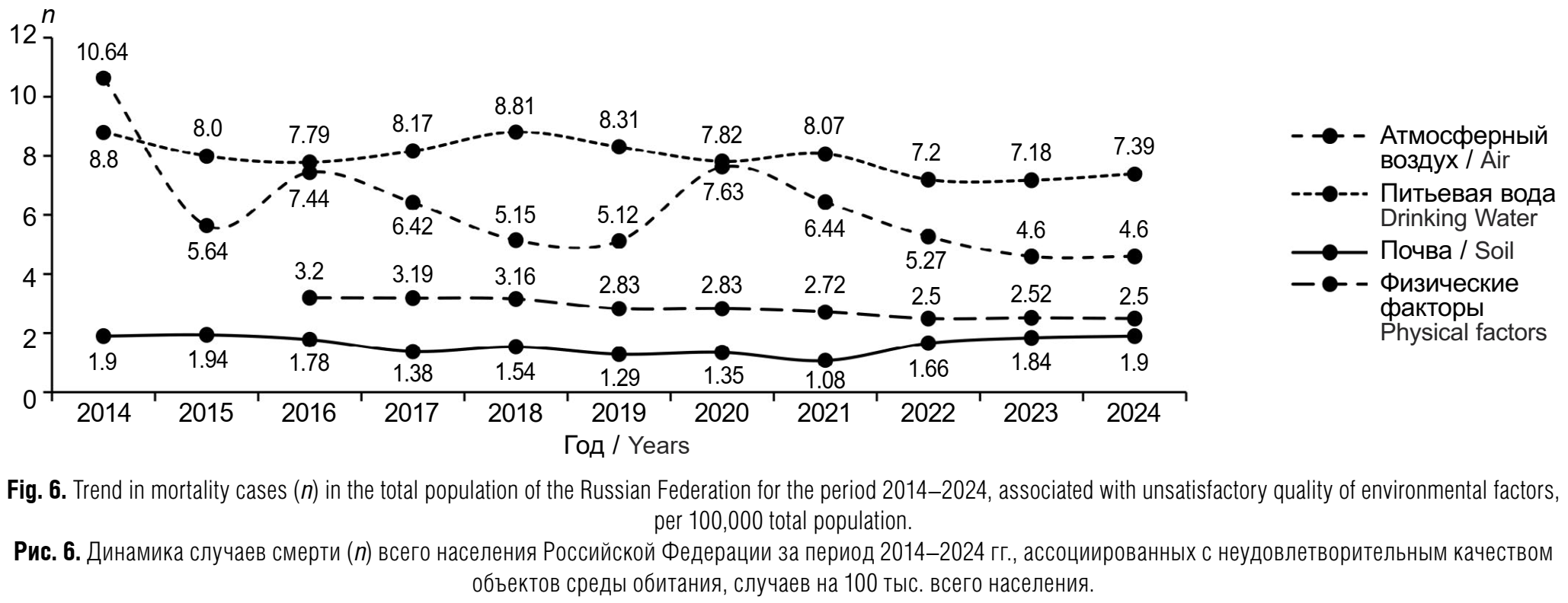
Over the period from 2014 to 2024, the most significant reduction (by 65.5%) in the number of disease cases associated with environmental factors was achieved through improving ambient air quality. A smaller contribution to the positive dynamics came from reducing the proportion of non-standard drinking water samples (17.2%) and improving indicators related to physical factors (27.1%). Despite some increase (by 9.2%) in recent years in cases associated with the quality of soil in residential areas, the impact of this factor on public health remains the smallest.
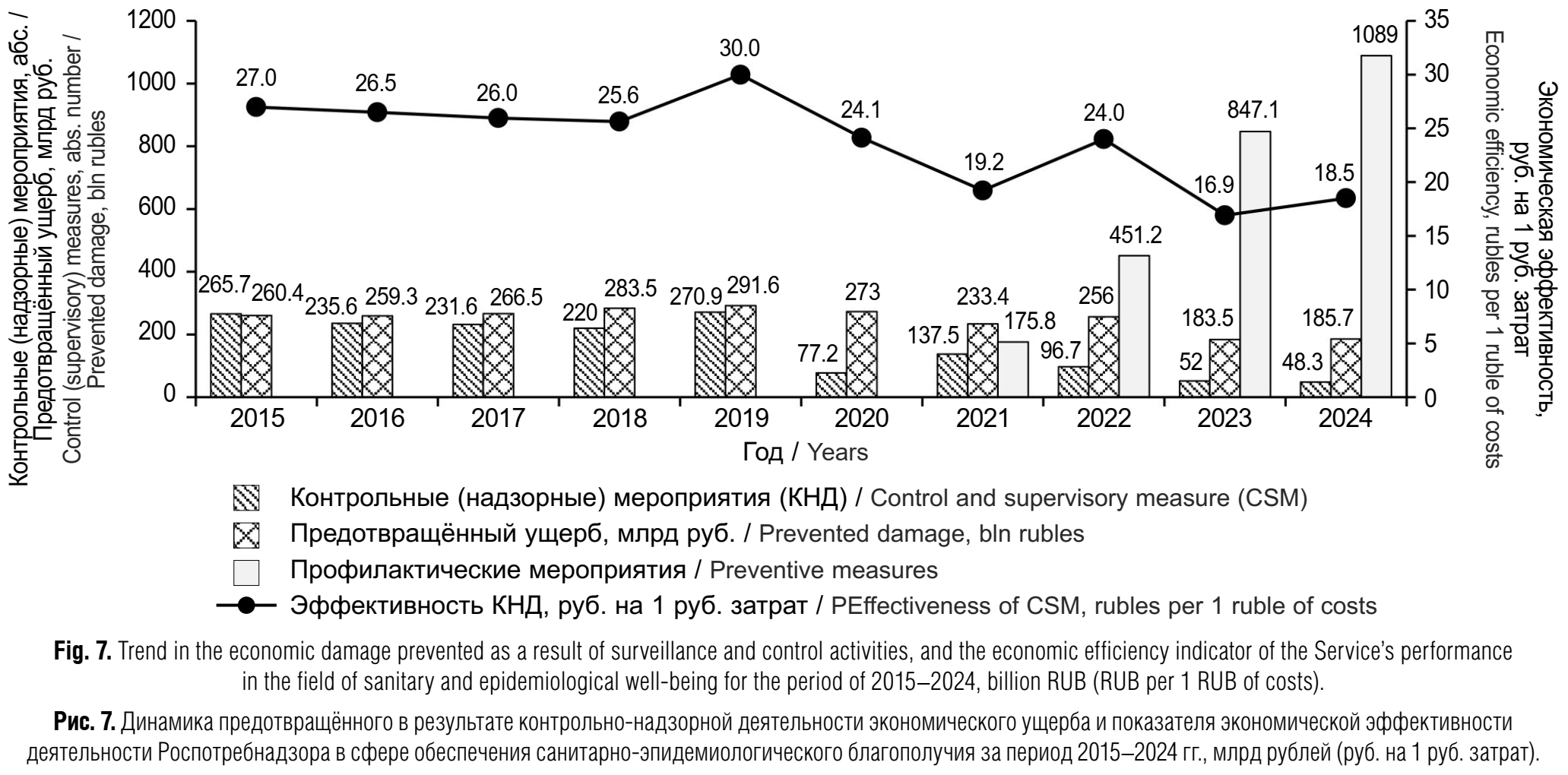
At the same time, according to model data, actions by Rospotrebnadzor in 2024 mitigated the probability of a deterioration in the sanitary-epidemiological situation, which prevented estimated additional deaths in the total population (33.9 thousand cases, older age groups – 59.8%, working-age population – 32.4%) and diseases (4.56 million cases, child population – 47.2%, working-age population – 36.6%, older age groups – 16.2%).
The established number of prevented cases of medico-demographic losses in the population of the Russian Federation is associated with the prevention of additional 19.1 million days of incapacity for work in 2024 by eliminating the likely withdrawal of citizens from the labor process. This is equivalent to over 185.7 billion rubles in economic losses of gross domestic product, including 16 billion rubles from associated mortality and 169.6 billion rubles from morbidity. The calculated amount of losses to the country's economy prevented by Rospotrebnadzor's actions indicates the effectiveness of its activities: ≈ 18.5 rubles per 1 ruble of expenditure, an increase of 9.4% compared to the 2023 level (Fig. 7).
The estimated number of additional disease cases, probabilistically caused by substandard quality of certain food products, amounted to 1.1% of the total primary morbidity in the Russian Federation in 2023. Notably, over the last 10 years, the number of cases of diseases (infectious, parasitic, and some non-infectious) decreased by 38.0%. During the period 2013–2023, the frequency of violations of food product quality standards decreased by 30.0%, reaching no more than 3.7%. Forecasting the risk of spread of diseases caused by food contamination factors showed that the average loss of life expectancy in the Russian Federation is 1.08 years.
Modeling the system of cause-and-effect relationships, based on machine learning (artificial neural networks) with subsequent calculation of elasticity coefficients for the 20 factors with the most significant effect on LE, showed that indicators of the socio-demographic state of regions have the greatest impact.
Results of clustering the subjects of the Russian Federation based on 20 factors revealed stable spatially determined patterns. These patterns reflect the basic (background) influence of priority socio-demographic and economic factors on the regional differentiation of LE, forming the framework of population health. The modulating influence of other determinants is stratified onto this framework, including sanitary-epidemiological factors, weather-climatic indicators not subject to human control, and lifestyle factors. This hierarchy of determinants creates a complex multi-level system of cause-and-effect relationships "socio-hygienic determinants – LE" (Fig. 8).
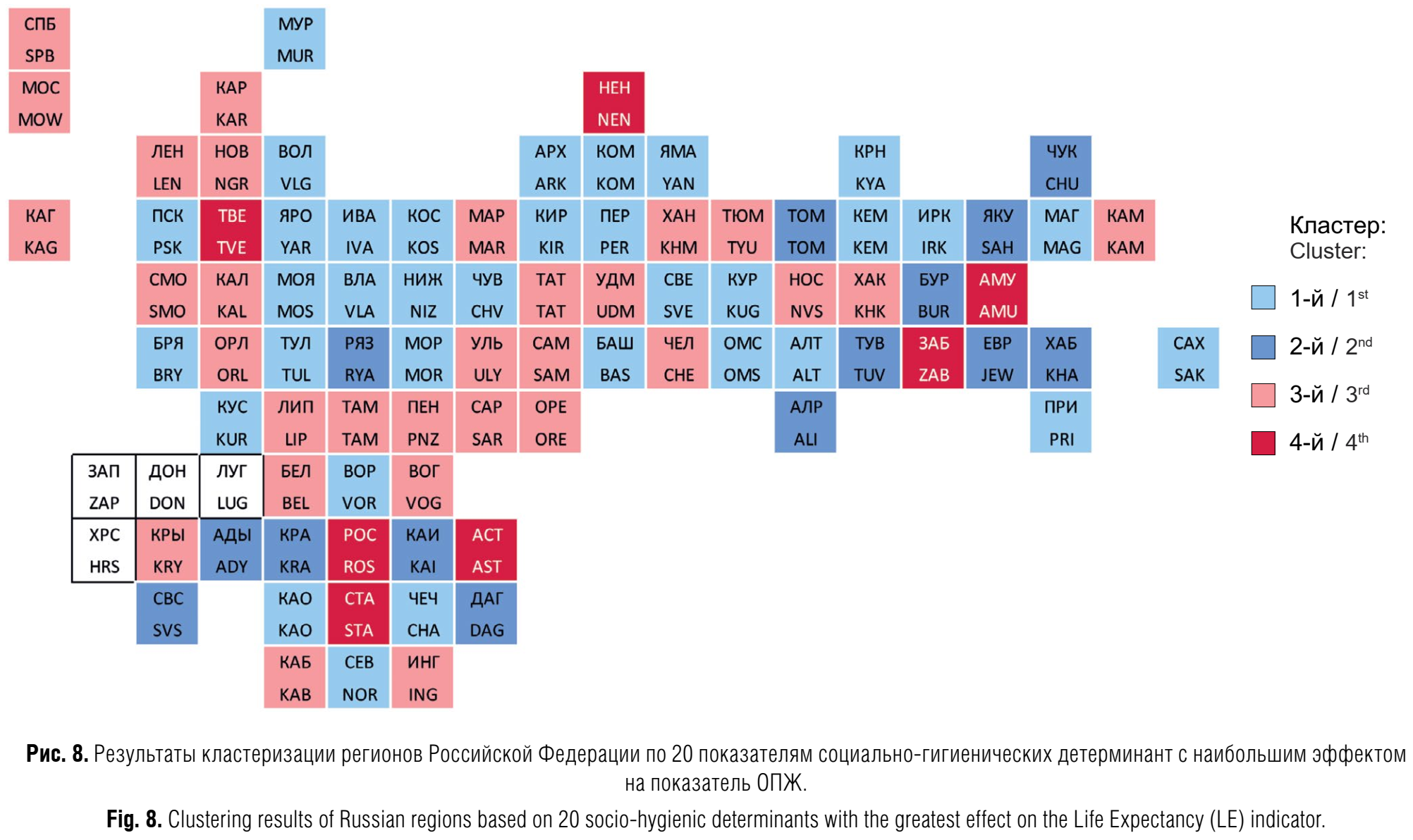
Structural analysis of the influence of factors on LE for different types of territories showed that in regions with low LE values, the priority factors are indicators of demographic burden and socio-economic living conditions. Conversely, the greatest management effects for regions with high LE values are expected from improving sanitary-epidemiological living conditions.
Forecasting the dynamics of potential growth of the LE indicator for the population of the Russian Federation, considering the 148 manageable and conditionally manageable determinants included in the analysis, indicates a LE growth deficit of 3.06 years by 2030 relative to 2024 (Fig. 9, Table 1).
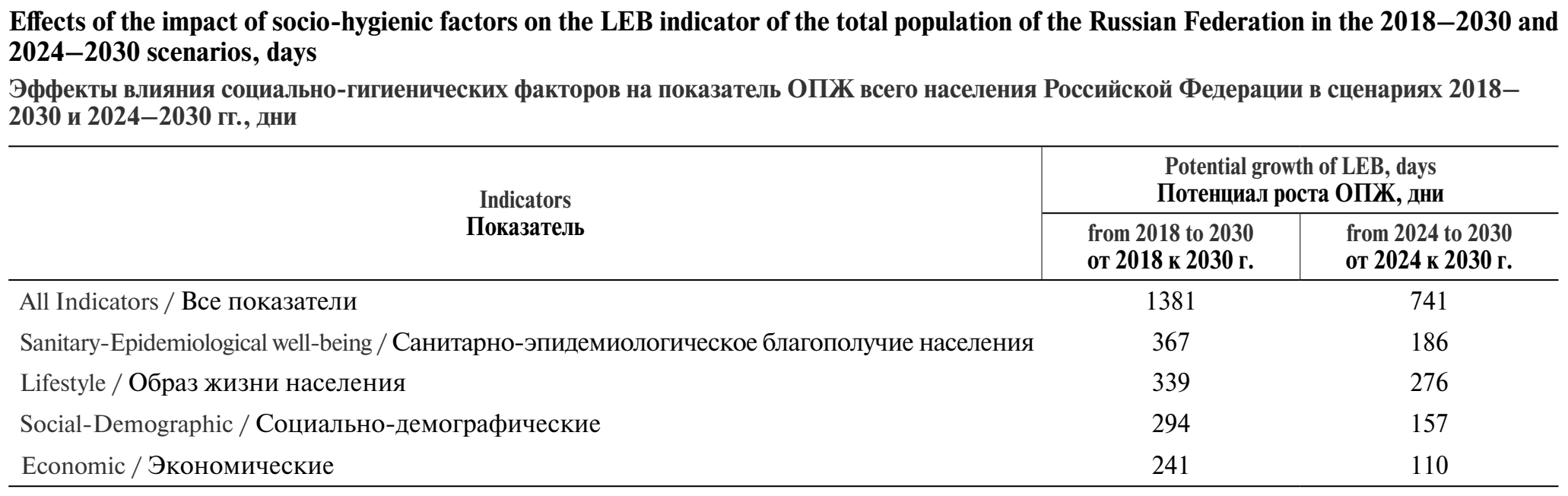
The greatest effects over the period 2018–2030 were expected from indicators of the population's sanitary-epidemiological welfare (367 days), lifestyle (339 days), and the socio-demographic sphere (294 days) [17]. Changes in the values of LE growth potential between the forecast values for 2018–2030 and 2024–2030 indicate their effective realization in various directions. For instance, changes in sanitary-epidemiological welfare indicators between 2018 and 2024 have already resulted in an LE increase of 181 days.
The results of a partial assessment of LE change according to the model "sanitary-epidemiological welfare indicators – age-specific mortality rates from circulatory system diseases (CSD) – LE", without accounting for COVID-related processes [18], showed a spatial disproportion (inequality) among regions of the Russian Federation in achieving target LE9 values solely through changes in sanitary-epidemiological welfare indicators (Fig. 10, 11).
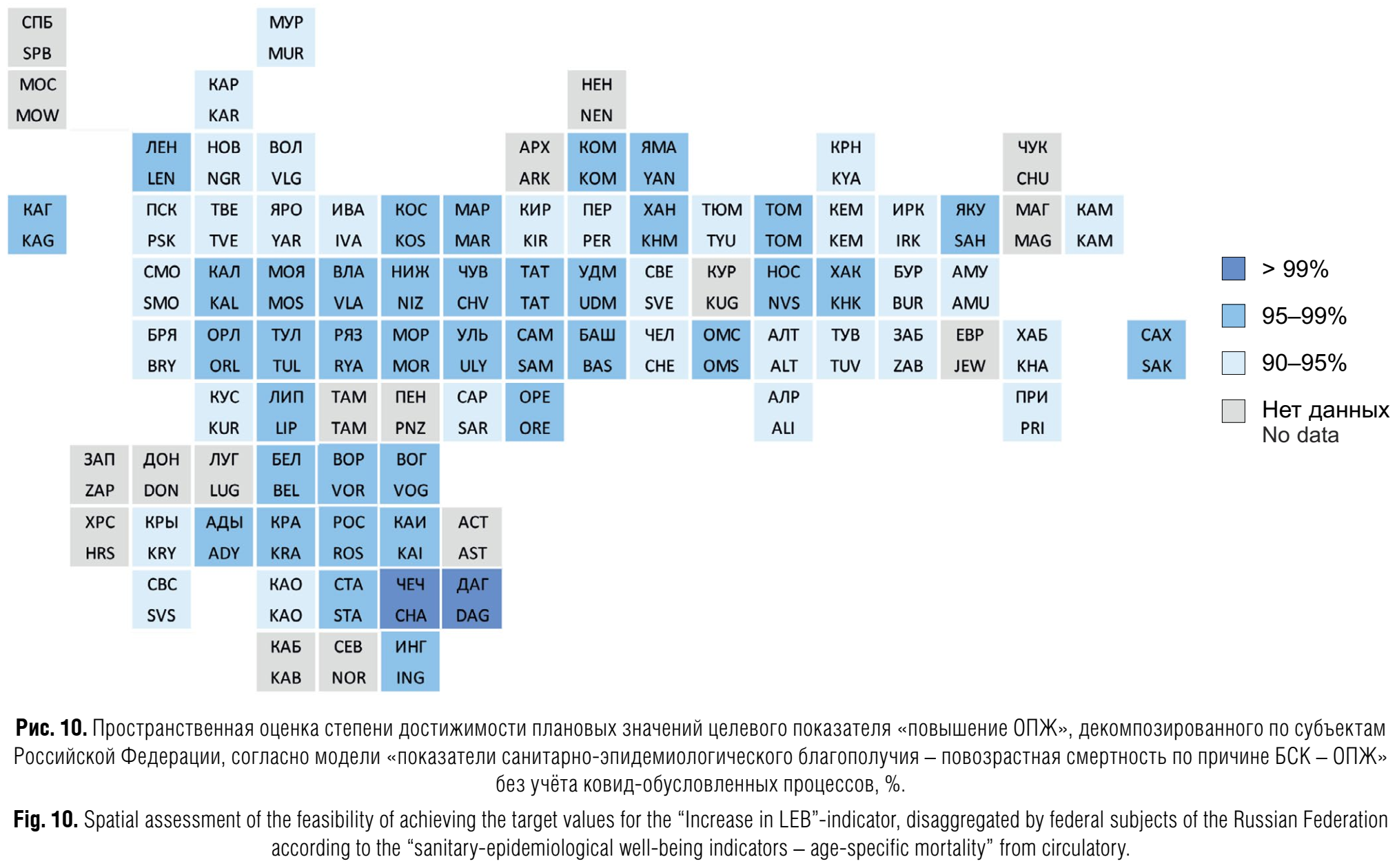
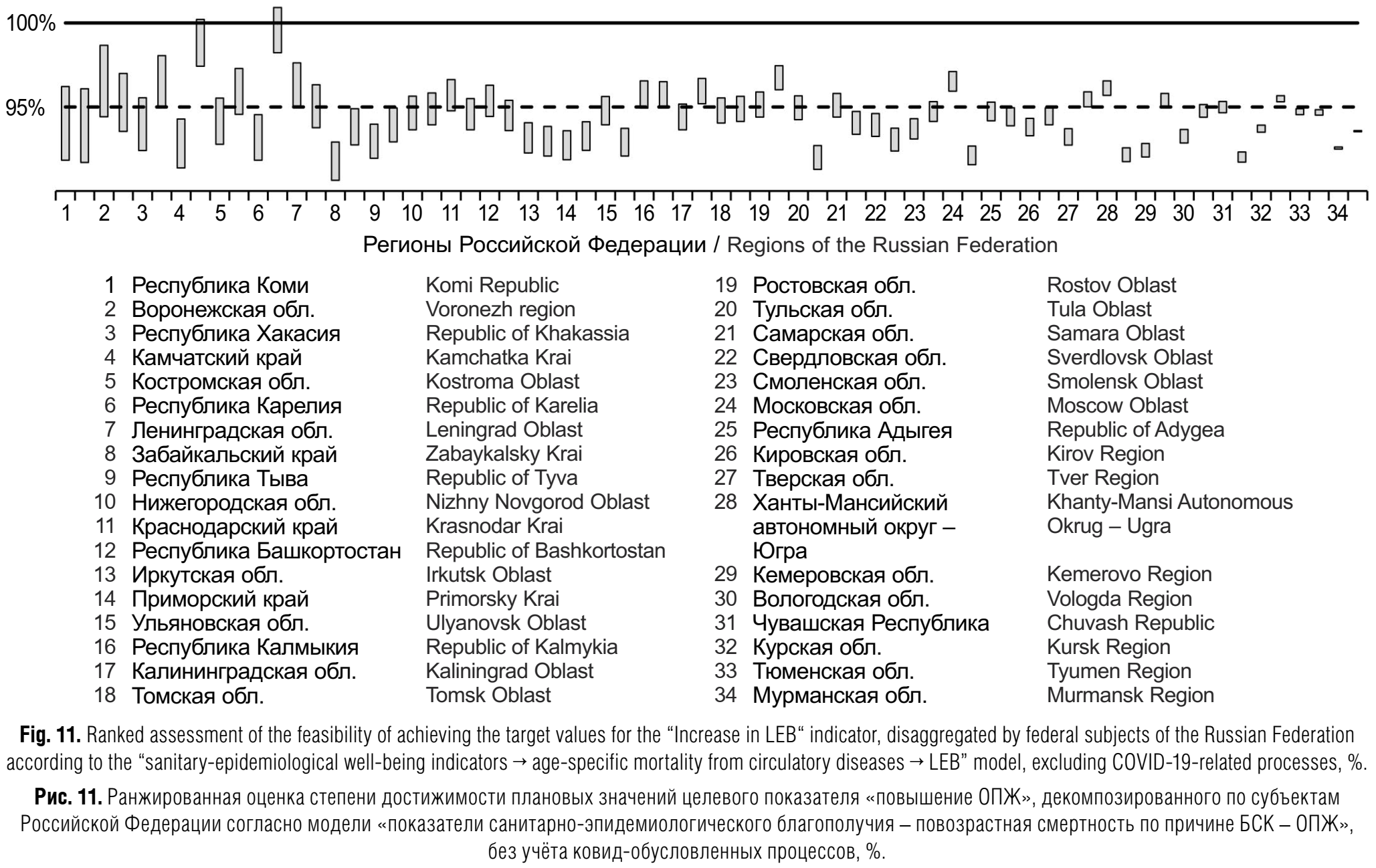
Using the priority cause of population mortality (CSD) as an example, it is shown that implementing measures to ensure sanitary-epidemiological welfare has a significant positive effect on the prospects of achieving target LE values in almost all regions (from 0.06 percentage points in Chelyabinsk Oblast to 4.39 percentage points in the Komi Republic).
Implementation of set of measures to ensure sanitary-epidemiological welfare (prevention of infectious diseases, quality control of environmental objects, drinking water, and food safety) could enable the achievement of national target indicators ahead of schedule in the Republic of Dagestan (105.5% of the target) and the Chechen Republic (101.4% of the target). The largest projected increase in LE from changes in sanitary-epidemiological welfare indicators is expected in the Komi Republic (+4.89 p.p.), Sakhalin Oblast (+4.85 p.p.), Orenburg Oblast (+4.48 p.p.), Tomsk Oblast (+3.51 p.p.), Kamchatka Krai (+4.23 p.p.), and the Republic of Tyva (+2.83 p.p.). These regions are priorities for investment in the sphere of sanitary-epidemiological welfare, while the presence of manageable health risks associated with environmental conditions and behavioral factors creates potential for a significant effect on LE upon the implementation of targeted measures.
Within the framework of studying the patterns of health impairment formation (morbidity and mortality) under the current sanitary-epidemiological situation, effects of LE increase due to the control and supervisory and preventive activities of Rospotrebnadzor were identified. Furthermore, quantitative parameters of a significant epidemiological potential – a reserve for increasing LE through the reduction of associated morbidity and mortality in the population – were established (Fig. 12).
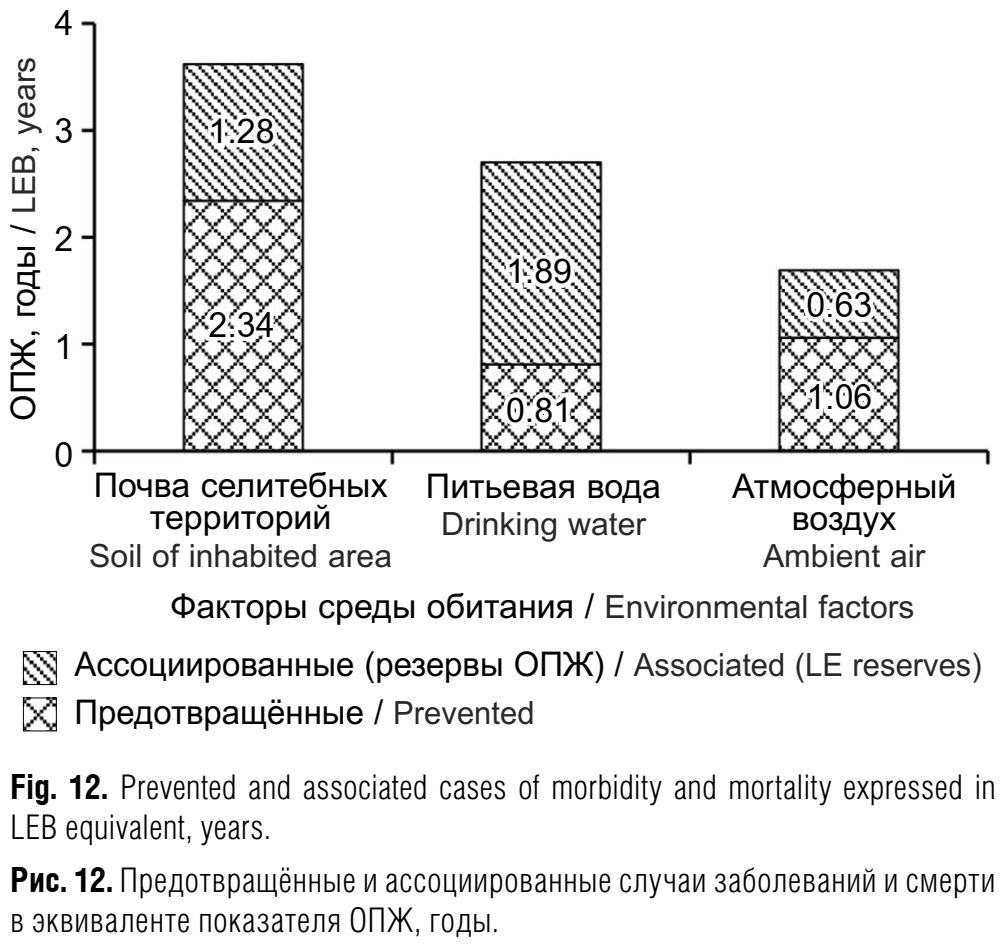
It was found that if the observed LE reserves were realized by eliminating environment-associated cases of disease and death (hypothetical elimination), an increase of 3.8 years could be expected, while the consolidated result of all control and supervisory activities is estimated at 4.2 years.
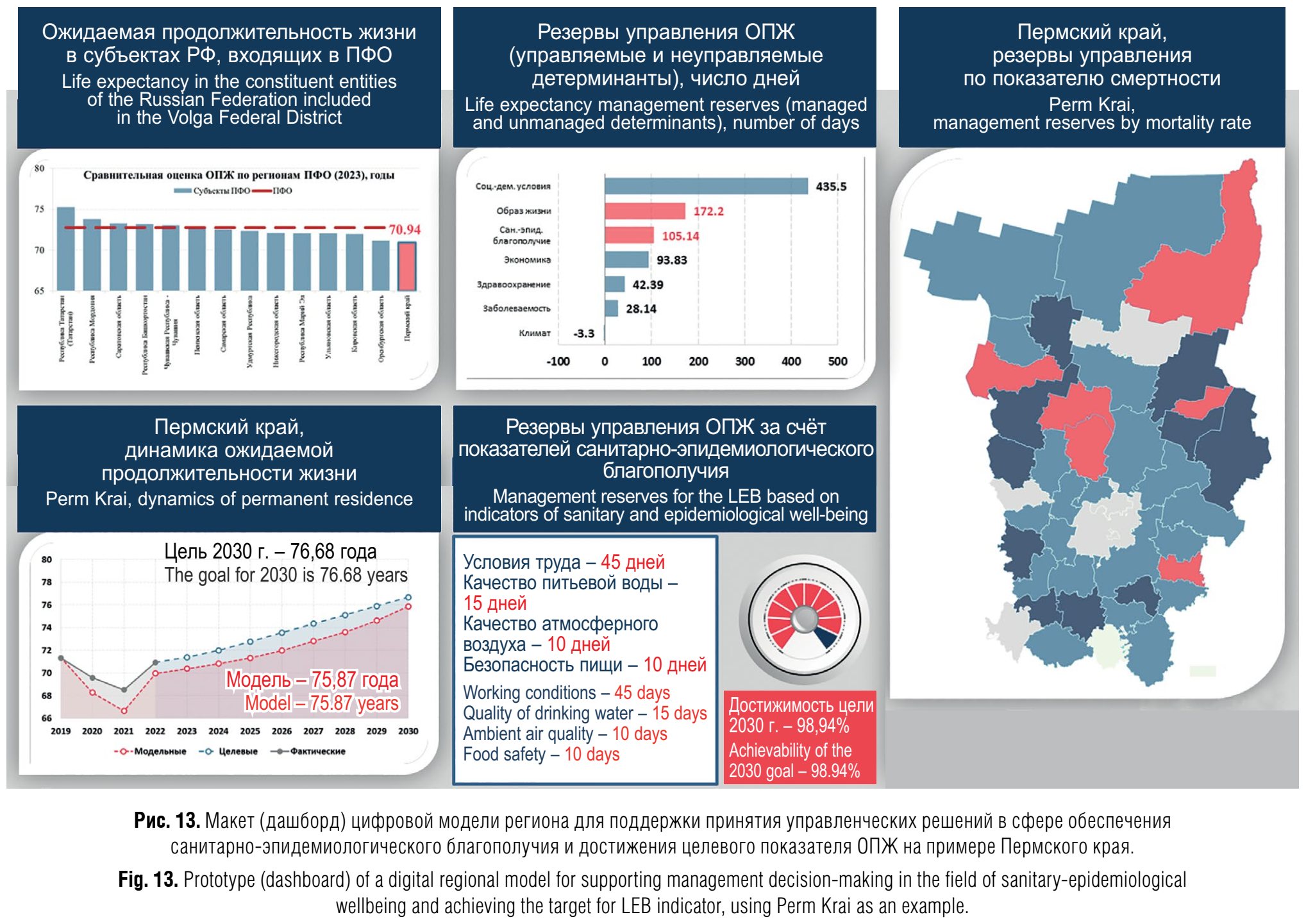
The methodological approaches considered, including machine learning methods, cascade modeling, and neural networks, for the purposes of quantitative forecasting and optimization of managerial decisions in the sphere of sanitary-epidemiological welfare and increasing LE, could become a tool for supporting the making of these decisions. In particular, a digital twin model of a subject of the Russian Federation for regional management is proposed as a foundation for proactive targeted prevention, ensuring optimal planning of activities, including those within national projects aimed at improving population health indicators (Fig. 13).
Discussion
The statistically significant correlations obtained between the LE indicator and the proportion of the urban population (urbanization) within the Russian Federation are consistent with global trends observed in the recent decades [16]. An increase in the territorial urbanization indicator in most cases points to active processes of scientific-technological and socio-economic development of a country [15]. However, these processes are inextricably linked with phase transformations of the sanitary-epidemiological situation, including temporary deterioration, which is reflected in elevated levels of population morbidity and mortality, associated with the quality of the living environment [19]. Our results showed that Russia has overcome the active stage of industrialization, which is expressed in relatively low levels of environment-associated morbidity and mortality compared to other countries. At the same time, improving the medico-demographic situation and increasing LE requires addressing existing issues in the sanitary-epidemiological sphere.
Results from the authors' previous studies demonstrated that health losses and reductions in population LE attributable to environmental quality are established as early as the first stages of ontogenetic development [20]. The decline in "initial health trajectories" manifests in the evolution of the structure of integral health risk for children, reflected in numerous pre-nosological effects, with the identification of cellular-molecular, organ-specific, and genetically determined mechanisms underlying the formation of etiopathogenetically significant early health disorders in vulnerable population groups [20]. According to forecasts, losses in life expectancy under combined and complex exposures to chemical environmental factors in early life stages can range from 30 to 370 days, with the critical age for exceeding acceptable risk levels observed from the age of two years [21]. According to the results of conducted studies [22], under conditions of increased academic load, irregular break times, use of electronic learning tools, sleep deprivation, low physical activity and excessive digital activity, as well as when ambient air and educational institution premises contain manganese, nickel, chromium, and formaldehyde at concentrations 1.8–8.5 times exceeding reference levels (RfCch), and unbalanced nutrition, schoolchildren exhibit: a significantly increased risk of developing allergic pathologies by a factor of 1.3, insufficient IgG production against herpesviruses by a factor of 2.3, and an increased proportion of seronegative individuals to measles and diphtheria antigens by a factor of 3.1–5.4 (OR = 1.33–5.40). Common pathogenetic links in the immunological mechanisms modifying anti-infective immunity and allergic reactivity under exposure to a complex of priority factors include the activation of cell-mediated reactions of the adaptive immune response (increase in CD3+ , CD3+CD25+ , CD3+CD8+ lymphocytes) and a decrease in the activity of the non-specific resistance system (decrease in absolute phagocytosis, phagocytic index, CD16+56+ lymphocytes) [22].
Evolutionary modeling and assessment of health risk accumulation under various school nutrition scenarios quantitatively confirmed that the "worst" values of these factors precisely during this period established the biological foundations for a reduction in LE potential by 4.7 years. This conclusion was drawn based on the results of a previous study [23]. Furthermore, the maximum reduction in LE during school years is formed by at least 12 nosological forms of diseases or early manifestations thereof that respond to or are modified by nutritional factors.
Based on the quantitative forecast and the obtained results of assessing nutritionally attributable LE losses [23], optimization maps for individual and group nutrition were developed, using the criterion of minimizing the risk of LE loss. The maps include indicators characterizing home nutrition (4 units) and school nutrition (7 units), the overall frequency of consumption of specific food products (24 units), and the socio-economic status of the family (5 units).
Potential LE losses are often associated predominantly with the working-age population, which, along with general environmental factors, is also affected by occupational factors [24]. In this regard, a methodology was developed for assessing and forecasting personalized occupational health risk for workers, and for creating scientifically substantiated decision support tools for management. Its theoretical foundation is an adaptive neuro-fuzzy network for pattern recognition, knowledge generalization, and resulting inference, possessing a special hybrid multi-layer (5 layers) architecture [24].
The deficit in growth rates predicted by the models can be overcome through the systematic implementation of national and federal projects, and preventive measures, including those of a hygienic nature. It should be emphasized that, on average, for countries with developed economies, increasing LE from 72.8 to 78 years (the target value for the Russian Federation by 2030) took 28 years [25]. Initially, Russia would have needed 13 years for this (from 2017 – 72.7 years, with an annual increase of 0.41 years), but the medico-demographic losses due to the COVID-19 pandemic significantly slowed this trend. Now, virtually the same amount of growth will require twice the effort (from 2024 – 72.8 years, with an annual increase of 0.86 years), necessitating high efficiency and coordination in the implementation of managerial decisions.
The identified effects of various determinant groups on the potential for LE growth fully align with the modern paradigm of public health, which shifts the focus from exclusively medical interventions towards prevention and the creation of a health-preserving environment. The established significant contribution of sanitary-epidemiological welfare factors confirms the economic and social feasibility of scaling investments in this sphere within the framework of implementing national projects.
An objectively important result of the study is the evidence of significant regional heterogeneity: not only in the current LE indicators, but also in the potential effectiveness of measures to ensure sanitary-epidemiological welfare. Identifying regions with the maximum projected LE increase from improving relevant indicators (the Komi Republic, Sakhalin Oblast, etc.) provides a scientifically substantiated priority for the targeted allocation of resources in managerial decision-making. This creates a foundation for transitioning from a unified approach to targeted mechanisms for pinpoint (focused) risk management.
Despite its comprehensiveness, the study has limitations: the analysis relied on the state statistics data, the accuracy and completeness of which may vary across regions. Forecast scenarios were developed based on retrospective data and specified forecast conditions, which may be subject to change under the influence of unforeseen macroeconomic (sanctions restrictions), social (policy, technology), or epidemiological (new pandemics similar to COVID-19) events. The conducted analysis identifies statistical associations and allows for forecasting; however, confirming cause-and-effect relationships will require additional in-depth studies with long-term follow-up periods.
Conclusion
The conducted comprehensive hygienic study demonstrates the key role of managing sanitary-epidemiological welfare in achieving target indicators for life expectancy at birth in the population of the Russian Federation and allows for the following conclusions:
1. The increase in the LE indicator (R² = 0.71; r = 0.84) is, to a certain extent, driven by the growth of urbanization in the Russian Federation. However, despite a relatively favorable sanitary-epidemiological situation, a significant reserve remains for increasing LE to the level of developed countries.
2. The substantial regional variability in the LE indicator (up to 12.8 years) indicates the necessity of a targeted approach to risk management, especially in regions with low indicators.
3. The main factors associated with health losses and reduced LE are pollution of ambient air, drinking water, food products, and soil, as well as the impact of physical factors.
4. The activities of Rospotrebnadzor have proven their effectiveness. In 2024, significant medico-demographic and economic losses were prevented, with the economic efficiency indicator reaching 18.5 rubles per 1 ruble of expenditure.
5. Forecast models indicate a deficit in LE growth by 2030 of 3.06 years relative to 2024, which can be compensated through the implementation of measures in the spheres of sanitary-epidemiological welfare, lifestyle, and socio-demographic policy.
6. The greatest potential for LE growth through improving sanitary-epidemiological conditions is forecasted in the Komi Republic, Sakhalin and Orenburg Oblasts, Kamchatka Krai, the Republic of Tyva, and others, where the effect of interventions could be maximal (range 92.3–100.9%).
The study confirms that investments in prevention, environmental quality control, and the promotion of healthy lifestyles are economically justified and contribute not only to achieving national goals concerning LE but also to strengthening the country's human capital. Successful implementation of these tasks requires systemic, scientifically substantiated, and regionally adapted managerial decisions.
¹ Decree of the President of the Russian Federation No. 309 dated May 7, 2024 “On the National Development Goals of the Russian Federation for the Period up to 2030 and for the Future up to 2036”.
² Government Work. National Projects. http://government.ru/rugovclassifier/section/2641/
³ National Project “Long and Active Life”. http://government.ru/rugovclassifier/917/about/
⁴ Order No. 665 dated August 26, 2019 “On Approval of the Concept for the Development of Socio-Hygienic Monitoring” of Rospotrebnadzor.
⁵ MR 5.1.0095–14. Calculation of Actual and Prevented Economic Losses Resulting from Control and Supervisory Activities, Associated with Mortality, Morbidity, and Disability of the Population Attributable to the Negative Impact of Environmental Factors: Methodological Recommendations. Moscow: Federal Center for Hygiene and Epidemiology of Rospotrebnadzor, 2015. 60 p.
⁶ MR 2.1.10.0269–21. Determination of Socio-Hygienic Determinants and Forecast of the Growth Potential of Life Expectancy at Birth in the Population of the Russian Federation, Considering Regional Differentiation: Methodological Recommendations. Moscow: 2021. 113 p.
⁷ Results of World Bank calculations of gross national income per capita using the Atlas method
⁸ Unified Plan for Achieving the National Development Goals of the Russian Federation for the Period up to 2024 and for the Planning Period up to 2030 / approved by Order of the Government of the Russian Federation No. 2765-r dated 01.10.2021 (as amended on 24.12.2021) [Electronic resource]. ConsultantPlus. URL: https://www.consultant.ru/document/cons_doc_LAW_398015/
1. Rio Declaration on Environment and Development: Report of the United Nations conference on Environment and development; 1992. A/CONF.151/26/Rev.1 (Vol. I). Available at: https://www.un.org/en/development/desa/population/migration/generalassembly/docs/globalcompact/A_CONF.151_26_Vol.I_Declaration.pdf
2. Transforming our world: the 2030 Agenda for Sustainable Development: Resolution by General Assembly UN; 2015. A/RES/70/1. Available at: https://www.un.org/en/development/desa/population/migration/generalassembly/docs/globalcompact/A_RES_70_1_E.pdf
3. Healthy People 2030. Available at: https://odphp.health.gov/healthypeople
4. 健康中国2030. Available at: https://www.gov.cn/gongbao/content/2016/content_5133024.htm (in Chinese)
5. Health2030. Available at: https://bag.admin.ch/en/health2030
6. Health Plan 2030. Available at: https://khepi.or.kr/board?menuId=MENU01737&siteId=null-
7. Pitt S.J., Gunn A. The one health concept. Br. J. Biomed. Sci. 2024; 81: 12366. https://doi.org/10.3389/bjbs.2024.12366
8. Adeyemi O.A., Sujon H., Agbabiaka T.O. A compendium of one health terminologies. EcoHealth. 2025; 22(4): 642–51. https://doi.org/10.1007/s10393-025-01738-6
9. Li O.Y., Wang X., Yang K., Liu D., Shi H. The approaching pilot for One Health governance index. Infect. Dis. Poverty. 2023; 12(1): 16. https://doi.org/10.1186/s40249-023-01067-2
10. One Health High-Level Expert Panel (OHHLEP). Hayman D.T.S., Adisasmito W.B., Almuhairi S., Behravesh C.B., Bilivogui P., Bukachi S.A., et al. Developing One Health surveillance systems. One Health. 2023; 17: 100617. https://doi.org/10.1016/j.onehlt.2023.100617
11. Zaitseva N.V., May I.V., Alekseev V.B., Kiryanov D.A. Actual aspects of digitalization in hygiene: theory and practice. Gigiena i Sanitaria (Hygiene and Sanitation, Russian journal). 2024; 103(7): 634–41. https://doi.org/10.47470/0016-9900-2024-103-7-634-641 https://elibrary.ru/bsfrhw (in Russian)
12. Zaitseva N.V. Hygiene in resolving actual problems of developing the health potential and life expectancy of the population in the Russian Federation. Gigiena i Sanitaria (Hygiene and Sanitation, Russian journal). 2022; 101(10): 1138–44. https://doi.org/10.47470/0016-9900-2022-101-10-1138-1144 https://elibrary.ru/ctxokc (in Russian)
13. Zaitseva N.V., Kleyn S.V., Glukhikh M.V. Determining priority socio-hygienic determinants of life expectancy at birth for the Russian Federation population. Zdravookhranenie Rossiiskoi Federatsii. 2022; 66(6): 435–43. https://doi.org/10.47470/0044-197X-2022-66-6-435-443 https://elibrary.ru/avkyiy (in Russian)
14. United Nations. Population Division. Available at: https://un.org/development/desa/pd/data-landing-page
15. Chen Z., Ma Y., Hua J., Wang Y., Guo H. Impacts from economic development and environmental factors on life expectancy: a comparative study based on data from both developed and developing countries from 2004 to 2016. Int. J. Environ. Res. Public Health. 2021; 18(16): 8559. https://doi.org/10.3390/ijerph18168559
16. Zhang Z., Zhao M., Zhang Y., Feng Y. How does urbanization affect public health? New evidence from 175 countries worldwide. Front. Public Health. 2023; 10: 1096964. https://doi.org/10.3389/fpubh.2022.1096964
17. Zaitseva N.V., Kleyn S.V., Glukhikh М.V., Kiryanov D.А., Kamaltdinov М.R. Predicting growth potential in life expectancy at birth of the population in the Russian Federation based on scenario changes in socio-hygienic determinants using an artificial neural network. Health Risk Analysis. 2022; (2): 4–16. https://doi.org/10.21668/health.risk/2022.2.01.eng
18. Glukhikh М.V., Kleyn S.V., Kiryanov D.А., Kamaltdinov М.R. Life expectancy at birth for the RF population: prediction based on modeling influence exerted by a set of socio-hygienic determinants on age-specific mortality rates exemplified by diseases of the circulatory system. Health Risk Analysis. 2022; (3): 98–109. https://doi.org/10.21668/health.risk/2022.3.09.eng https://elibrary.ru/bihdtm
19. Ketenci N. The environmental Kuznets curve in the case of Russia. Russian Journal of Economics. 2018; 4(3): 249–65. https://doi.org/10.3897/j.ruje.4.28482
20. Dolgikh O.V., Starkova K.G., Krivtsov A.V., Chelakova Yu.A., Chigvintsev V.M., Alikina I.N., et al. Modeling of combined effects of the exposure to chemicals (aluminum) and regulatory immune and endocrine factors in research on cytokines production in experiments in vitro. Gigiena i Sanitaria (Hygiene and Sanitation, Russian journal). 2019; 98(2): 214–8. https://elibrary.ru/stdhcx (in Russian)
21. Zaitseva N.V., Koldibekova Yu.V., Zemlyanova М.А., Chigvintsev V.М., Ukhabov V.М. Methodical approaches to assessing additional disease risk and loss of life expectancy at birth upon combined exposure to pollutants. Health Risk Analysis. 2025; (1): 4–15. https://doi.org/10.21668/health.risk/2025.1.01.eng
22. Valina S.L., Zaitseva N.V., Ustinova О.Yu., Shtina I.Е., Maklakova О.А. Common immunological pathways of anti-infection immunity and allergic reactivity modification in children associated with peculiarities of the modern educational process and environment quality. Health Risk Analysis. 2025; (2): 126–44. https://doi.org/10.21668/health.risk/2025.2.11.eng
23. Zaitseva N.V., Alekseev V.B., May I.V., Kiryanov D.A., Zemlyanova M.A., Khismatullin D.R., et al. Problem searching approaches to nutrition optimization to increase the potential of life expectancy taking into account bioinformatic signals of the human regulatory system. Gigiena i Sanitaria (Hygiene and Sanitation, Russian journal). 2024; 103(12): 1494–503. https://doi.org/10.47470/0016-9900-2024-103-12-1494-1503 https://elibrary.ru/dmgnfz (in Russian)
24. Zaitseva N.V., Savochkina A.A., Zemlyanova M.A., Goryaev D.V., Fadeev A.G. Methodology for assessing and predicting personalized occupational health risks based on adaptive neural fuzzy network for image recognition. Health Risk Analysis. 2025; (2): 4–15. https://doi.org/10.21668/health.risk/2025.2.01.eng
25. World Bank. World Bank Open Data. Available at: https://data.worldbank.org/
DSc (Medicine), professor, academician of the RAS, scientific director, Federal Scientific Center for Medical and Preventive Technologies for Managing Population Health Risks, Perm, 614045, Russian Federation
e-mail: znv@fcrisk.ru
DSc (Medicine), director, Federal Scientific Center for Medical and Preventive Health Risk Management Technologies, Perm, 614045, Russian Federation
e-mail: root@fcrisk.ru
DSc (Medicine), associate professor, professor of the RAS, Deputy Director for Research of the Federal Scientific Center for Medical and Preventive Health Risk Management Technologies, Perm, 614045, Russian Federation
e-mail: kleyn@fcrisk.ru
DSc (Biology), professor, chief researcher, director advisor for Federal Scientific Center for Medical and Preventive Health Risk Management Technologies, Perm, 614045, Russian Federation
e-mail: may@fcrisk.ru
PhD (Medicine), senior research, Department of sanitary and hygienic analysis and monitoring systemic methods, Federal Scientific Center for Medical and Preventive Health Risk Management Technologies, Perm, 614045, Russian Federation
e-mail: gluhih@fcrisk.ru
PhD (Engineering), head, Department of Systems and Processes Mathematical Modeling of the Federal Scientific Center for Medical and Preventive Health Risk Management Technologies, Perm, 614045, Russian Federation
e-mail: kda@fcrisk.ru
Zaitseva N.V., Alekseev V.B., Kleyn S.V., May I.V., Glukhikh M.V., Kiryanov D.A. Hygienic analysis and digital forecasting as the tools for managing sanitary-epidemiological wellbeing to achieve target indicators of life expectancy in the population of the Russian Federation. Hygiene and Sanitation. 2026;105(1):68-77. https://doi.org/10.47470/0016-9900-2026-105-1-68-77. EDN: dmeepo
Мы в ВК:

 Email this article (Login required)
Email the author (Login required)
Email this article (Login required)
Email the author (Login required) 141014, The Moscow region, Mytishchi, 2, Semashko street
Federal Scientific Center of Hygiene named after F.F. Erisman
Phone: +7 916 885 28 02
e-mail: gigsan@list.ru