Contents
Scroll to:
 Irina V. Korablina,
Lilia G. Gorgola,
Yulia V. Kosenko,
Irina D. Mkhitaryan,
Victoria S. Ekilik,
Artem A. Petrenko
Irina V. Korablina,
Lilia G. Gorgola,
Yulia V. Kosenko,
Irina D. Mkhitaryan,
Victoria S. Ekilik,
Artem A. Petrenko https://doi.org/10.47470/0016-9900-2026-105-3-293-300
EDN: ovsiyy
Scroll to:
Introduction. In the modern period, the reservoirs of the Azov-Black Sea basin continue to be sources of commercial fish species. In this regard, monitoring for the levels of accumulation of toxicants is the main task in assessing the physiological and biochemical state of fish in terms of reproduction and their use as food.
The purpose. To assess the safety of commercial fish species in the Azov-Black Sea basin.
Materials and methods. Based on studies conducted during 2024, there were determined the levels of accumulation of polychlorinated biphenyls (PCBs), pesticides, toxic elements, and specific activity of radionuclides in the muscles of tulka, anchovy, pilengas, crucian carp, atherina, gobies,gloss’s flounder, whiting, sprat, loofah, horse mackerel, and perch, caught in the Azov and Black Seas.
Results. The results obtained during 2024 for toxicants in fish are correlated with the current fish as food standard. The results obtained over 2024 were compared with the retrospective data (2020–2023). The analyses were carried out in accordance with certified methods included in the scope of accreditation of the Analytical Testing Center of the Azov-Black Sea branch of the Scientific Research Center of the Russian Federation VNIRO Federal State Budgetary Scientific Institution.
Limitations. The limitations are related to the specifics of sampling: the study was limited to the maximum possible selection of biological resources.
Conclusion. Low concentrations of pesticides and toxic elements (lead, cadmium, mercury, arsenic), and PCBs were detected, the specific activity of caesium-137 and strontium-90 was recorded at a low level. Therefore, tulka, hamsa, pelengas, crucian carp, atherina, gobies, Gloss flounder, whiting, sprat, lufari, horse mackerel are suitable for food in terms of pollution and radiation safety in accordance with the requirements of TR CU 021/2011.
Compliance with ethical standards. The study does not require the submission of the conclusion of the biomedical ethics committee or other documents.
Contribution:
Korablina I.V. — research concept and design, writing, editing, approval of the final version, responsibility for the integrity of all data;
Gorgola L.G., Petrenko A.A. — collection of material and data processing, editing;
Kosenko Yu.V. — approval of the final version; responsibility for the integrity of all data;
Mkhitaryan I.D. — collection of material and data processing;
Ekik V.S. — collection of material and data processing.
All authors are responsible for the integrity of all parts of the manuscript and approval of the manuscript final version.
Conflict of interest. The authors declare no conflict of interest.
Funding. The study had no sponsorship.
Received: May 14, 2025 / Accepted: October 15, 2025 / Published: April 17, 2026
Korablina I.V., Gorgola L.G., Kosenko Yu.V., Mkhitaryan I.D., Ekilik V.S., Petrenko A.A. On the hygienic safety of commercial fish species in the Azov-Black Sea basin. Hygiene and Sanitation. 2026;105(3):293-300. https://doi.org/10.47470/0016-9900-2026-105-3-293-300. EDN: ovsiyy
Introduction
The Azov-Black Sea Basin includes the Black Sea and the Azov Sea, along with the river basins flowing therein, as well as watersheds in certain regions of Russia that are of significance for fisheries (Order of the Ministry of Agriculture of Russia No. 1 dated January 9, 2020)¹. The seaports of Rostov-on-Don, Azov, Taganrog, Yeisk, Temryuk, Kavkaz, Taman, Anapa, Novorossiysk, Gelendzhik, Tuapse, and Sochi have a significant anthropogenic impact on the ecosystem of the Azov-Black Sea Basin [1]. Intensive economic activity affects environmental quality through discharges into the water area and via river runoff. Other types of pollution in the water bodies of the Azov-Black Sea basin include:
The majority of the Azov-Black Sea basin is an area of intensive agricultural productivity, hence the significant threat of runoff from fields and livestock pastures contaminating surface waters. Anthropogenic factors cannot be excluded, such as the construction of locks on the Don River and the salinization of the Sea of Azov, which affects the lower reaches of the Don [5].
Pollution of waters in the Azov-Black Sea basin is negatively affecting aquatic organisms. Deteriorating water quality and heavy recreational pressure have already led to a significant decline in fish stocks. Many pollutants can accumulate in the tissues of aquatic organisms, causing poisoning, developmental disorders and reproductive system disorders, which leads to a decline in population numbers and even the extinction of some species [6]. Toxic substances move up the food chain, from microscopic organisms to large predators, resulting in the accumulation of harmful compounds in the body, which can have a negative impact at all levels of the ecosystem. Fish eggs and larvae are considered the most vulnerable to pollution, as their defense systems are not yet fully developed and they are unable to leave polluted areas [7]. Nevertheless, the basins’ water areas still possess a rich feeding supply, hydrological, and hydrochemical features satisfactory for the commercial fish species’ feeding [8].
The species considered most sensitive to pollution in the Azov–Black Sea basin are:
The degree of fish vulnerability depends on the season, the biological characteristics of the fish and the level of habitat pollution. Fish sensitivity to the effects of toxicants is also influenced by species, age and physiological condition. Adverse environmental conditions, starvation, overcrowding, parasite infestation and other factors reduce fish resistance to pollutants. Among medium and large fish species, large specimens are now becoming increasingly rare [10].
Materials and methods
The aim of the study was to assess the levels of toxicants in commercial fish species caught in the waters of the Azov–Black Sea basin in 2024. Muscle samples were analyzed from sprat, anchovy, pilengas, crucian carp, sand smelt, crucian carp, goby, glossy flounder, whiting, sprat, blue whiting and horse mackerel caught in the Azov and Black Seas.
Sampling of aquatic biological resources was carried out in accordance with the requirements of GOST 31339–2006². The sample included females and males with similar intraspecific morphometric parameters and gonadal maturity stages. In total, more than 100 samples of aquatic biological resources were collected and processed. The data presented in the article correspond to the analysis of an average sample of each fish species (n = 10).
The reliability of differences between samples for determining the statistical significance of differences in mean values was assessed using Student’s t-test: if the probability (p) was below the significance level (p < 0.05), the samples were considered to belong to two different populations, i.e. the differences were statistically significant provided that the data were normally distributed and the variances of the compared groups were equal. Excesses of the obtained values relative to the standard were assessed using a binary test (a simple test where the acceptanc e limit coincides with the tolerance limit), taking into account methodological error (uncertainty). The research results were statistically analyzed using Excel, and figures were also constructed within the programme.
When monitoring the accumulation levels of priority toxicants in fish muscle, methods adopted and approved at federal level for environmental monitoring studies were used. For the determination of pesticides in fish muscle, gas chromatography with an electron capture detector was used (NDI 05.05–2013)³. PCBs were determined by gas chromatography–mass spectrometry using a gas chromatograph and a high-resolution mass spectrometric detector, allowing the detection of individual ions with specified masses (NDI 05.23.2012)⁴. To determine toxic elements, atomic absorption was used in two variants: with electrothermal atomisation and
the cold vapour method (NDI 05.14–2007⁵; NDI 05.35–2021⁶; NDI 05.26–2014⁷). The specific activity of radionuclides was determined using the MKS-01A ‘MULTIRAD’ spectrometric system on the ‘MULTIRAD-gamma’ scintillation gamma spectrometer (measurement methodology, 2003)⁸. The safety of toxicant accumulation levels, as well as the specific activity of caesium-137 and strontium-90 in the muscle tissue of fish caught in 2024 in the Don River, the Black Sea and the Sea of Azov, was assessed for compliance with the standards set out in TR TS 021/2011⁹ ‘On the safety of food products’.
Results
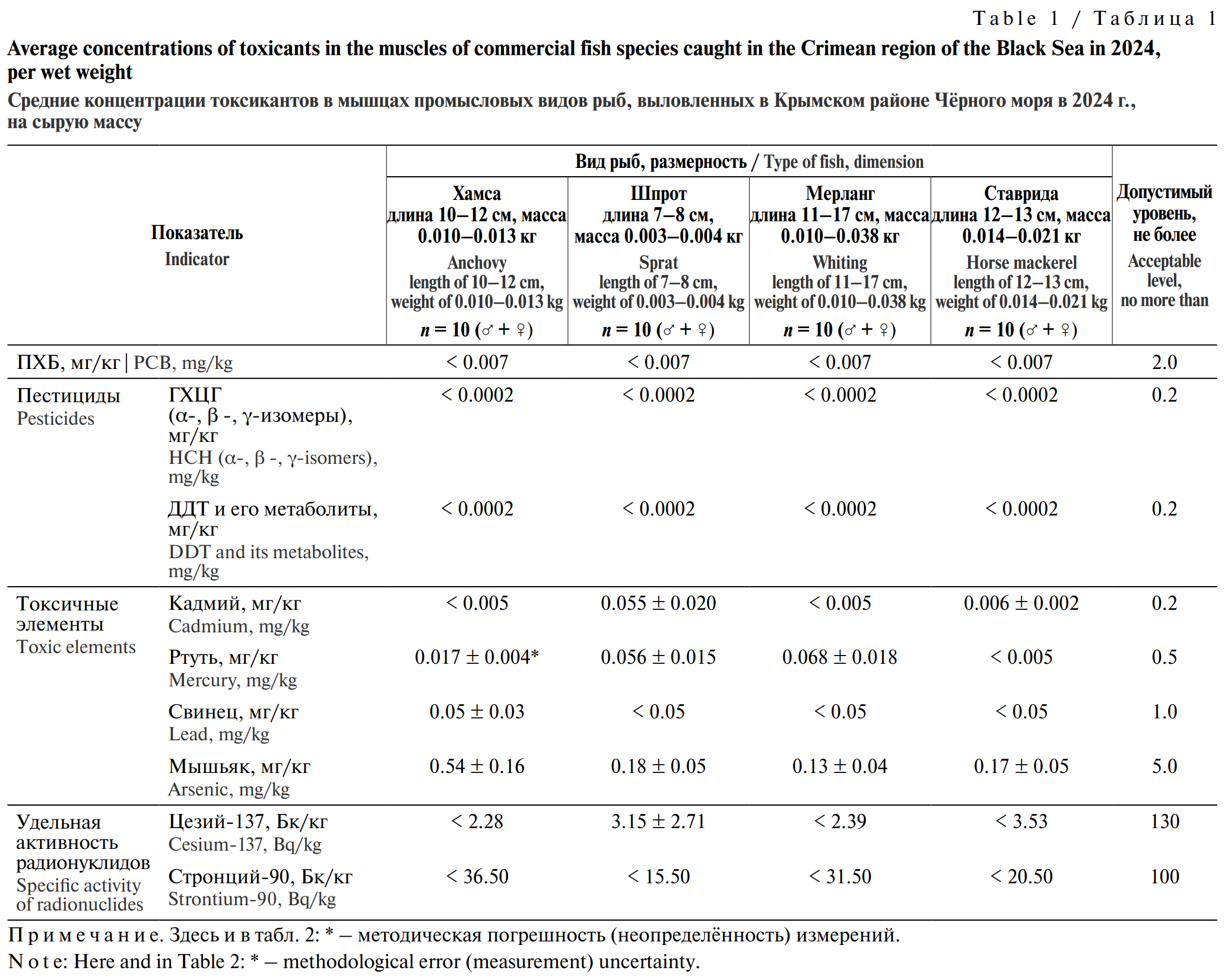
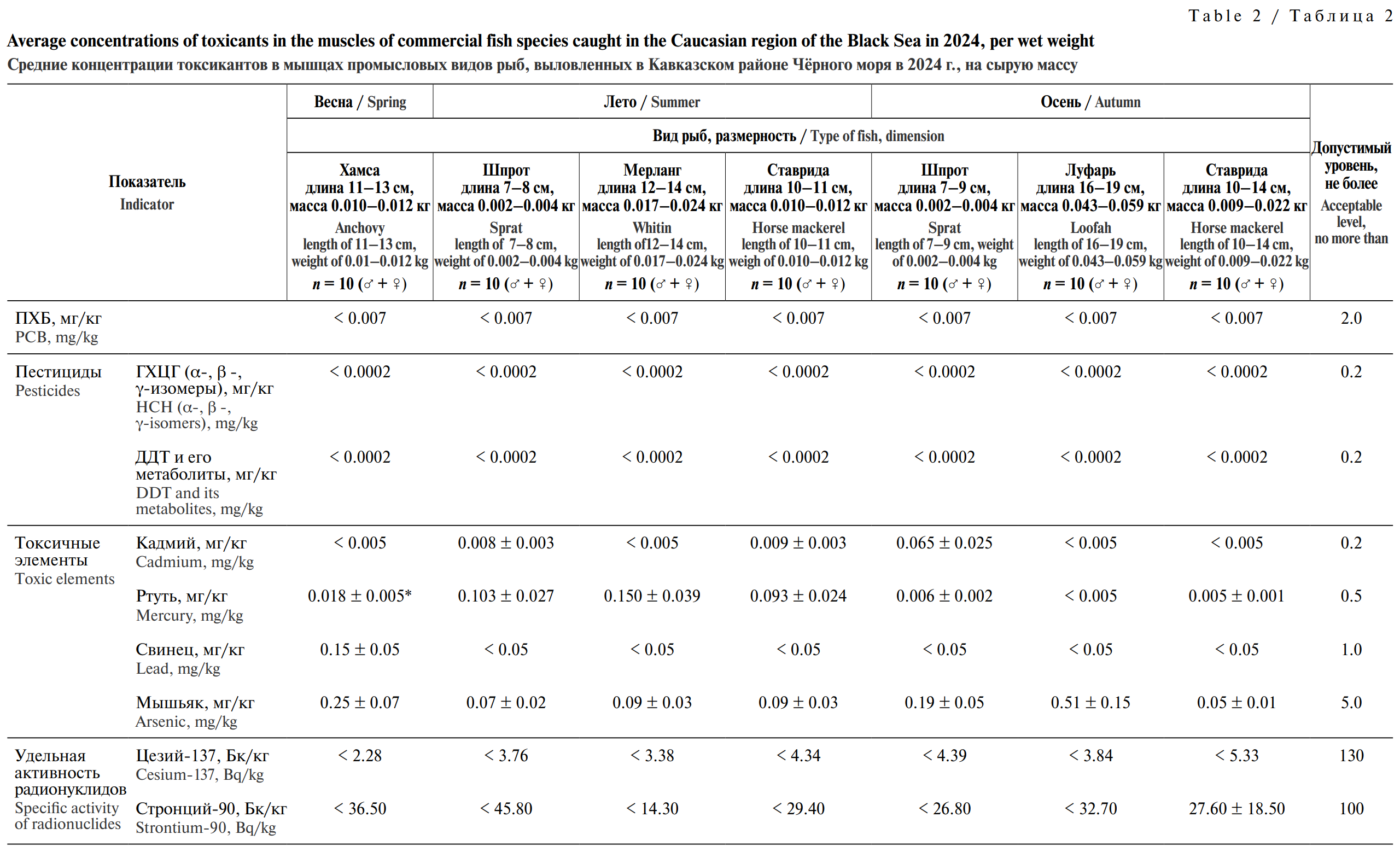
Five commercial fish species caught during the summer and autumn periods were analysed in 2024 in the Caucasian and Crimean regions of the Black Sea: anchovy, whiting, sprat, blue whiting, and horse mackerel. No PCBs or pesticides were detected in any of the biological samples. The specific activity of strontium-90 was recorded at a low level only in the muscle tissue of horse mackerel caught in the autumn in the Caucasian region of the sea, whilst no specific activity of caesium-137 was detected (Tables 1, 2).
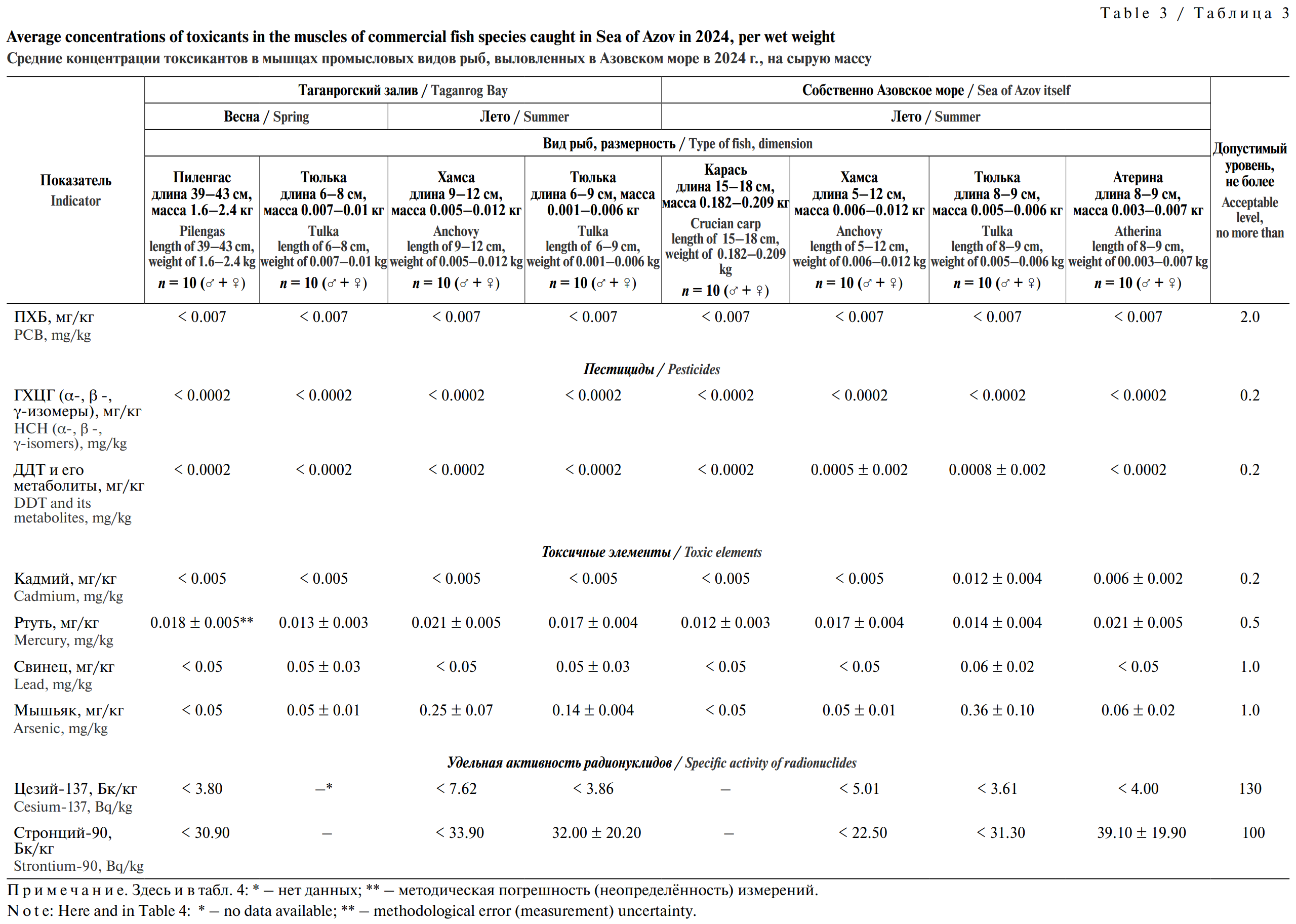
Five species of commercial fish (sprat, anchovy, pilengas, crucian carp, and sand smelt) caught in the spring and summer in Taganrog Bay and the Azov Sea itself were researched in 2024. PCBs weren’t found in any of the samples. In the muscle tissue of anchovies caught in the Sea of Azov, p´p-DDD (a metabolite of DDT) was detected in trace amounts (0.0005 mg/kg wet weight). No specific activity of caesium-137 was recorded in the fish muscle tissue. Low specific activity of strontium-90 was noted in the muscles of sand smelt; it was absent in the other fish species studied. Of the regulated toxic elements, mercury, arsenic, and cadmium were found in the muscles of sand smelt at concentrations below the permissible level; in crucian carp, mercury, cadmium, and lead were also below the permissible level. In the muscles of the pilengas, only mercury was found in concentrations below the permissible level; cadmium, lead, and arsenic were not detected in significant quantities. In the muscle tissue of anchovies caught in the Taganrog Gulf and in the open sea, the toxic elements found were mercury and arsenic in comparable concentrations below the permissible level; no significant amounts of cadmium or lead were detected (Table 3).
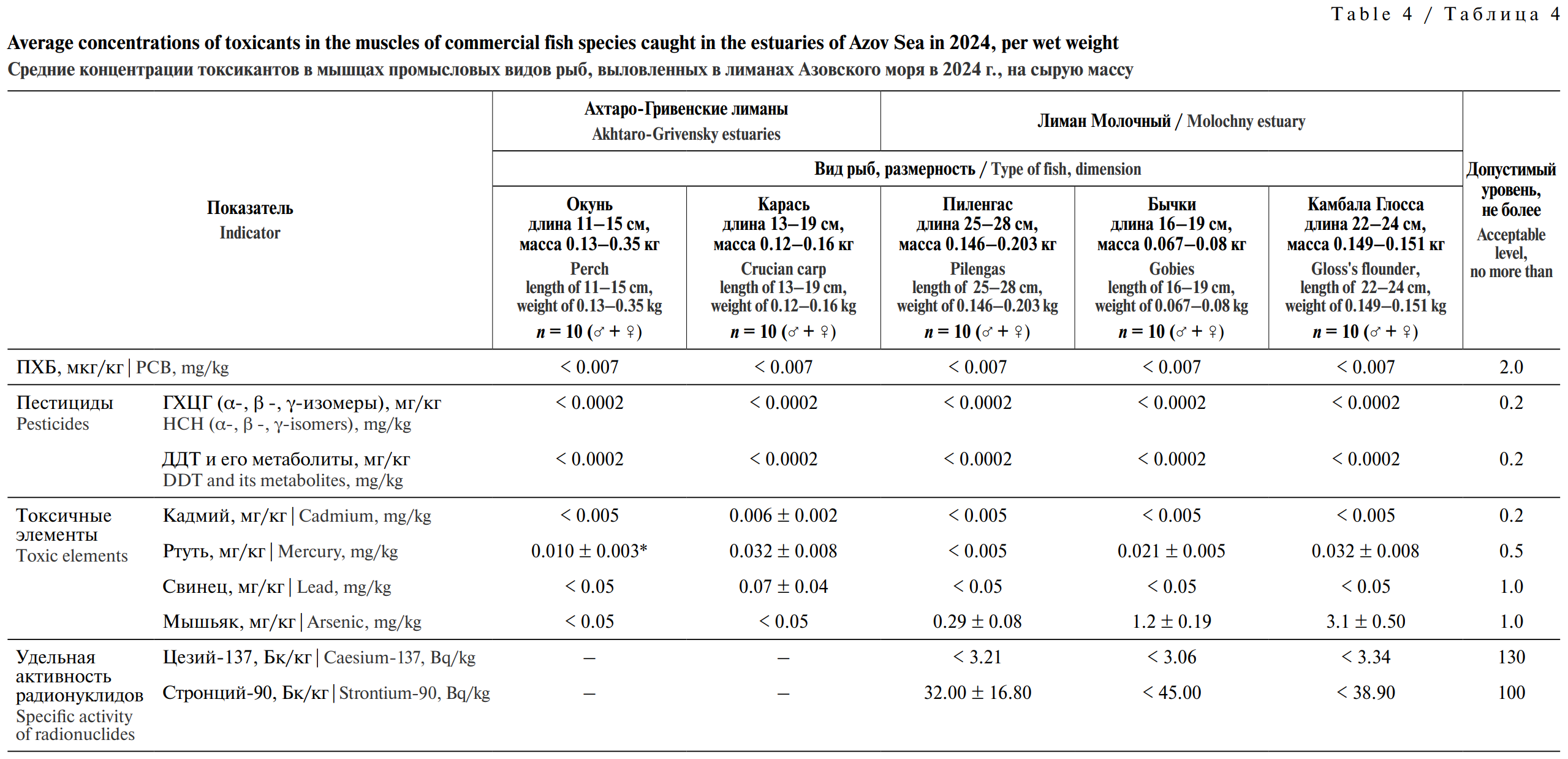
During the spring of 2024, two species of commercial fish caught in the Akhtaro-Grivensky estuaries (Azov estuaries in the Krasnodar Krai) were analysed. Of the regulated toxic elements, only mercury was detected in the muscles of perch (at concentrations significantly below the permissible limit). Cadmium, arsenic, lead, PCBs, and pesticides were not detected in significant concentrations. In crucian carp muscle, mercury, cadmium, and lead were detected among the regulated toxic elements (concentrations were significantly below permissible levels). Arsenic, PCBs, and pesticides were not found in crucian carp muscle. During the autumn period, the accumulation of toxicants was assessed in three species of commercial fish caught in the Molochny Estuary (an estuary of the Sea of Azov, Zaporizhzhia Oblast). No PCBs or pesticides were detected in significant concentrations in the muscles of pilengas, gobies, and glossy flounder; no specific activity of caesium-137 was recorded, and strontium-90 was detected only in pilengas at levels below the permissible limit (48.8 Bq/kg). Of the regulated toxic elements, arsenic and mercury were recorded in fish muscle at concentrations below the permissible limits; cadmium and lead were not found (Table 4).
Discussion
Adequate assessment levels of toxin accumulation in fish requires an awareness regarding the content of these substances in the components of the aquatic ecosystem [9]. The concentrations of all monitored elements and substances detected in the water and bottom sediments of water bodies, with some fluctuations, corresponded to the long-term average (2020–2023) values (at p < 0.05) [11–15].
Over the last five years of observations, the mercury content in the muscles of Black Sea whiting has increased more than tenfold (remaining within acceptable limits), the arsenic and lead contents have decreased by more than sevenfold and twofold respectively, and the cadmium content has remained at a similar level with some fluctuations (Figure).
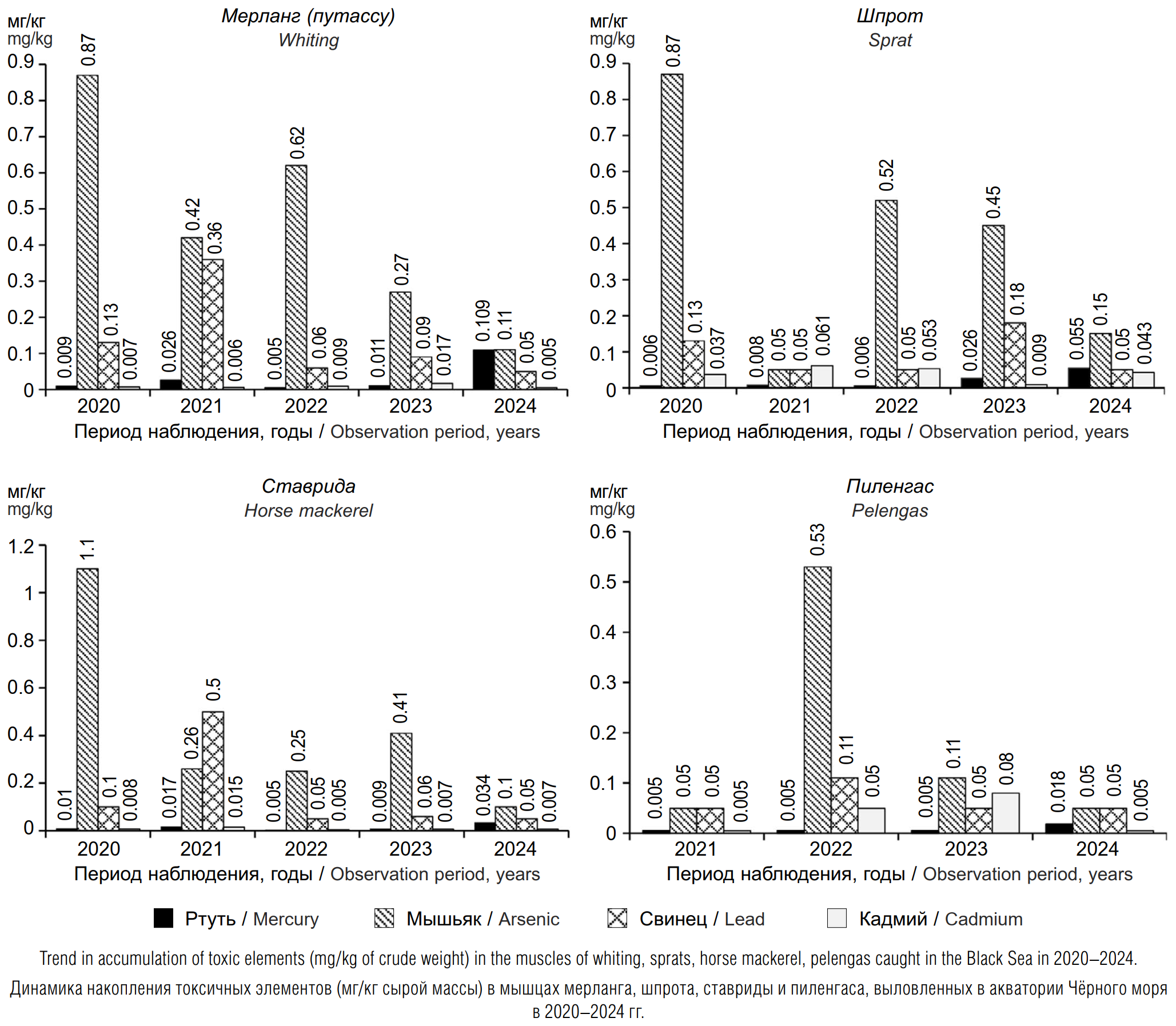
Over the same period, the mercury content in sprat muscle increased ninefold, whilst the arsenic content decreased fivefold; cadmium and lead concentrations remain low and relatively similar.
The mercury content in the muscles of horse mackerel had increased threefold by 2024, whilst the arsenic and lead contents had decreased by more than 10-fold and 2-fold respectively; cadmium levels changed only slightly.
Between 2021 and 2024, the mercury content in the muscles of the Azov pilengas increased 3.6-fold, whilst the arsenic and lead contents, after peaking in 2022, returned to the 2021 levels.
Conclusion
Chemical and radiological data were gathered and analyzed on the health of commercial fish species in the Azov–Black Sea basin, caught in the Azov and Black Seas during the spring, summer, and autumn of 2024. The low concentrations of pesticides and toxic elements (lead, cadmium, mercury, arsenic) detected indicate the high physiological health and nutritional quality of the fish. No PCBs were found in significant concentrations in the aquatic biological resources studied, and the specific activity of caesium-137 and strontium-90 was found to be at an extremely low level. Tulka, anchovy, pilengas, crucian carp, sand smelt, crucian carp, gobies, glossy flounder (from the Sea of Azov, including the estuaries), as well as anchovy, whiting, sprat, blue whiting and horse mackerel (from the Black Sea) meet regulatory requirements in terms of pollution and radiation safety and are fit for human consumption.
¹ Order of the Ministry of Agriculture of Russia No. 1 of January 9, 2020, “On the Approval of Fishing Regulations for the Azov-Black Sea Fisheries Basin”; https://docs.cntd.ru/document/564189244 (accessed April 4, 2025).
² NDI 05.05–2013 ‘Mass fractions of pesticides in soils and bottom sediments of freshwater and marine water bodies. Methodology for measurement by gas-liquid chromatography’. https://docs.cntd.ru/document/902320560 (accessed on April 4, 2025).
³ NDI 05.23–2012 ‘Method for the determination of mass fractions of individual polychlorinated biphenyl congeners in soil and sediment samples from freshwater and marine water bodies by gas-chromatography-mass spectrometry’.
⁴ NDI 05.14–2007 ‘Method for the determination of mass fractions of cadmium, lead and zinc in samples of aquatic organisms by atomic absorption with electrothermal atomisation’.
⁵ NDI 05.35–2021 ‘Method for the determination of the mass fractions of aluminium, barium, cadmium, cobalt, lithium, arsenic, silver, strontium and thallium in samples of aquatic organisms by atomic absorption with electrothermal atomisation’.
⁶ NDI 05.26–2014 ‘Mass fraction of total mercury in aquatic organism samples. Method for measurement by flame-less atomic absorption’.
⁷ Method for measuring the activity of radionuclides using a scintillation gamma spectrometer with ‘Progress’ software.
⁸ Method for measuring the activity of radionuclides using a scintillation gamma spectrometer with the Progress software.
⁹ Technical Regulation of the Customs Union ‘On the Safety of Food Products’ (as amended on 22 April 2024). Approved by Decision No. 880 of the Customs Union Commission dated 9 December 2011. TR CU 021/2011
1. Salko D.Y., Aristov V.M. Characteristics and analysis of cargo turnover of sea ports of the Azov-Black Sea basin as a component of cargo base of sea ports of Russia. Ekonomicheskii vektor. 2020; (1): 34–7. https://doi.org/10.36807/2411-7269-2020-1-20-34-37 https://elibrary.ru/qgdcec (in Russian)
2. Bufetova M.V., Egorov V.N., Malakhova T.V., Proskurnin V.Yu., Bobko N.I. Migration of heavy metals and boron through the Kerch strait. Ekologicheskaya bezopasnost’ pribrezhnoi i shel’fovoi zon morya. 2018; (3): 77–83. https://doi.org/10.22449/2413-5577-2018-3-77-83 https://elibrary.ru/yllqhz (in Russian)
3. Barabashin T.O., Korablina I.V., Pavlenko L.F., Skrypnik G.V., Korotkova L.I. Methodological support of pollution monitoring of the Azov and Black seas water bodies. Vodnye bioresursy i sreda obitaniya. 2018; 1(3–4): 9–27. https://doi.org/10.47921/2619-1024_2018_1_3-4_9 https://elibrary.ru/ysevvz (in Russian)
4. Pavlenko L.F., Korablina I.V., Barabashin T.O., Ekilik V.S. Priority toxicants in elements of Lower Don ecosystem. Vodnye resursy. 2022; 49(3): 298–30. https://elibrary.ru/efjpsa (in Russian)
5. Matishov G.G., Khoroshev O.A., Sushko K.S., Stepanyan O.V., Malik Yu.V. The Lower Don: a unique river artery and its environmental problems. Priroda. 2023; (3): 36–50. https://elibrary.ru/susvxk (in Russian)
6. Akselev O.I., Nikitina T.A. The state of stocks and catch of valuable commercial fish species in the Azov-Black Sea basin. Mezhdunarodnyi zhurnal eksperimental’nogo obrazovaniya. 2016; (4–3): 503–5. https://elibrary.ru/vssbdx (in Russian)
7. Balykin P.A. Changes in the species composition of Russian catches in the Black and Azov seas in the 21st century. Voprosy rybolovstva. 2021; 22(3): 51–60. https://elibrary.ru/cxqfac (in Russian)
8. Rudneva I.I. Assessment of mazut toxicity for embryos of two sea fish species. Ehkologicheskaya bezopasnost’ pribrezhnoi i shel’fovoi zon morya. 2022; (2): 118–27. https://elibrary.ru/ekwoft (in Russian)
9. Rudneva I.I. Responses of marine animals to anthropogenic pollution of the Black Sea: Diss. Moscow; 2000. https://elibrary.ru/qdbmzh (in Russian)
10. Arshanitsa N.M., Belyaev D.S., Stekolnikov A.A., Grebtsov M.R., Karimov B.K. Toxicoresistance to the main types of water pollution. Mezhdunarodnyi vestnik veterinarii. 2018; (3): 110–23. https://elibrary.ru/sahayp (in Russian)
11. Kornienko G.G., Dudkin S.I., Sergeeva S.G., Ruzhinskaya L.P., Tsema N.I., Bugaev L.A., et al. Physiological and biochemical characteristics of the Azov and Black Sea fishes undergoing anthropogenic pressure. Vestnik Kamchatskogo gosudarstvennogo tekhnicheskogo universiteta. 2017; (40): 58–66. https://doi.org/10.17217/2079-0333-2017-40-58-66 https://elibrary.ru/ytnuet (in Russian)
12. Korablina I.V., Barabashin T.О., Gevorkian J.V., Evseeva А.I. The dynamics of the distribution of heavy metals in the water column of the North-Eastern part of the Black Sea after 2000. Trudy VNIRO. 2021; 183: 96–112. https://doi.org/10.36038/2307-3497-2021-183-96-112 https://elibrary.ru/akzgvt (in Russian)
13. Kosenko Yu.V., Korablina I.V. Short-term forecast of the changes in the primary production of organic matter and pollution by priority toxicants in the Azov Sea. Vodnye bioresursy i sreda obitaniya. 2023; 6(4): 31–42. https://doi.org/10.47921/2619-1024_2023_6_4_31 https://elibrary.ru/xyaefa (in Russian)
14. Mkhitaryan I.D., Korablina I.V. Assessment of caesium-137 accumulation in the bottom sediments and aquatic bioresources of the Azov Sea at the present time. Vodnye bioresursy i sreda obitaniya. 2020; 3(3): 36–44. https://doi.org/10.47921/2619-1024_2020_3_3_36 https://elibrary.ru/qtjima (in Russian)
15. Gorgola L.G., Barabashin T.O., Korablina I.V., Gevorkyan Zh.V., Denisova T.V. Modern assessment of copper, lead, cadmium, and nickel concentrations in the water of the Lower Don. Gigiena i Sanitaria (Hygiene and Sanitation, Russian journal). 2025; 104(1): 23–30. https://doi.org/10.47470/0016-9900-2025-104-1-23-30 https://elibrary.ru/bwnpnw (in Russian)
Head, Laboratory for analytical control of aquatic ecosystems, Azov-Black Sea Branch, All-Russian Scientific Research Institute of Fisheries and Oceanography, Rostov-on-Don 344002, Russian Federation
e-mail: korablinaiv@azniirkh.vniro.ru
Leading specialist, Laboratory for analytical control of aquatic ecosystems, Azov-Black Sea Branch, All-Russian Scientific Research Institute of Fisheries and Oceanography, Rostov-on-Don, 344002, Russian Federation
e-mail: Lilia.Gorgola@yandex.ru
PhD (Biology), head, Testing Analytical Center, Azov-Black Sea Branch, All-Russian Scientific Research Institute of Fisheries and Oceanography, Rostov-on-Don, 344002, Russian Federation
e-mail: kosenkoyv@azniirkh.vniro.ru
Chief specialist of the Laboratory for analytical control of aquatic ecosystems, Azov-Black Sea Branch, All-Russian Scientific Research Institute of Fisheries and Oceanography, Rostov-on-Don, 344002, Russian Federation
e-mail: mhitarianid@azniirkh.vniro.ru
Leading specialist, Laboratory for analytical control of aquatic ecosystems, Azov-Black Sea Branch of the All-Russian Scientific Research Institute of Fisheries and Oceanography, Rostov-on-Don, 344002, Russian Federation
e-mail: ekilikvs@azniirkh.vniro.ru
Specialist, Laboratory for analytical control of aquatic ecosystems, Azov-Black Sea Branch of the All-Russian Scientific Research Institute of Fisheries and Oceanography, Rostov-on-Don, 344002, Russian Federation
e-mail: petrenkoaa@azniirkh.vniro.ru
Korablina I.V., Gorgola L.G., Kosenko Yu.V., Mkhitaryan I.D., Ekilik V.S., Petrenko A.A. On the hygienic safety of commercial fish species in the Azov-Black Sea basin. Hygiene and Sanitation. 2026;105(3):293-300. https://doi.org/10.47470/0016-9900-2026-105-3-293-300. EDN: ovsiyy
Мы в ВК:

 Email this article (Login required)
Email the author (Login required)
Email this article (Login required)
Email the author (Login required) 141014, The Moscow region, Mytishchi, 2, Semashko street
Federal Scientific Center of Hygiene named after F.F. Erisman
Phone: +7 916 885 28 02
e-mail: gigsan@list.ru